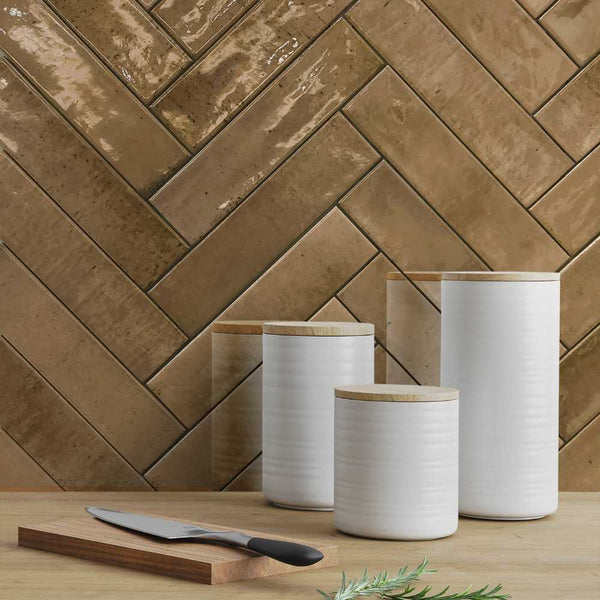
Subway tile has earned its place as one of the most trusted backsplash materials in kitchen design. It is versatile, timeless, easy to style, and available in an enormous range of materials, colors, finishes, and sizes. But while subway tile itself remains a strong category, choosing the best subway tile for your specific kitchen takes more thought than simply selecting the first white rectangle you see.
The right subway tile backsplash depends on your kitchen style, cabinet color, lighting, countertop material, desired maintenance level, and the overall design mood you want to create.
In this guide, we will break down the best subway tile backsplash options for different kitchen styles, compare popular materials, explain layout choices, and help you avoid common backsplash design mistakes.
If you are currently shopping, browse our full subway tile collection for kitchen backsplash inspiration.
Why Subway Tile Works So Well for Kitchen Backsplashes
Few backsplash materials offer the flexibility of subway tile. Its rectangular shape is simple enough to work in nearly any kitchen, yet adaptable enough to create dramatically different looks depending on installation pattern, finish, grout color, and scale.
Subway tile works well because it offers:
- timeless visual appeal
- easy coordination with cabinets and countertops
- multiple price points
- classic and modern design versatility
- clean wall protection behind cooking zones
- broad material availability
If you are new to this category, our pillar guide What Is Subway Tile? explains its history, sizes, and broader design uses.
For additional backsplash inspiration, explore our kitchen backsplash tile collection.
Best Subway Tile Materials for Kitchen Backsplashes
Ceramic Subway Tile
Ceramic subway tile remains one of the best overall backsplash choices because it balances affordability, style flexibility, and broad availability.
Ceramic works especially well in kitchens because backsplashes are vertical applications that do not experience floor traffic, making ceramic’s performance profile an excellent match.
Advantages of ceramic subway tile:
- wide color selection
- glossy and matte finishes
- handmade-look options
- beveled styles
- budget-friendly options
- timeless appeal
If you want a dependable classic backsplash, ceramic is often the safest choice.
Browse our ceramic tile collection.
We also compare materials more directly in our upcoming guide to glass vs ceramic subway tile.
Glass Subway Tile
Glass subway tile creates a noticeably different kitchen experience compared to ceramic. Because glass reflects both natural and artificial light, backsplashes often feel brighter, deeper, and more dimensional.
Glass subway tile is particularly effective in:
- smaller kitchens
- darker kitchens needing brightness
- modern kitchens
- coastal-inspired kitchens
- transitional designs
Glass can make a backsplash feel cleaner and more luminous, though some homeowners prefer ceramic’s softer visual warmth.
Explore our glass tile collection.
Porcelain Subway Tile
Porcelain subway tile can also be an excellent backsplash option. It tends to be denser and may offer stronger moisture resistance depending on the specific product.
While many homeowners default to ceramic for backsplash applications, porcelain can be a smart choice when you want added durability or a specific design finish.
We will compare these in detail in ceramic vs porcelain subway tile.
Best Subway Tile Styles for Kitchen Design
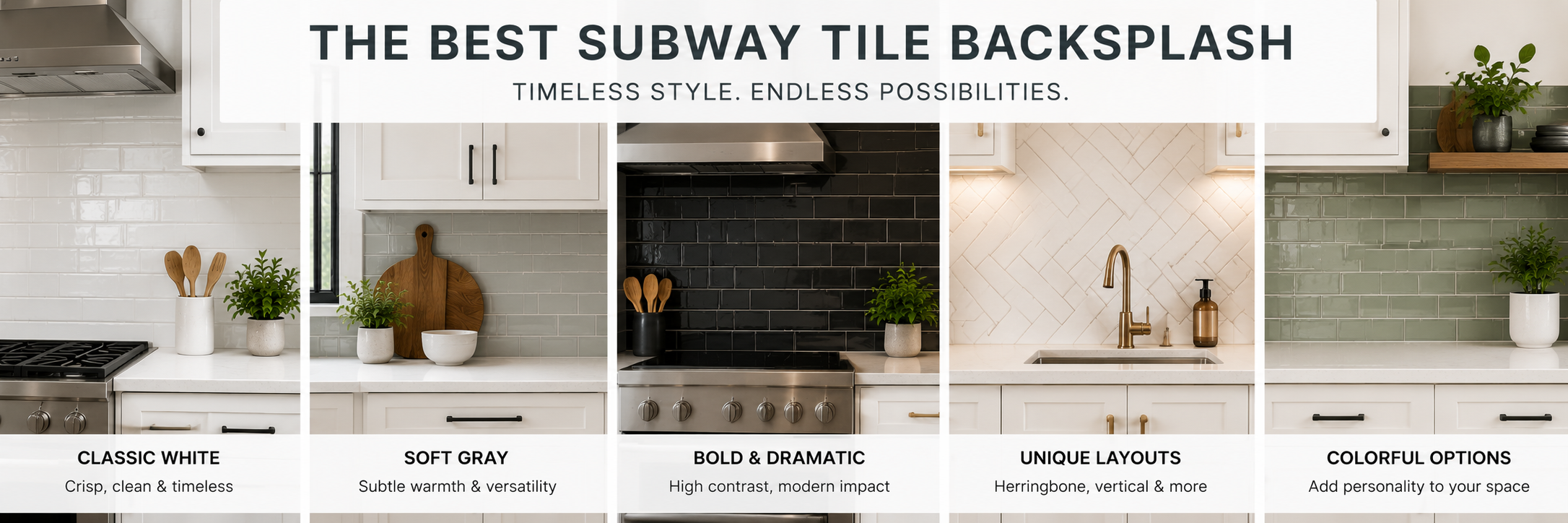
Classic White Subway Tile Backsplash
If you ask designers for the most timeless backsplash solution, white subway tile consistently lands near the top.
White subway tile works because it pairs effortlessly with:
- white cabinets
- black cabinets
- wood cabinetry
- navy kitchens
- green cabinetry
- gray kitchens
- warm neutral palettes
White does not mean boring. White subway tile can look completely different depending on grout contrast, tile size, texture, and installation pattern.
For more ideas, see our upcoming guide to white subway tile ideas.
Browse more options in our white tile collection.
Handmade-Look Subway Tile
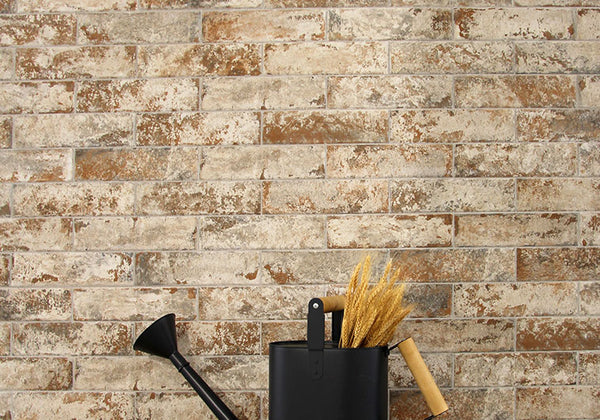
Handmade-look subway tile has become one of the most desirable backsplash styles because it adds movement, glaze variation, texture, and artisanal character.
These tiles often feature:
- uneven edges
- surface variation
- glaze movement
- intentional tonal inconsistency
This creates a backsplash that feels richer and more custom compared to machine-perfect flat tile.
Beveled Subway Tile
Beveled subway tile introduces shadow lines and dimensional definition, making a backsplash feel slightly more architectural and classic.
This style works especially well in:
- traditional kitchens
- transitional spaces
- black-and-white kitchens
- luxury-inspired designs
Colored Subway Tile
Subway tile no longer means only white. Green, navy, black, gray, cream, taupe, blush, and deep jewel tones are all strong backsplash contenders.
Colored subway tile works best when coordinated carefully with cabinetry and countertops.
Best Subway Tile Layout Patterns for Kitchen Backsplashes
Classic Offset (Brick Pattern)
The most traditional subway tile backsplash layout.
Safe, timeless, and easy to coordinate.
Vertical Stack
One of the strongest modern design directions.
Vertical subway tile backsplashes create height and a more contemporary visual rhythm.
We explore this further in subway tile layout patterns.
Straight Stack
Clean, organized, and distinctly modern.
Excellent for minimalist kitchens.
Herringbone
Designer-focused, dynamic, and visually rich.
A strong focal-point backsplash option.
How to Match Subway Tile to Kitchen Cabinets
White Cabinets
White cabinets offer maximum flexibility.
Great subway tile pairings include:
- white glossy ceramic
- soft gray subway tile
- sage green subway tile
- deep navy subway tile
- textured handmade-look neutrals
Wood Cabinets
Wood kitchens often pair beautifully with warm subway tile colors:
- cream
- taupe
- warm white
- olive green
- earthy neutrals
Dark Cabinets
Darker cabinetry often benefits from lighter backsplash contrast unless a dramatic monochromatic design is intentional.
Common Subway Tile Backsplash Mistakes to Avoid
Choosing Tile Solely From Photos
Lighting, monitors, grout, and surrounding materials dramatically change how tile appears.
Ignoring Grout Color Strategy
Grout can completely change backsplash appearance.
Matching grout softens the look. Contrasting grout emphasizes pattern.
Our upcoming guide to best grout colors for subway tile will help.
Choosing the Wrong Scale
Very small kitchens may feel cluttered with certain oversized patterns, while very large kitchens may benefit from elongated subway tile.
Ignoring Layout Planning
Backsplash design is not only about tile selection. Layout decisions significantly impact final aesthetics.
Is Subway Tile Still a Good Kitchen Choice?
Absolutely.
The question is not whether subway tile is outdated. The question is whether the execution feels current.
Modern subway tile design includes:
- elongated formats
- vertical installations
- stacked layouts
- handmade-look glazes
- designer colors
- subtle texture
See our full discussion in Is Subway Tile Outdated?
Kitchen Backsplash Planning Tips
Before finalizing a subway tile backsplash, consider:
- cabinet finish
- countertop material
- lighting conditions
- grout maintenance expectations
- visual contrast preferences
- tile finish
- edge trim details
For broader tile education, visit our Tile Guides.
If you are planning DIY installation, our upcoming guide to how to install subway tile will be helpful.
Final Thoughts
The best subway tile backsplash is not about choosing the trendiest tile. It is about selecting a material, finish, size, and layout that aligns with your kitchen’s architecture and design goals.
Whether you love classic white ceramic, luminous glass subway tile, artisanal handmade looks, or bold designer colors, subway tile remains one of the most dependable backsplash categories available.
Ready to compare styles? Browse the full Tile Choices subway tile collection.