Filters

$
-
$

Cabinet Pulls

1 product

Showing 1 - 1 of 1 product

Showing 1 - 1 of 1 product
View
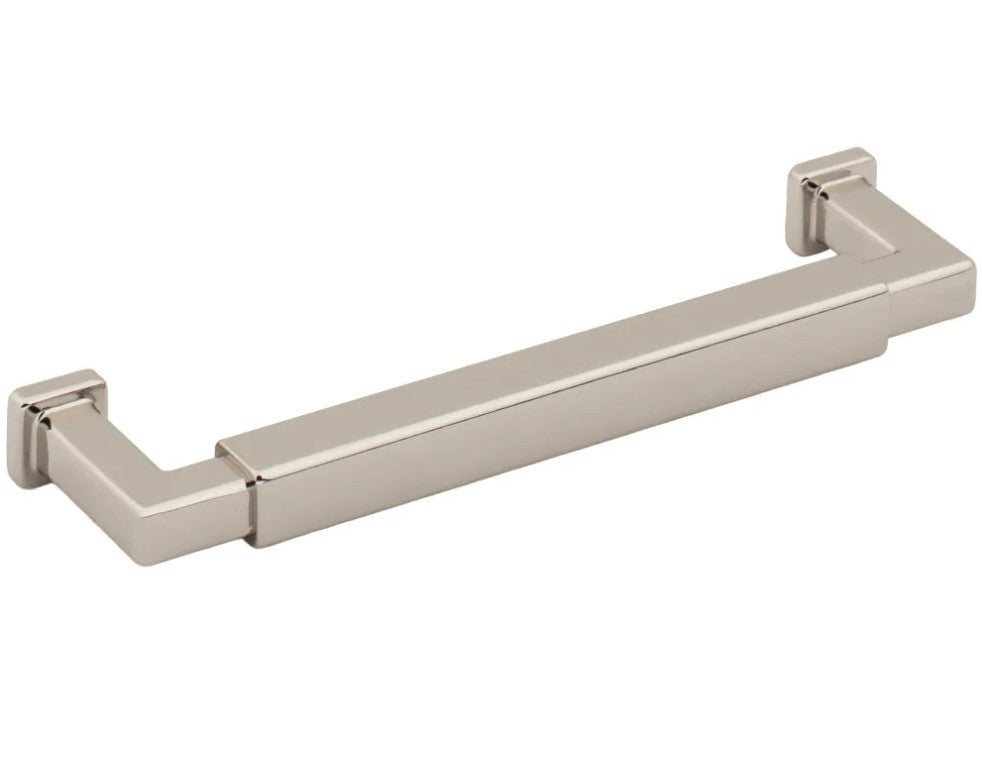
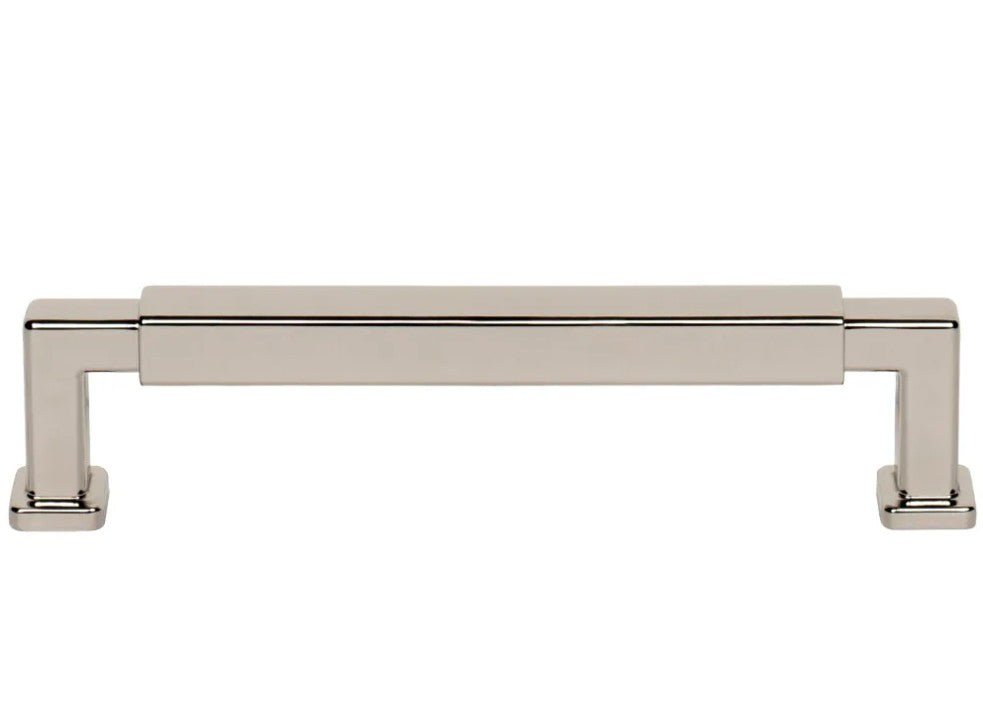
128 mm Center-to-Center Polished Nickel Nash Cabinet Pull 229-128NI Installed View128 mm Center-to-Center Polished Nickel Nash Cabinet Pull 229-128NI Straight View

How to Choose Cabinet Pulls for Your Kitchen or Bathroom

The pull selection process is most efficient when you work through it in a fixed sequence: center-to-center measurement first, then profile, then finish, then size scaling across the full drawer range. That order prevents the most common selection mistake, falling in love with a pull profile before confirming it is available in the center-to-center size needed for existing holes.

Once center-to-center is confirmed, profile selection follows from door style and design direction as described above. Finish selection follows from the tile palette and fixture finish already in the room, a decision covered in detail in the hardware finish and tile pairing guide, which covers every major tile type from warm subway to cool porcelain to natural stone. Size scaling is the final step: confirm that the collection you have chosen offers pull sizes across the full range of your drawer and door widths, and order accordingly.

For kitchens that include both pulls on drawers and knobs on doors, confirm that the knob you want is available in the same Jeffrey Alexander collection as the pulls, collection-coordinated knobs and pulls share the same design language and finish, producing the most resolved hardware result across the full kitchen.

Cabinet Pulls in the Bathroom: Vanity Hardware Done Right

Bathroom vanity drawers are among the most frequently used drawer runs in a home, they open and close multiple times every morning and evening with a consistency that few kitchen drawers match. Hardware quality matters in a bathroom vanity for the same reasons it matters in a kitchen: the structural integrity of the pull, the durability of the finish in a humid environment, and the proportional relationship between pull size and drawer width all contribute to whether the vanity hardware looks and performs correctly over time.

For single-sink vanity configurations — typically one or two drawers flanking a door — a 96mm (3 3/4 inch) pull on the drawers and a coordinating knob on the door is the classic approach. For double-sink vanities with wider drawer banks, 18 to 30 inches, scaling up to a 128mm or 160mm pull keeps the hardware proportional to the wider drawer fronts. Finish selection in the bathroom follows the same tile palette logic as the kitchen: warm bathroom tile palettes suit warm hardware finishes; cool and neutral tile palettes suit Satin Nickel, Polished Chrome, or Matte Black. The full bathroom coordination approach is covered in the cohesive kitchen and bathroom design guide.

Coordinating Pulls Across the Full Home

One of the practical advantages of the Jeffrey Alexander system is the ability to use a single collection across an entire home, kitchen, bathrooms, laundry room, and built-in furniture, in a consistent finish that creates through-line design continuity without requiring any special-order hardware. A collection like Alvar or Sutton that offers pulls from 76mm to 192mm in six or more finishes can literally dress every drawer in a house without changing collections.

This matters because whole-home hardware consistency is one of the design decisions with the highest perceived impact for the lowest actual complexity. When every room's hardware speaks the same finish language, the home reads as designed from a single vision rather than assembled from multiple shopping decisions. Browse the full Jeffrey Alexander collection to identify which collections offer the broadest size and finish range for multi-room applications, or shop by hardware type directly to compare options: bar pulls, handle pulls, and cabinet knobs are each available in dedicated collection pages.

Hardware Buying Guides

Still working through the finish, size, or hardware type decision? These guides cover the questions we hear most often before a cabinet pull purchase:

Browse Related Hardware Collections

  • Jeffrey Alexander Cabinet Hardware — the full collection including knobs, pulls, bar pulls, handle pulls, and appliance hardware across 60+ named collections
  • Cabinet Knobs — single-hole hardware for doors in coordinating Jeffrey Alexander collections and finishes
  • Bar Pulls — straight, minimal profiles for contemporary and modern cabinetry
  • Kitchen Backsplash Tiles — ceramic, glass, porcelain, and stone tile where hardware finish and tile palette meet most visibly
  • Bathroom Tiles — vanity, shower, and floor tile to coordinate with your hardware selection
  • Floor Tiles — durable porcelain, ceramic, and natural stone for kitchens, baths, and living spaces

Questions about a specific collection, center-to-center measurement, finish coordination, or a replacement hardware situation? The Tile Choices team is available at sales@tilechoices.com or +1 614-515-7816. We are a family-owned business and we take the time to get it right with you.

Frequently Asked Questions?

The 96mm (3 3/4 inch) center-to-center pull is the single most widely used cabinet pull size in residential kitchens and has been for many years. It suits a broad range of standard drawer widths, 12 to 15 inches, without reading as either undersized or disproportionately large, and it is available across virtually every Jeffrey Alexander collection in multiple finishes. The 128mm (5 inch) pull is the second most popular, serving wider 15-to-20-inch drawer fronts that are common on base cabinet drawers and island drawer banks. In contemporary kitchens that favor longer bar pulls, 160mm (6 1/4 inch) and 192mm (7 1/2 inch) are increasingly standard on wider drawers where the longer pull reads as a deliberate design element rather than just a functional grip. If you are selecting pulls for the first time on new cabinetry, starting with 96mm on standard drawers and 128mm or 160mm on wider drawers is the proportional default that works across the widest range of kitchen configurations.

Replacing cabinet pulls requires one critical measurement: the center-to-center distance between the two existing screw holes. Measure from the center of one hole to the center of the other using a tape measure or ruler. This measurement must match the center-to-center specification of the new pull exactly, even a few millimeters of difference means the new pull will not align with the existing holes and new holes will need to be drilled. Common center-to-center sizes are 76mm, 96mm, 128mm, 160mm, 192mm, and 224mm. If your existing measurement falls between two standard sizes, you have three options: choose the nearest standard size and fill the old holes before drilling new ones; select a pull with an adjustable or wider backplate that covers both hole positions; or choose a different profile, such as a cup pull or a pull with a larger backplate, that accommodates non-standard hole spacing without visible patching. The Tile Choices team at sales@tilechoices.com or +1 614-515-7816 can advise on specific replacement situations where the hole spacing creates an unusual fitting challenge.

The orientation of a cabinet pull is determined by the surface it is mounted on, not by personal preference or style. On drawer fronts, pulls are always mounted horizontally, with the center-to-center axis running parallel to the top and bottom edges of the drawer. This is because a horizontal pull aligns with the natural direction of drawer opening force and provides balanced grip across the width of the drawer. On cabinet doors, pulls can be mounted either horizontally or vertically, but vertical mounting on doors is far more common and ergonomically preferable. A vertically mounted pull on a door aligns with the natural motion of pulling a door open, the hand grips the pull and moves laterally, which a vertical pull accommodates more naturally than a horizontal one at the same position. The exception is on very wide cabinet doors, pantry doors, for example, where a horizontal pull mounted at a comfortable hand height can work ergonomically and creates a distinctive visual statement. Both orientations use the same pull; the difference is entirely in installation rotation.

A bar pull is a specific type of cabinet pull defined by its profile: a straight, cylindrical or tubular bar that runs between two mounting points with no decorative detail, curved elements, or shaped backplate. All bar pulls are cabinet pulls, but not all cabinet pulls are bar pulls. Standard cabinet pulls include a wider range of profiles, shaped backplates, arched or curved bars, decorative end caps, transitional and traditional detailing, that suit a broader range of cabinet door styles and design directions. Bar pulls are the defining hardware choice of contemporary and modern kitchens because their clean, unornamented geometry echoes the flat-panel door's own lines. Standard cabinet pulls suit transitional and traditional kitchens where some profile detail is appropriate to match the door's own architectural character. Browse bar pulls separately if you are working with a contemporary or modern kitchen, or shop this cabinet pulls collection for the full range of profiles across all design directions.

The projection of a cabinet pull, how far the grip bar extends from the cabinet surface, is determined by the pull's design and the mounting hardware included. Most Jeffrey Alexander pulls project between 1 inch and 1 1/2 inches from the cabinet surface, which provides comfortable clearance for the hand to grip the bar without the pull feeling either too flat against the surface or excessively prominent. Projection becomes critical in specific installation situations: pull-out drawers or shelves where the open door would bring the pull into contact with an adjacent surface; face-frame cabinetry where the door is partially inset and the pull must clear the frame; and installations in narrow cabinet runs where door clearance is limited. In these situations, check the projection measurement on the specific product page before ordering, or contact the Tile Choices team for installation guidance. For standard kitchen and bathroom applications, the projection range across the Jeffrey Alexander line is appropriate for all common residential cabinetry configurations.

Yes, and using the same pull type throughout, on both doors and drawers, has become the dominant hardware approach in contemporary kitchen design. A single pull profile and finish applied consistently across all surfaces creates a more unified visual result than the traditional mixed approach of knobs on doors and pulls on drawers. The practical consideration is whether the pull size you want on your drawers reads proportionally on your door fronts as well. A 96mm pull that is perfectly scaled for a 12-inch drawer may look short on a 15-inch door. In this case, choosing a 128mm or 160mm pull for both applications, or mounting the pull vertically on the door at full length, produces a more resolved result. The key is to choose a pull whose center-to-center measurement and overall length works proportionally on both the drawer and door applications you have. If the proportions do not work consistently across both applications, the knobs-on-doors and pulls-on-drawers combination is the reliable fallback, browse cabinet knobs in coordinating Jeffrey Alexander collections for the most seamless mixed-hardware approach.

Brushed finishes, Brushed Gold, Satin Nickel, Brushed Oil Rubbed Bronze, Satin Bronze, are the easiest to maintain in high-use kitchen environments because their directional micro-texture disperses fingerprints and minor contact marks rather than displaying them as defined smudges on a flat or reflective surface. Among brushed options, Satin Nickel has the longest track record in kitchen applications and remains the most forgiving finish in terms of daily appearance between cleaning cycles. Brushed Gold has demonstrated comparable maintenance characteristics in the years since it became a mainstream choice. Matte Black and polished finishes, Polished Chrome, Polished Nickel, show fingerprints and contact marks more clearly and require more frequent wiping to maintain their appearance in a busy kitchen. For all Jeffrey Alexander finishes, the correct maintenance approach is a damp soft cloth for regular cleaning, mild dish soap for grease or residue, and no abrasive cleaners or harsh chemicals that can damage the applied topcoat layer over time.

Yes, all Jeffrey Alexander cabinet pulls include the mounting screws required for standard installation. The standard machine screw included fits the standard cabinet door thickness of 3/4 inch, which is the thickness of the overwhelming majority of residential cabinetry. If your cabinet doors are thicker than standard, as is sometimes the case with custom cabinetry, face-frame inset doors, or furniture repurposed as cabinetry, longer screws may be needed. Standard machine screws for cabinet hardware are widely available at hardware stores in extended lengths if the included screws are too short for a specific application. The screw gauge for Jeffrey Alexander hardware is the industry-standard 8-32 machine screw thread, which means standard replacement screws are universally compatible without any special ordering.

Expertly Curated Tile You Can Trust

Every tile in this collection is carefully selected based on real-world performance, design relevance, and long-term durability. We don’t list thousands of random products — we curate materials that meet professional installation standards.

Our collections are guided by Bruno Mendolini, a tile expert with over 25 years of experience and deep roots in the Italian tile industry.

  • 25+ years tile industry expertise
  • Italian tile sourcing heritage
  • Curated for backsplash, shower, and floor performance
  • Installation-focused product selection

Recently viewed