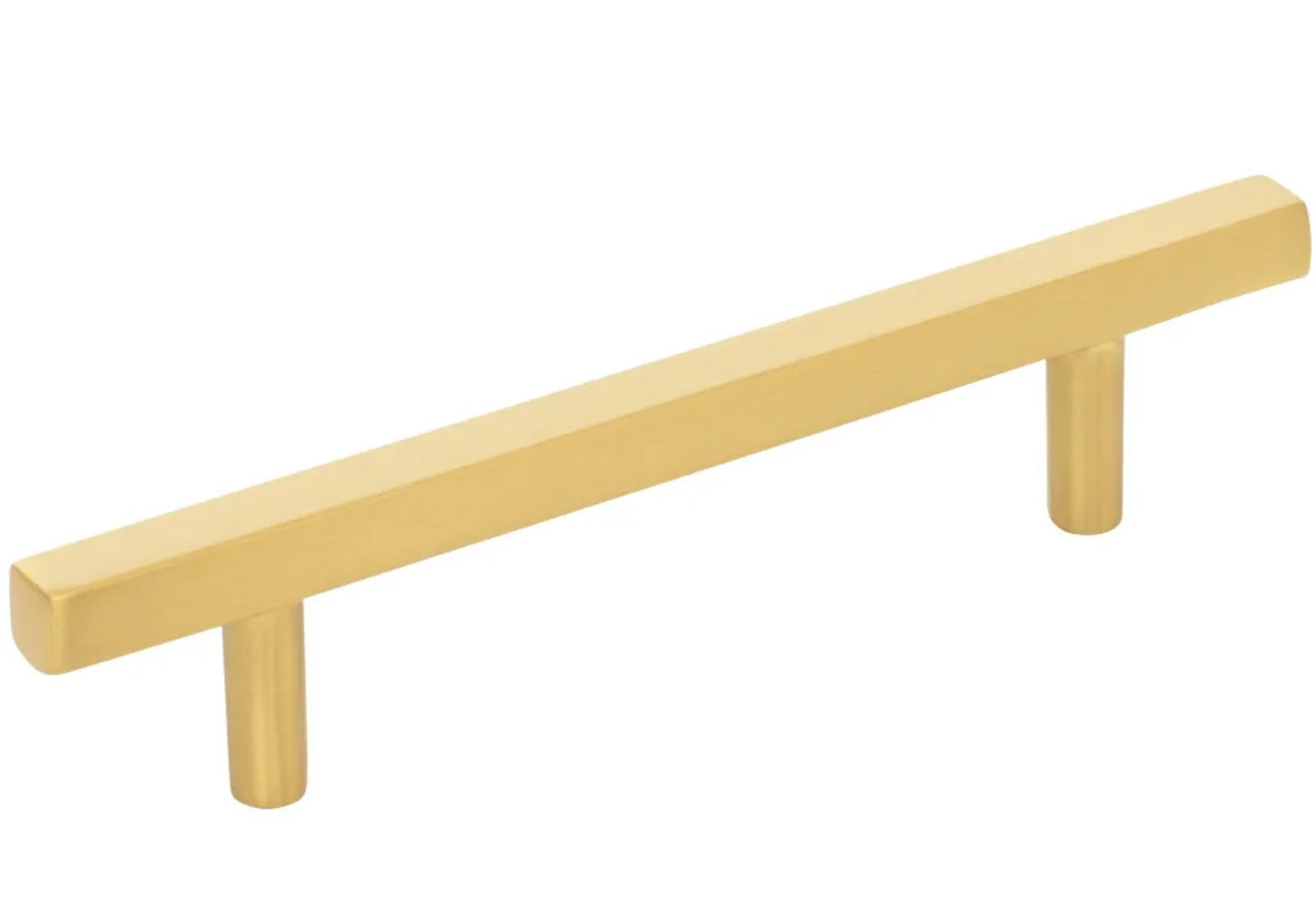
Bar Pull Style Guide: Matching Hardware to Your Kitchen or Bathroom Design
Understanding how bar pull profiles interact with cabinet door styles helps you make a more confident decision. Here is a straightforward style matching framework:
Contemporary and Modern Kitchens
Clean-lined, flat-front cabinetry , whether Shaker, slab, or handleless , is the natural home for bar pulls. The linear geometry of a bar pull echoes the horizontal and vertical lines already present in modern cabinet doors. For this setting, look for bar pulls with a slim diameter (around 5/16 to 3/8 inch), minimal end cap detailing, and finishes in matte black, brushed gold, or polished chrome. Longer bar pulls, 8 inches and up, placed vertically on full-height cabinet doors are one of the defining looks in contemporary kitchen design right now.
Transitional Kitchens
Transitional spaces blend traditional architecture with modern restraint. Raised-panel cabinet doors, simple crown molding, and classic subway tile backsplashes often anchor the traditional side, while cleaner countertops and neutral color palettes push toward modern. For this setting, bar pulls in brushed nickel or satin brass with slightly more pronounced end cap detailing bridge the gap well. Mid-range sizes, 3 to 6.3 inch center-to-center, feel proportionally appropriate on both Shaker and raised-panel door fronts.
Traditional and Farmhouse Kitchens
Oil-rubbed bronze and antique brass bar pulls carry an aged, handcrafted quality that suits traditional and farmhouse-style cabinetry. In these spaces, bar pulls often play a supporting role to other hardware like cup pulls and bail pulls, but they remain a solid choice for drawers and utility areas. Look for bar pulls with slightly more decorative end cap treatments, a small fluted detail or subtle stepped profile adds character without being fussy.
Bathroom Vanities
Bar pulls work beautifully on bathroom vanity drawers and doors. Because bathroom hardware spans a wider range of surfaces, think your towel bar, toilet paper holder, faucet finish, and light fixture, coordinate your bar pull finish with the predominant metal in the room. A matte black vanity bar pull should ideally be matched by a matte black faucet and lighting fixture for a pulled-together look. Single-vanity drawers typically take a 3-inch pull while double-sink vanities with wider drawers scale up naturally to 5 inch or longer.
How to Install Bar Pulls: A Quick Overview
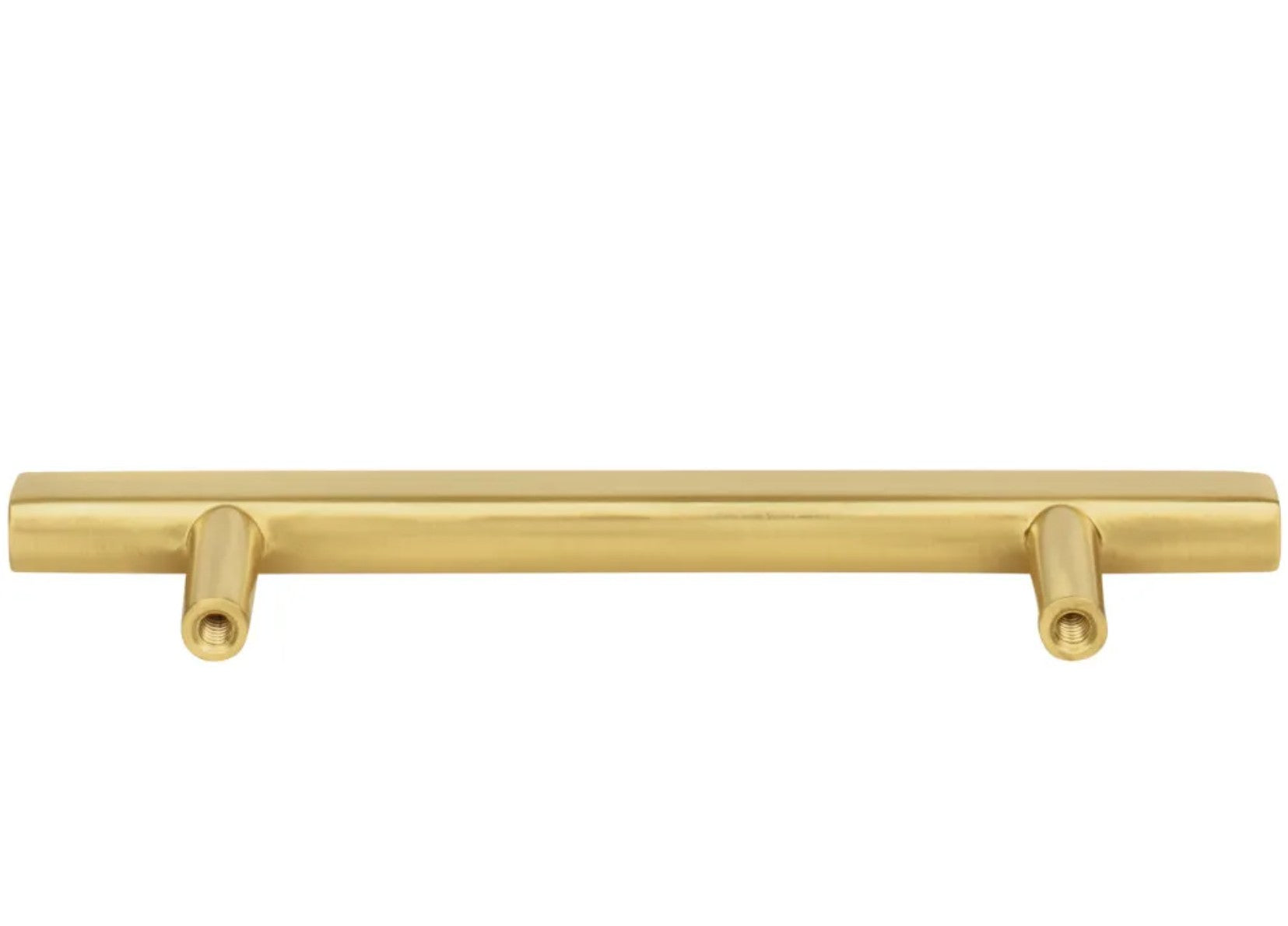
Installing cabinet bar pulls is a straightforward DIY task. You will need a drill, a drill bit sized to match your screw diameter, a hardware template or measuring tape, a pencil for marking, and a screwdriver. The key step is accurate marking, your two holes need to be level and spaced precisely to match the center-to-center dimension of your chosen pull. A hardware installation template makes this significantly easier and more consistent, especially across multiple cabinets. Drilling from the inside of the door out prevents tear-out on the visible face. Screws are fed from inside the cabinet or drawer and tightened into the back of the pull.
For existing cabinets, check whether your current hole spacing matches a standard center-to-center size before purchasing. Many manufacturers offer pulls in multiple center-to-center sizes within the same style, so you can often find a match or near-match for your existing holes.