Filters

$
-
$

Cabinet Knobs

4 products

Showing 1 - 4 of 4 products

Showing 1 - 4 of 4 products
View
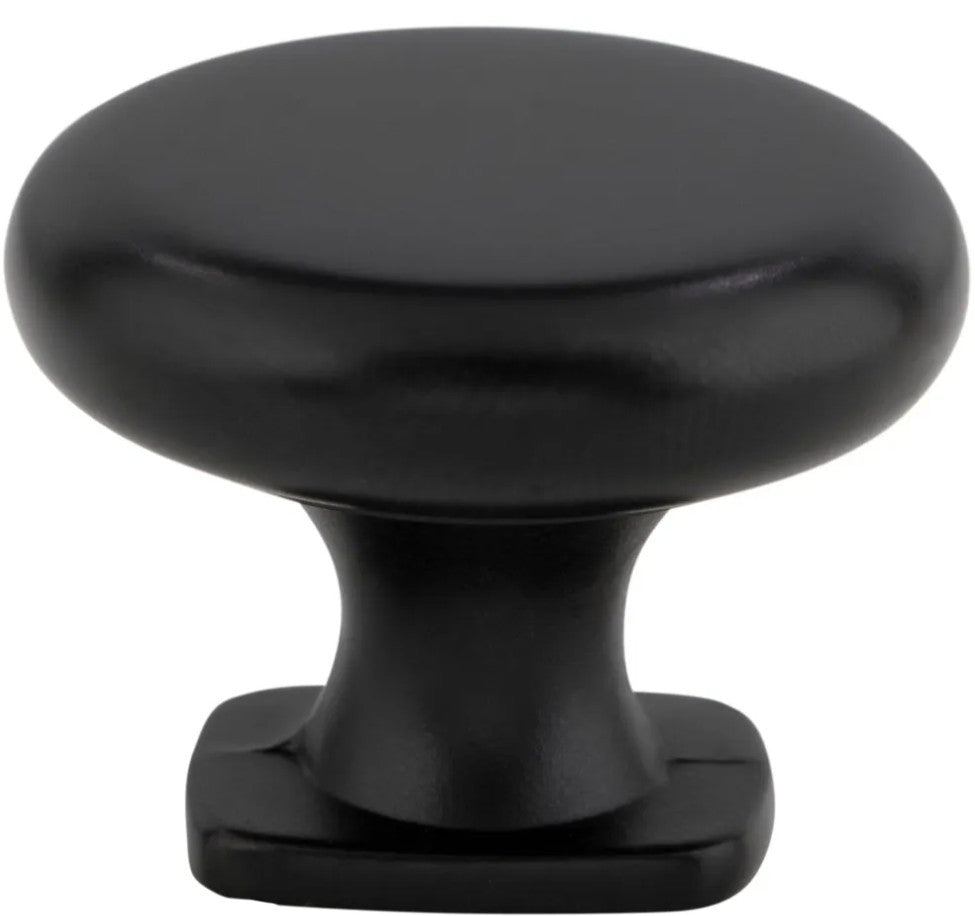
1-3 8 Diameter Matte Black Belcastel 1 Cabinet Knob
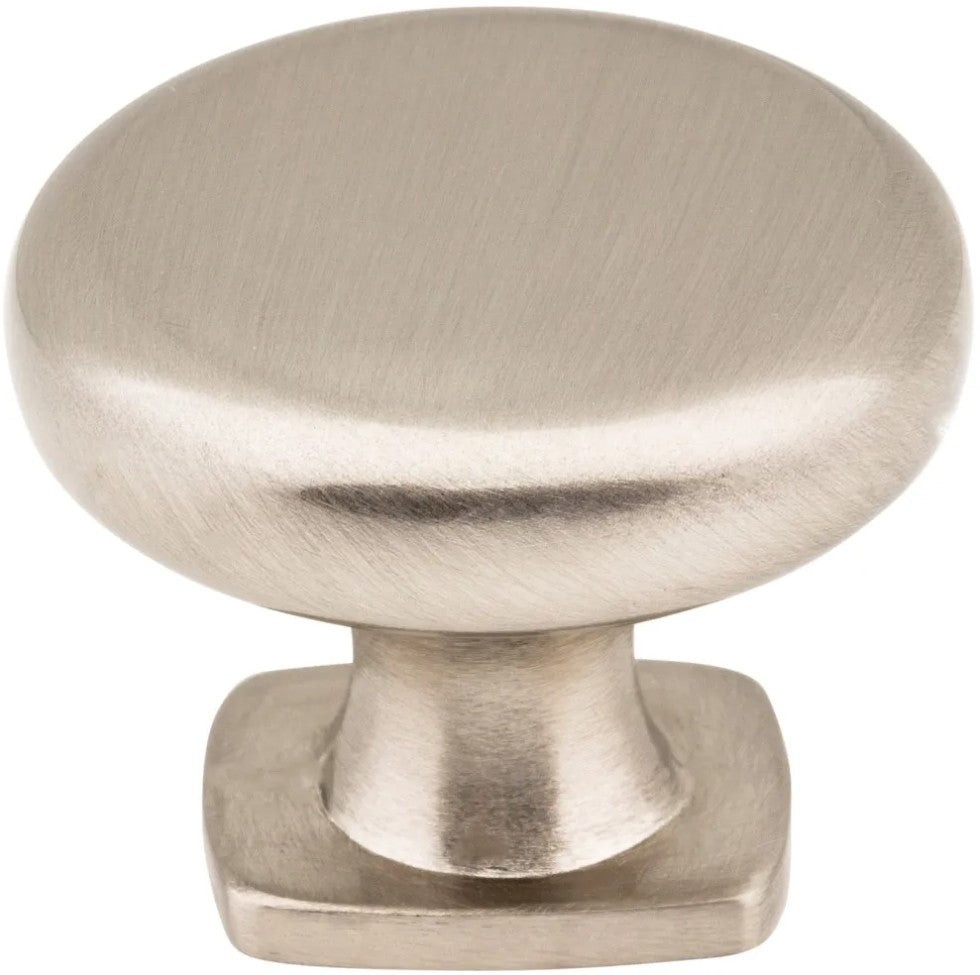
1-3/8" Diameter Belcastel 1 Cabinet Knob MO6303SN
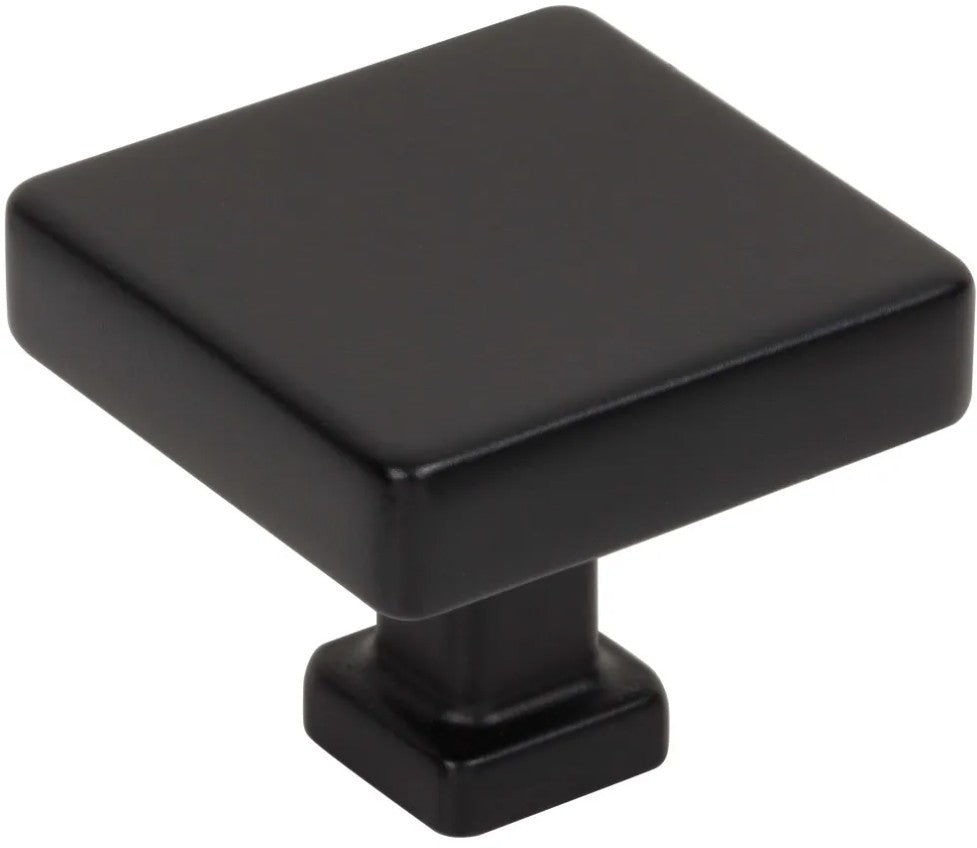
Matte Black Square Nash Cabinet Knob 229MB
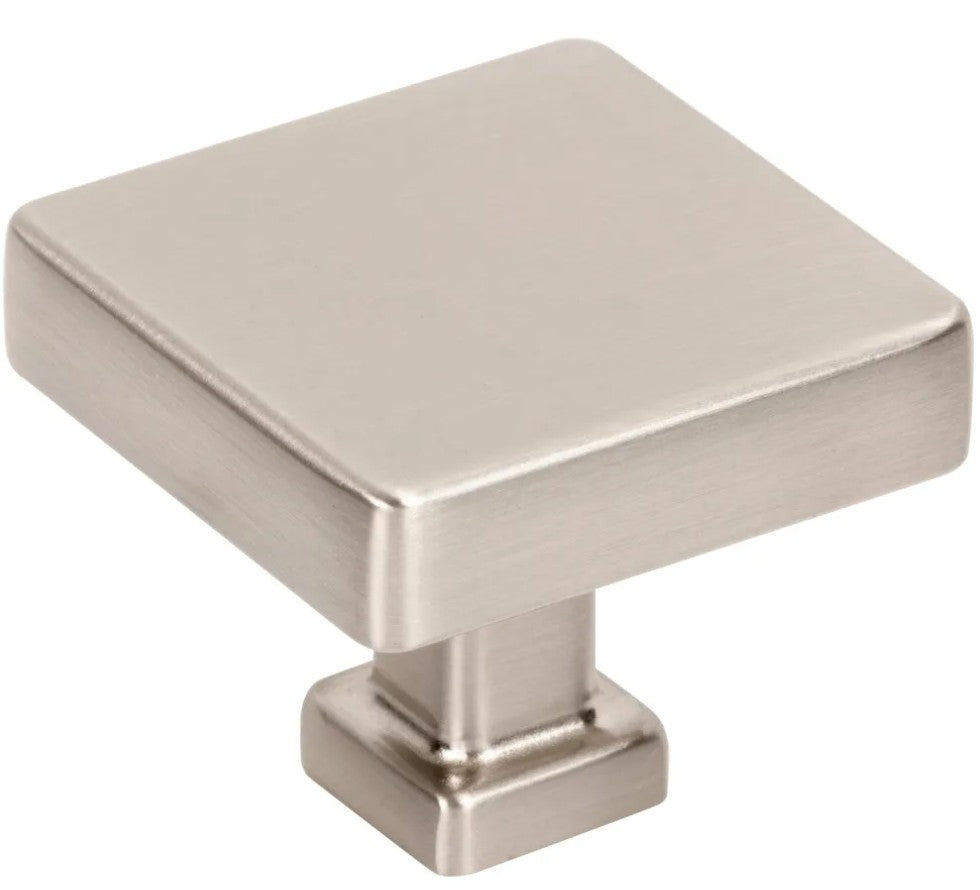
Satin Nickel Square Nash Cabinet Knob Part 229-SN Tile Choices

How to Choose the Right Cabinet Knob for Your Project

The selection process for cabinet knobs comes down to four decisions made in order: door style, knob profile, finish, and size. Work through them sequentially and the right product becomes clear without second-guessing.

Start with your cabinet door style. Flat-panel and slab doors suit round, minimal knobs, simple sphere shapes, slightly domed round profiles, or clean square knobs that echo the door's own geometry. Shaker doors are the most versatile and accept everything from simple rounds to more detailed oval or T-bar knobs. Raised-panel and ornate doors look most resolved with knobs that have some architectural presence — carved detail, curved feet, or a shaped profile that mirrors the door's own relief.

Once you have a profile direction, choose your finish based on the tile and fixture palette in the room. The one-third rule that applies to pulls does not apply to knobs, knob sizing is simpler. Most standard kitchen and bathroom cabinet doors suit a knob in the 1 inch to 1 1/4 inch diameter range. Larger statement knobs in the 1 1/2 inch range suit furniture-scale cabinetry or oversized cabinet doors where a smaller knob would look undersized. Position the knob one to two inches from the corner of the door on the opening side, upper cabinet doors get the knob near the bottom; lower cabinet doors get it near the top.

Coordinating Knobs With the Rest of Your Hardware

Cabinet knobs work best when they are chosen from the same collection as any pulls or bar pulls used on drawers in the same room. Jeffrey Alexander's collection-based system is designed for exactly this: the Sutton knob coordinates with the Sutton pull; the Belcastel 1 knob pairs with the Belcastel 1 cabinet pull; the Alvar knob matches the Alvar bar pull. Staying within a collection guarantees that the design language and finish are identical across both hardware types, the knobs and pulls will look as if they were always meant to be together, because they were.

If you are outfitting an entire kitchen, the most efficient approach is to identify one or two collections in your target finish, confirm those collections offer both knobs and pulls in the sizes you need, and order from that shortlist. Browse the full Jeffrey Alexander collection to see which collections include the broadest range of coordinating hardware types, or shop by hardware type directly: cabinet pulls, bar pulls, and appliance pulls are each available in their own dedicated collection pages.

Knobs in the Bathroom: Vanity Hardware Done Right

Cabinet knobs are as important in a bathroom as they are in a kitchen, and in the smaller footprint of a vanity, proportion and finish are even more visible. A single-door vanity cabinet with a mismatched or poorly sized knob reads immediately as an oversight. The right knob, in the right finish, in the right size for the vanity door width, looks as if the cabinetry and the hardware were specified together from the start.

For bathroom vanity hardware, the finish coordination logic is the same as in the kitchen: match the hardware finish to your faucet finish or stay within the same tonal family. Warm tile palettes in the bathroom — travertine, warm ceramic, beige stone, cream subway, suit Brushed Gold, Satin Bronze, or Brushed Oil Rubbed Bronze knobs. Cool and neutral bathroom tile palettes — white porcelain, gray ceramic, glass tile, suit Polished Chrome, Satin Nickel, or Matte Black. The full coordination guide is available in the cohesive kitchen and bathroom design guide for anyone still working through the full palette decision.

Hardware Buying Guides

Still working through the finish or hardware type decision? These guides answer the questions we hear most often before a hardware purchase:

Browse Related Hardware Collections

  • Jeffrey Alexander Cabinet Hardware — the full collection including knobs, pulls, bar pulls, handle pulls, and appliance hardware
  • Cabinet Pulls — two-point drawer and door hardware in every Jeffrey Alexander collection and finish
  • Bar Pulls — clean, straight profiles for modern and contemporary cabinetry
  • Kitchen Backsplash Tiles — where hardware finish and tile palette interact most visibly
  • Bathroom Tiles — vanity, shower, and floor tile to coordinate with your hardware selection

Questions about a specific collection, finish, or whether a knob will work with your existing hardware holes? Reach the Tile Choices team at sales@tilechoices.com or +1 614-515-7816. We are a family-owned business and we are here to help you get it right.

Frequently Asked Questions?

Most kitchen and bathroom cabinet doors suit a knob in the 1 inch to 1 1/4 inch diameter range. This is the standard size across the majority of Jeffrey Alexander knob collections and it works proportionally on standard 12-to-18-inch wide cabinet doors without looking oversized or too small. Larger knobs in the 1 1/2 inch range are available for furniture-scale cabinetry, oversized pantry doors, or any application where the door is wide enough that a standard knob would look undersized against the door's visual weight. When in doubt, cut a circle from paper in your target diameter and tape it to the door in the position it would be installed, this quick visual test tells you more than any size chart. As a general rule, a knob that looks slightly larger than you expect in isolation usually looks exactly right once it is on the door and you are standing back to see the full cabinet.

The standard placement for cabinet knobs is one to two inches from the corner of the door on the opening side, the side opposite the hinge. For upper cabinet doors, the knob goes near the bottom of the door at that corner position, because that is where a hand naturally reaches to pull a door open from below. For lower cabinet doors, the knob goes near the top of the door at the same corner position, because the hand reaches from above. This placement is consistent across both traditional and contemporary cabinetry and applies regardless of knob size or profile. If you are replacing existing knobs and the old holes are in a different position, you have two options: choose a new knob that covers the existing hole while drilling a new hole in the correct position, or use a knob base or backplate that covers the old hole entirely. Jeffrey Alexander backplates are available in coordinating finishes for exactly this situation.

They do not need to match exactly, but they should belong to the same finish family. The current design standard is to keep all metal finishes in a kitchen or bathroom within the same warm or cool tonal range, warm metals (Brushed Gold, Satin Bronze, Oil Rubbed Bronze) with warm metals; cool metals (Satin Nickel, Polished Chrome, Matte Black) with cool metals, while allowing slight variation in exact shade or reflectivity. A Brushed Gold knob pairs naturally with an unlacquered brass or matte gold faucet without needing to be the identical finish. Where you want a closer match is when the two elements are in close visual proximity, such as a knob on a cabinet door directly adjacent to a visible faucet, because the contrast becomes more obvious the closer the elements are. In those situations, staying in the same Jeffrey Alexander finish across both hardware and selecting a faucet in the same finish family produces the most cohesive result.

Yes, and it is done in traditional and country-style kitchens regularly. A centered knob on a drawer front is a classic look that suits furniture-style cabinetry, unfitted kitchens, and rooms where the design leans decidedly traditional. The practical limitation is grip, a single knob centered on a wide drawer front provides less leverage than a two-point pull, which means heavier drawers can be harder to open cleanly over time. For narrow drawers, spice drawers, small utility drawers, a knob works perfectly well. For wide or heavy kitchen drawers, a cabinet pull or bar pull is the stronger ergonomic choice. Many designers use knobs on doors and pulls on drawers precisely because this combination solves both the visual and practical requirements of the typical kitchen layout.

Both are single-hole hardware pieces that mount with one screw, but they have different profiles and grip characteristics. A knob projects from the surface as a rounded or shaped protrusion that the fingers grip from the side or front. A cup pull, also available in the Jeffrey Alexander line, projects as a curved, bowl-shaped piece that the fingers curl into from below. Cup pulls are traditionally used on drawers in farmhouse, cottage, and transitional kitchens where they provide a deeper, more ergonomic grip than a round knob while maintaining the single-hole installation simplicity. On cabinet doors, knobs are the more common choice. If you are designing a kitchen that leans traditional or farmhouse, using cup pulls on drawers and matching knobs on doors is a classic combination that has remained in continuous use for good reason.

Cabinet knob screws loosen with repeated use because the rotational force of opening and closing a door works against the screw's grip over time. The most reliable solution is to apply a small amount of thread-locking compound, products like Loctite Blue (removable), to the screw threads before installation. This prevents the screw from working loose without making future removal impossible if you ever need to replace the hardware. Tightening knob screws periodically is also an easy maintenance habit, a quarter turn every six months on high-use cabinets is usually enough to keep everything tight. If a screw continues to loosen despite these measures, the hole in the cabinet door may have widened over time; a longer screw or a small amount of wood filler in the hole before re-driving the screw usually solves the problem permanently.

Yes, bathroom vanity cabinetry is one of the most common applications for cabinet knobs, and the Jeffrey Alexander line includes knob sizes and profiles that suit every vanity door style from compact single-sink vanities to large double-sink configurations. The solid zinc construction handles bathroom humidity without the finish degradation that affects lower-quality hardware over time. When selecting knobs for a bathroom vanity, the finish coordination follows the same logic as the kitchen: match the finish family to your faucet and towel bar rather than trying to match the exact finish. If your bathroom tile runs warm, travertine, warm ceramic, cream subway, Brushed Gold or Satin Bronze coordinates naturally. If the tile is cool or neutral, white porcelain, gray stone, glass tile, Satin Nickel, Polished Chrome, or Matte Black is the stronger choice. For the full bathroom hardware and tile coordination logic, the cohesive design guide covers each scenario in detail.

Expertly Curated Tile You Can Trust

Every tile in this collection is carefully selected based on real-world performance, design relevance, and long-term durability. We don’t list thousands of random products — we curate materials that meet professional installation standards.

Our collections are guided by Bruno Mendolini, a tile expert with over 25 years of experience and deep roots in the Italian tile industry.

  • 25+ years tile industry expertise
  • Italian tile sourcing heritage
  • Curated for backsplash, shower, and floor performance
  • Installation-focused product selection

Recently viewed