Metal tiles are among the most low-maintenance backsplash surfaces available, but "low-maintenance" does not mean "no maintenance." The right cleaning approach for your specific metal tile makes a real difference in how the surface looks and performs over years of use. The wrong approach, even with the best intentions, can permanently damage the finish.
The critical point that most generic cleaning guides miss is this: each metal type behaves differently and requires a different care routine. What works beautifully on stainless steel can damage copper. What maintains aluminum will not serve gun metal well. This guide covers each metal tile type individually, from daily cleaning to stain removal, sealing, and the products and habits to avoid absolutely.
The full technical installation and care specifications for all metal tile types are also available in the Tile Choices Metal Tile Installation and Care Guide.
The Golden Rules of Metal Tile Maintenance
Before getting into metal-specific guidance, four universal rules apply to every metal tile type and should be the foundation of your cleaning routine.
Rule 1: Wipe Up Spills Immediately
Metal tile surfaces are non-porous, which means spills sit on the surface rather than absorbing, but prolonged contact with acidic foods (tomatoes, citrus, vinegar-based dressings), oils, and hard water can still affect the finish over time. Wiping up spills as they happen is far easier than dealing with dried, baked-on residue later and protects the surface from unnecessary chemical exposure.
Rule 2: Always Dry After Cleaning
Water spots and streaking are the most common issue with metal tile backsplashes, and they are entirely preventable. After any cleaning, whether a quick wipe or a thorough scrub, dry the surface completely with a clean, dry microfiber cloth. This applies to all metal types but is especially critical for stainless steel and copper, where mineral deposits from water can cloud the surface over time.
Rule 3: Never Use Abrasives
Abrasive scouring pads, steel wool, metal brushes, and abrasive cleaning powders will scratch metal tile surfaces, and those scratches are permanent. This rule is absolute across all metal types. Always use soft microfiber cloths, soft sponges, or lint-free cloths for all metal tile cleaning.
Rule 4: Use the Right Grout, and Keep It Clean Too
The grout joints in a metal tile installation should always be filled with epoxy grout or unsanded grout. Sanded grout contains abrasive particles that scratch metal surfaces during installation and cleaning. Epoxy grout is non-porous and requires no periodic sealing, making it the only choice that fully matches the low-maintenance quality of the tile itself. Keep grout joints clean with a soft cloth, if grout lines require scrubbing, use a soft nylon-bristle brush, never a metal-bristle brush.
How to Clean Stainless Steel Tiles
Stainless steel tiles are the most widely used metal tile in kitchen backsplash applications and are known for their hygienic, easy-clean surface. They do require specific care to maintain their appearance, particularly around the direction of cleaning and the products used. For design ideas, layout options, and installation tips specific to stainless steel tile, see our dedicated Stainless Steel Tile Backsplash guide.
Everyday Cleaning
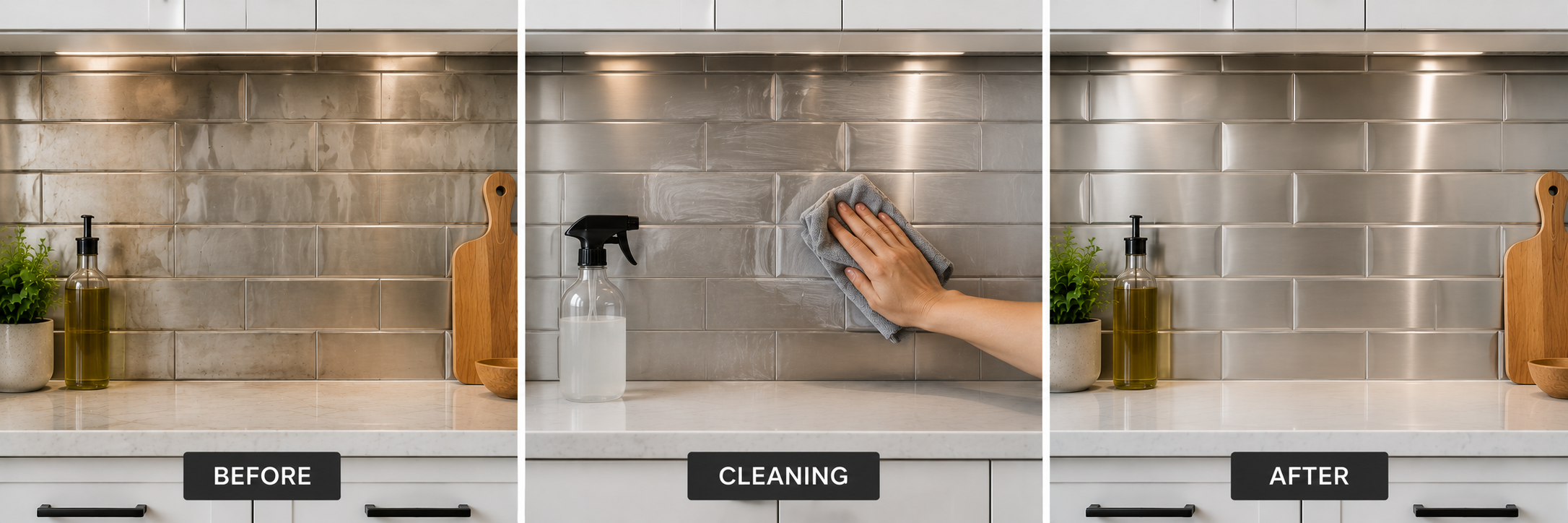
For routine daily or weekly cleaning, use a dedicated stainless steel cleaner applied with a dry, lint-free microfiber cloth. Always wipe in the direction of the grain, the directional texture visible in the brushed finish. Wiping against the grain creates fine, visible scratches that accumulate over time and dull the surface. Rinse with clean warm water using a damp cloth, then dry immediately and completely with a clean dry cloth.
For lightly soiled surfaces, warm water with a small amount of mild dish soap and a soft cloth works well. Rinse and dry thoroughly after, never leave stainless steel surfaces wet.
Removing Hard Water Deposits
Hard water staining on stainless steel appears as a milky, cloudy film and is one of the most common issues with kitchen backsplash tiles near the sink. The remedy is straightforward: mix baking soda with enough water to form a soft paste, apply it to the affected area with a soft cloth, and rub gently in the direction of the grain. Leave it for a few minutes, then rinse thoroughly with warm water and dry completely. Repeat if necessary for heavier deposits.
Do not use white vinegar, citric acid-based descalers, or lemon juice on stainless steel tiles. Despite being recommended for stainless steel appliances in some guides, these acidic solutions can damage the chromium oxide layer that gives stainless steel its corrosion resistance, causing long-term discoloration and increased susceptibility to rusting.
Removing Grease
For fresh grease: a soft microfiber cloth with warm water and a small amount of mild dish soap removes most kitchen grease promptly. For dried or baked-on grease behind a cooktop: apply a slightly more concentrated dish soap solution, let it sit for a few minutes to soften the residue, then wipe gently with the grain, rinse, and dry.
Products to Avoid on Stainless Steel Tile
Never use bleach, chloride-based cleaners, oven cleaners, or any product containing hydrochloric acid on stainless steel tile. These damage the protective chromium oxide layer and can cause pitting and permanent corrosion. Avoid steel wool, metal scourers, and abrasive cleaning pads. Do not use oil-based polishes, as these can attract grease and create a sticky residue over time in kitchen environments.
How to Clean Copper and Antique Copper Tiles
Antique copper tiles require a slightly different approach depending on whether they are sealed and whether you want to preserve the existing patina or maintain a brighter finish. Understanding which situation applies to your installation is the starting point for proper copper tile care.
Sealed Copper Tiles: Everyday Cleaning
Sealed copper tiles, including those with an applied clear coat, clean best with mild dish soap and warm water. Apply with a soft microfiber cloth, wipe gently, rinse thoroughly with clean water, and dry immediately. Never use a dedicated copper cleaner on sealed or clear-coated copper tiles, as copper cleaners strip the protective coating and expose the metal surface to oxidation. If in doubt about whether your tiles are sealed, treat them as if they are and use mild soap and water only.
Unsealed Copper Tiles: Maintaining Natural Patina vs. Original Shine
Unsealed copper tiles will naturally darken and develop a patina over time as the metal reacts with air and moisture. If you want to preserve this natural aging process, clean regularly with mild soap and water and enjoy the evolving character of the surface, no further intervention is needed.
If you prefer to maintain a brighter, closer-to-original copper finish, use a copper-specific cleaner applied with a soft cloth. After cleaning, seal the surface with a solvent-based sealer to slow future oxidation. Reapply sealer periodically as the manufacturer directs.
Sealing Copper Tiles
For any copper or iron-based metal tile where you want to prevent oxidation and patina development, sealing is essential. Apply a quality solvent-based sealer by spray or brush before installation, ensuring every part of every tile surface is covered, any unsealed spot will oxidize independently, creating an uneven, patchy appearance. Apply the sealer in a well-ventilated area and allow it to dry completely before grout installation.
Products to Avoid on Copper Tile
Avoid bleach, abrasive cleaners, and any acid-based products. On clear-coated antique copper tiles specifically, avoid copper cleaners, they are designed to remove the patina layer and will strip any clear coat protection. Keep copper tiles away from standing water wherever possible, and always dry the surface after cleaning.
How to Clean Aluminum Tiles
Aluminum tiles are naturally corrosion-resistant, making them one of the easier metal tile types to maintain. Their resistance to rust and oxidation means they do not require sealing in most applications, and their lightweight nature makes them a practical choice for large-area installations.
Everyday Cleaning
Warm water with a mild dish soap and a soft microfiber cloth handles everyday cleaning effectively for aluminum tiles. Wipe gently, rinse thoroughly, and dry completely. Aluminum's corrosion resistance makes it more tolerant of moisture than copper or iron tiles, but drying after cleaning is still recommended to prevent any mineral deposits from water hardness building up over time.
Removing Stains and Oxidation
If aluminum tiles develop a white, powdery residue, a sign of surface oxidation from prolonged moisture exposure, a solution of mild dish soap and warm water with a soft cloth is usually sufficient. For more stubborn oxidation, a paste of cream of tartar and water applied with a soft cloth, gently rubbed, rinsed, and dried works well. Avoid harsh chemical cleaners and highly alkaline products, which can react with aluminum and cause discoloration.
Products to Avoid on Aluminum Tile
Avoid strongly alkaline cleaners, bleach, and any products designed for other metal types (copper cleaners or dedicated stainless steel polishes). Abrasive scouring pads and metal brushes will scratch aluminum's softer surface. Aluminum is more susceptible to surface scratching than stainless steel, so the soft-cloth rule is especially important here.
How to Clean Brushed Gun Metal Tiles
Brushed gun metal tiles are valued for their dark, smoky tone and refined brushed texture. Maintaining the integrity of that distinctive finish requires the same fundamental approach as other metal tiles, with a few specific considerations.
Everyday Cleaning
Clean brushed gun metal tiles with warm water, mild dish soap, and a soft microfiber cloth. Wipe gently in the direction of the brushed grain texture where visible. Rinse thoroughly with clean water and dry immediately with a clean cloth. The dark finish of gun metal tiles can show water spots clearly against their deep tone, making thorough drying after every cleaning especially important.
Removing Grease and Residue
For kitchen backsplash applications behind a cooktop, grease splatters on gun metal tile can be harder to see against the dark finish but should still be cleaned promptly to prevent baked-on buildup. Warm water with a mild dish soap applied with a soft cloth handles most kitchen grease effectively. For stubborn residue, apply the soapy solution, let it sit for a few minutes, then wipe gently, rinse, and dry. Avoid harsh degreasers that could affect the dark surface finish.
Products to Avoid on Gun Metal Tile
Avoid bleach, acidic cleaners, and abrasive products. The brushed finish of gun metal tile is particularly sensitive to abrasive damage, even a brief contact with a rough sponge can leave visible marks on the dark surface. Stick exclusively to soft microfiber cloths. Never use products designed for polished stainless steel, as these can alter the dark finish of gun metal tile.
Room-by-Room Maintenance Summary
Kitchen Backsplash
Kitchen backsplash metal tiles deal with heat, grease, and cooking moisture on a daily basis. Wipe up grease and food splatters promptly after cooking. Maintain a regular weekly cleaning routine using the metal-appropriate method outlined above. Keep the area behind the cooktop particularly clean, as heat can bake grease residue onto the surface over time, making it progressively more difficult to remove. Always maintain the minimum recommended clearance from burners, at least 4.5 inches, as specified in the Metal Tile Installation and Care Guide.
Fireplace Surrounds
Metal tile on fireplace surrounds accumulates soot and smoke residue over time. For light dust and soot, a dry microfiber cloth wipe is sufficient. For heavier residue, a mild dish soap solution applied with a soft cloth, gently worked across the tile, rinsed, and dried handles most fireplace cleaning needs. Never use harsh chemical cleaners near an open fireplace, and ensure the fireplace is completely cool before cleaning the surrounding tile. For design inspiration using metal tile on fireplaces, see our guide on 7 Stylish Fireplace Backsplash Ideas for Homeowners.
Bathroom and Vanity Backsplash
Metal tiles in bathroom applications, particularly near sinks, encounter soap residue and hard water deposits regularly. Dry the tiles after every use where possible to prevent mineral buildup. A weekly wipe-down with the appropriate mild cleaning solution keeps the surface in excellent condition. For any bathroom metal tile application, check that your specific metal type is suitable for the moisture level of the location, see the full suitability guidance in our metal tiles collection.
Accent Walls
Metal tile accent walls in living spaces, dining rooms, or entryways encounter far less aggressive conditions than kitchen or bathroom applications. Dusting with a soft dry cloth regularly and an occasional gentle wipe with a mild soap solution is all that is typically needed to keep accent wall metal tiles looking excellent long-term.
Long-Term Metal Tile Care: What to Expect
With proper care, metal tiles maintain their appearance and performance for decades. The key long-term maintenance considerations by metal type are: reapplying sealer to copper and iron-based tiles as needed, inspecting grout joints annually and regrouting if needed (though epoxy grout rarely requires this), and addressing any surface scratches on stainless steel by lightly buffing with the grain using a dry cloth for minor marks.
It is worth remembering that some surface evolution in metal tile is natural and not a sign of failure. Brushed stainless steel develops a lived-in character over time. Copper patina, if unsealed, deepens and becomes more distinctive with age. These qualities are part of what makes genuine metal tile a rewarding long-term design investment, the material ages in a way that most manufactured products cannot.
For the complete technical specification on installation, adhesives, grout, sealing, and per-metal-type care requirements, the Metal Tile Installation and Care Guide is the definitive reference. Our blog post on Stylish Metal Tiles for Modern Home Design offers broader inspiration and design context for the full metal tile range.
Shop Metal Tiles at Tile Choices
Every metal tile in the Tile Choices collection is curated by Bruno Mendolini, a tile expert with over 25 years of experience, for real-world performance, design quality, and long-term durability. Browse the full range and order samples with free shipping before you commit to your full purchase.
- All Metal Tiles
- Stainless Steel Tiles — Design ideas & installation guide →
- Antique Copper Tiles
- Aluminum Tiles
- Brushed Gun Metal Tiles
Still deciding between metal tile and other backsplash materials? Our in-depth comparison covers metal tile, porcelain, and glass side by side: Metal Tile vs. Porcelain vs. Glass: Which Backsplash Is Right for You?