

Few backsplash materials carry the same combination of visual impact and real-world performance as stainless steel tile. Long a staple of professional and commercial kitchens, stainless steel tile backsplashes have moved firmly into residential design, and for good reason. They are heat-resistant, non-porous, effortless to clean, and deliver a sleek, contemporary look that coordinates with almost any cabinetry, countertop, or fixture choice.
Whether you are designing a modern chef's kitchen, updating a bar wall, or adding a bold accent to a contemporary space, this guide covers everything you need to choose, design, and install a stainless steel tile backsplash that looks exceptional and performs for decades.
Why Choose a Stainless Steel Tile Backsplash
Stainless steel tiles earn their place in kitchens for reasons that go well beyond aesthetics. Here is what makes them a standout choice compared to ceramic, porcelain, and glass alternatives.
Heat and Stain Resistance
Stainless steel is inherently heat-resistant, making it one of the safest materials to install directly behind a cooktop. Unlike ceramic or glass tile, which can crack under severe thermal stress, stainless steel tiles handle the radiant heat of professional-grade ranges without any compromise in appearance or performance. They are also non-porous, meaning grease, oil, and food splatters sit on the surface rather than absorbing into the material, making cleanup fast and thorough.
Hygienic and Easy to Clean
Stainless steel is the material of choice in commercial kitchens for a reason: it does not harbor bacteria or mold. Its non-porous surface can be completely sanitized with a single wipe, and it requires no periodic sealing or specialty maintenance products for the tile face itself. A soft microfiber cloth and a stainless steel cleaner, or simply warm water, is all you need for everyday care.
Light-Amplifying Design Impact
The reflective quality of stainless steel tile does something few other backsplash materials can: it actively makes your kitchen feel larger and brighter by bouncing light around the room. In smaller kitchens or spaces with limited natural light, a stainless steel tile backsplash can meaningfully improve the feel of the entire room, particularly when paired with light cabinetry and under-cabinet lighting.
Compatibility With Every Kitchen Style
Stainless steel tile is not a one-style material. It works in modern and minimalist kitchens, industrial loft-style spaces, transitional kitchens that mix contemporary and traditional elements, and even in commercial and restaurant-grade residential kitchens. Its neutral, silvery tone coordinates with virtually every cabinet color and countertop material on the market.
Stainless Steel Tile Finishes: Brushed vs. Polished
Understanding the difference between the two primary stainless steel finishes helps you choose the right look for your specific space and lifestyle.
Brushed Stainless Steel Tile
Brushed stainless steel tile has a directional grain finish that reduces surface reflectivity, producing a softer, more understated metallic look. The texture of a brushed finish also has a practical advantage: it is more forgiving of fingerprints, smudges, and light scratches than polished stainless, making it the most popular choice for residential kitchens where the backsplash gets daily use near a cooktop or sink. Brushed stainless pairs particularly well with matte cabinet hardware and natural materials like wood and stone.
Polished Stainless Steel Tile
Polished stainless steel tile delivers a mirror-like, highly reflective surface that maximizes the light-amplifying quality of the material. It creates dramatic visual impact and looks exceptionally sharp in contemporary and minimalist kitchen designs. The tradeoff is that polished stainless shows fingerprints and water spots more readily, requiring more frequent wiping in high-traffic cooking environments. Polished stainless works particularly well in low-traffic accent applications, bar walls, feature installations, or backsplashes in kitchens used more for entertaining than heavy daily cooking.
Stainless Steel Tile Backsplash Design Ideas
The format and layout of your stainless steel tile is as important as the finish. Here are the most popular approaches, each producing a distinct aesthetic result.
Subway Tile Layout
Stainless steel subway tiles are one of the most timeless and versatile options available. Laid in a classic horizontal offset pattern, they create a clean, structured backdrop that feels both modern and enduring. Stacked vertically in a straight bond pattern, the same tiles take on a more graphic, contemporary quality. Stainless steel subway tiles look exceptional behind a professional range, where their heat resistance and clean lines complement the industrial quality of high-end cooking equipment.
Mosaic Format
Stainless steel mosaic tiles, typically supplied on mesh sheets, add texture and visual complexity that solid-format tiles cannot match. Small-format mosaics create a shimmering, dynamic surface that changes appearance with different light sources and angles throughout the day. Stainless steel mosaic backsplashes work beautifully across the full wall from counter to cabinet, and the mesh-backed format makes installation more manageable for large areas. They also mix particularly well with glass and stone accent tiles for a custom, layered look.
Linear and Herringbone Patterns
Linear metal tile strips and thin pencil-format stainless steel tiles create a sleek, horizontal flow that makes kitchen walls feel elongated and refined. Arranged in a herringbone pattern, the same tiles add dynamic movement and visual energy, a popular choice for statement backsplash installations behind a focal-point range or kitchen island. Herringbone stainless steel backsplashes have become a signature look in contemporary kitchen design, offering the structure of a classic pattern in the most modern of materials.
Mixed-Material Designs
One of the most effective ways to use stainless steel tile is in combination with other materials. A stainless steel accent strip or liner tile integrated into a larger porcelain or natural stone backsplash adds a metallic detail that elevates the entire installation without the full commitment of an all-metal surface. Stainless steel paired with glass mosaic tile creates a sophisticated interplay of reflective surfaces. Mixed with natural stone or wood-look porcelain, stainless steel tile adds industrial edge to an otherwise organic palette.
For guidance on combining materials and patterns effectively, see our blog post on Master Mixing Tile Patterns for Stunning Spaces.
What Pairs Best With a Stainless Steel Backsplash
Getting the most out of a stainless steel tile backsplash comes down to how you pair it with the other elements in your kitchen.
Cabinet Colors
White and cream cabinetry creates a clean, high-contrast pairing that is bright and contemporary. Dark cabinetry, navy, charcoal, or black, produces a bold, dramatic result that feels luxurious and intentional. Medium wood tones add warmth that beautifully counterbalances the cool silvery quality of the steel. Gray cabinetry in any shade coordinates naturally, creating a tonal, monochromatic palette that feels cohesive and modern.
Countertops
Quartz countertops in white, gray, or concrete tones pair seamlessly with stainless steel tile. Natural stone, particularly white or gray marble, quartzite, and granite, creates an elevated, material-rich combination. Concrete countertops lean into the industrial quality of stainless steel for a full industrial-modern aesthetic. Dark countertops in black or near-black tones create maximum contrast that is dramatic and intentional.
Fixtures and Hardware
Stainless steel tile backsplashes coordinate most naturally with stainless steel and brushed nickel fixtures and hardware, creating a cohesive metallic palette throughout the kitchen. Matte black fixtures create a strong, modern contrast that is extremely popular in contemporary kitchen design. Brushed gold or brass hardware adds warmth and a touch of luxury that contrasts beautifully with the cool steel surface.
Beyond the Kitchen: Other Applications for Stainless Steel Tile
While the kitchen backsplash is the most common application, stainless steel tile performs beautifully in several other locations throughout the home.
Bar and Beverage Station Walls
A stainless steel tile backsplash behind a home bar or beverage station creates an immediate professional, hospitality-quality finish. The material's resistance to moisture and ease of cleaning makes it perfectly suited to bar environments, and its sleek look elevates any bar setup from functional to genuinely impressive.
Fireplace Surrounds
Stainless steel tile handles the radiant heat of a residential fireplace without issue, making it an excellent choice for fireplace surrounds and hearth applications. The reflective quality of polished stainless steel amplifies the warmth and glow of a fire, creating a dramatic focal point in any living room. For design ideas across metal tile types for fireplaces, see our guide on 7 Stylish Fireplace Backsplash Ideas for Homeowners.
Bathroom Vanity Accents
Used as a vanity backsplash or accent strip in a bathroom, stainless steel tile adds modern sophistication without overwhelming the space. Paired with white subway tile or large-format porcelain for the main wall, a stainless steel accent creates a custom, designer-quality detail at a fraction of the cost of a full metal installation.
Installation Tips for Stainless Steel Tile
Stainless steel tile installs similarly to ceramic and porcelain tile, but several important differences apply that directly affect the quality and longevity of the finished installation.
Cutting
Use a liquid-cooled tile saw or band saw for cutting stainless steel tiles. A standard dry-cut tile saw can damage the metal surface or leave rough, unsafe edges. Avoid miter cuts where possible, they expose raw metal edges that can be sharp and difficult to finish cleanly. Always wear appropriate eye protection when cutting or grinding metal tile.
Adhesive and Setting Materials
Use a quality polymer-modified thinset appropriate for metal tile applications. Ensure the substrate is clean, flat, and free of dust or grease before beginning installation. Many stainless steel tiles are built with a metal surface bonded over a ceramic body, this construction makes them less brittle and more forgiving than solid metal tile during handling and installation.
Grout Selection
This is critical: always use epoxy grout or unsanded grout with stainless steel tiles. Standard sanded grout contains abrasive particles that will permanently scratch the metal surface during application. Epoxy grout is non-porous, requires no sealing, and is highly stain-resistant, it is the professional's choice for metal tile installations of all types.
Expansion Joints
Apply flexible silicone caulk (not cement grout) at all perimeters, inside corners, and any location where tile meets a restraining surface such as a cabinet, wall, countertop, or ceiling. Metal tile expands and contracts with temperature changes more than ceramic tile does, caulk at these joints prevents grout cracking over time and is an essential step that many DIY installations skip to their detriment.
For complete installation and long-term maintenance guidance, visit the Tile Choices Metal Tile Installation and Care Guide. If you are weighing DIY versus professional installation for your project, our post on DIY vs. Professional Backsplash Installation walks through that decision in detail.
How to Clean Stainless Steel Tile
Stainless steel tile is one of the lowest-maintenance backsplash materials available, but a few cleaning rules matter significantly for keeping the surface looking its best long-term.
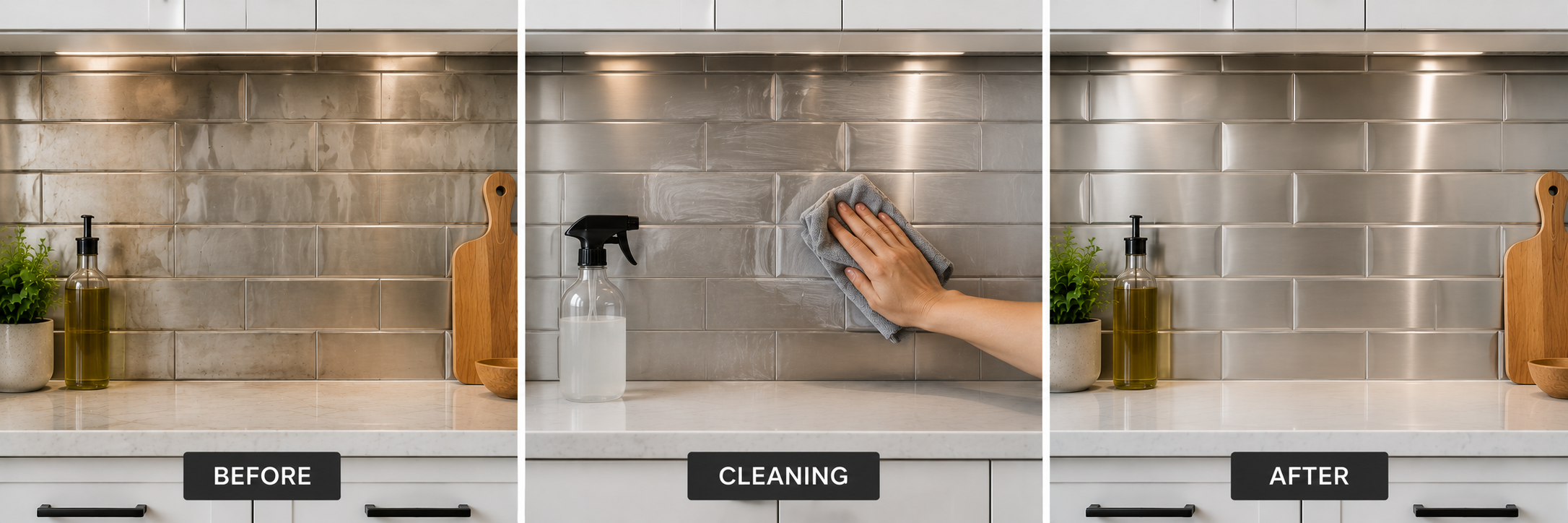
For everyday cleaning, use a lint-free microfiber cloth with a dedicated stainless steel cleaner. Always wipe in the direction of the grain, wiping against the grain can create fine scratches that become visible over time. Rinse thoroughly and dry completely after cleaning to prevent water spots and streaking. For hard-water deposits, a paste of baking soda and water applied with a soft cloth and then rinsed and dried works effectively. Never use bleach, chloride-based cleaners, steel wool, or abrasive scouring pads, these damage the chromium oxide layer that gives stainless steel its corrosion resistance and leaves the surface vulnerable to pitting and rust. For a full room-by-room cleaning routine covering every metal type, see our dedicated guide: How to Clean Metal Tiles: A Complete Maintenance Guide by Metal Type.
Explore the Full Stainless Steel Tile Collection
Every stainless steel tile at Tile Choices is individually selected for quality, finish consistency, and professional installation performance. Browse brushed and polished finishes across subway, mosaic, linear, and geometric formats to find the right option for your project.
Looking for a different metal tile finish? Explore the full metal tiles collection, or browse related finishes: brushed gun metal tiles, antique copper tiles, and aluminum tiles.
Still deciding between materials? Our side-by-side breakdown covers everything you need to know: Metal Tile vs. Porcelain vs. Glass: Which Backsplash Is Right for You?