

White tile is one of the easiest surfaces in a home to clean, the non-porous glazed surface of ceramic and porcelain resists staining and wipes down with minimal effort. What requires more attention is the grout. Grout lines are porous, accumulate grime, and, if not properly sealed and maintained, are the primary reason white tile installations look dingy over time.
This guide covers how to clean white tile in every common application: bathroom walls, bathroom floors, kitchen backsplashes, showers, and countertops. We also cover grout care, the right products to use and avoid, and how to maintain your white tile installation so it stays bright for years.
The Basics: Why White Tile Gets Dirty
Before cleaning, it helps to understand what you are actually cleaning. White tile collects different types of residue depending on where it is installed:
- Bathrooms: Soap scum, hard water mineral deposits, toothpaste splatter, and general dust and debris.
- Showers: All of the above, plus body oils and shampoo/conditioner residue. Shower environments also create ideal conditions for mold and mildew growth in grout lines.
- Kitchen backsplashes: Cooking grease, food splatter, and steam residue. The area directly behind the stovetop accumulates the most.
- Floors: Dirt tracked in from outside, cleaning product residue, and in bathrooms, water splatter from the sink and shower.
The tile surface itself is relatively impervious to all of these. The grout, if not sealed, absorbs them.
Daily and Weekly Cleaning: Keeping White Tile Bright
Daily Habits That Make a Big Difference
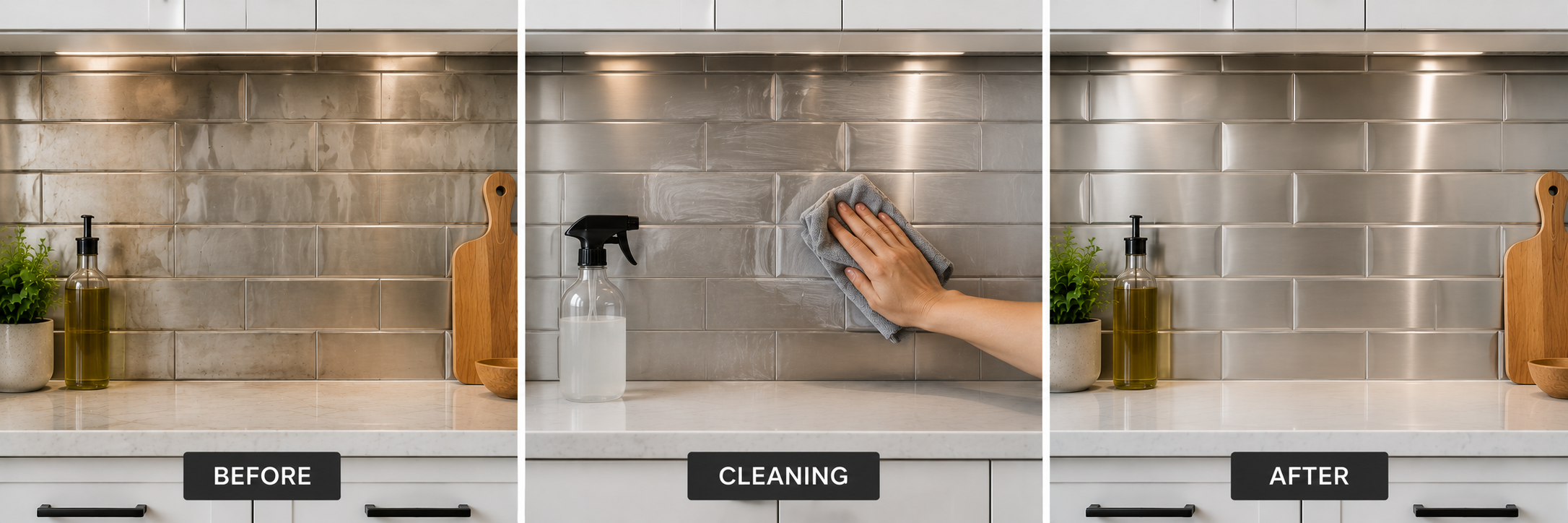
The single most effective thing you can do to keep white shower tile looking clean is to squeegee the walls after every use. A simple 10-second routine of pulling a squeegee down the shower walls removes the vast majority of soap scum and mineral deposit buildup before it can dry and harden. In kitchens, wiping the backsplash with a damp cloth after cooking prevents grease from accumulating.
These habits are not about cleaning, they are about prevention. Preventing buildup is dramatically easier than removing it once it has set.
Weekly Cleaning Routine for White Tile
For a thorough weekly clean, use the following approach for white bathroom tile:
- Spray the tile surface with a pH-neutral tile cleaner or a diluted white vinegar solution (1 part white vinegar to 3 parts water).
- Let it sit for 2 to 3 minutes to loosen soap scum and mineral deposits.
- Wipe down with a microfiber cloth or soft sponge. Do not use abrasive scrubbers — they can dull the tile surface over time.
- For grout lines, use a soft grout brush (an old toothbrush works well) with your cleaning solution.
- Rinse thoroughly with clean water and dry with a clean cloth or squeegee.
Weekly Cleaning for White Kitchen Backsplash Tile
Kitchen grease requires a slightly more aggressive approach than bathroom soap scum. A diluted dish soap solution or a dedicated kitchen tile cleaner works well for regular white kitchen backsplash tile cleaning. For the area directly behind the stove, clean more frequently, ideally after each heavy cooking session. A baking soda paste (baking soda mixed with a small amount of dish soap) is effective for cutting through stubborn grease without damaging the tile or grout.
Deep Cleaning White Tile: Removing Stubborn Stains
Removing Hard Water Stains from White Tile
Hard water mineral deposits, the white, chalky, or rust-colored buildup from calcium and magnesium in tap water, are one of the most common challenges with white shower and bathroom tile. They are best removed with an acidic cleaner:
- White vinegar: Apply undiluted white vinegar directly to the mineral deposits and let it sit for 10 to 15 minutes. The acidity dissolves the calcium carbonate deposits. Scrub gently and rinse thoroughly.
- Commercial lime and scale remover: Products specifically formulated for hard water deposits are very effective. Follow the manufacturer's instructions carefully.
- Lemon juice: A natural acidic alternative to vinegar. Less effective on severe buildup but safe for regular use.
Important: Do not use acidic cleaners on natural stone tile, they can etch the stone surface. The above applies to ceramic and porcelain white tile only.
Removing Soap Scum from White Shower Tile
Soap scum is a combination of soap, body oils, and hard water minerals that bonds to tile surfaces over time. It creates a cloudy, dull film on white tile that diminishes its brightness. To remove it:
- Apply a diluted white vinegar solution or a commercial soap scum remover.
- Let it penetrate for 5 to 10 minutes.
- Scrub with a non-abrasive sponge or microfiber cloth.
- For stubborn buildup, a paste of baking soda and dish soap applied to the surface, left for 10 minutes, then scrubbed and rinsed is very effective.
Removing Grease from White Kitchen Tile
Kitchen grease on white white subway tile or other kitchen tile can become stubborn if left too long. For fresh grease: wipe immediately with a damp cloth and dish soap. For dried or baked-on grease: apply a degreaser or a paste of baking soda and dish soap, let sit for 10 minutes, then scrub gently with a soft brush and rinse.
Cleaning White Tile Grout: The Most Important Step
Grout maintenance is where most white tile cleaning effort should be focused. Light-colored grout in particular shows staining, mold, and discoloration more readily than dark grout, and the state of the grout determines whether a white tile installation looks pristine or dingy.
Regular Grout Cleaning
For routine grout cleaning, a soft grout brush with your regular tile cleaner is sufficient. Work the cleaner into the grout line with the brush, let it sit for a moment, then rinse. For bathroom and shower grout, this should be done weekly.
Deep Grout Cleaning
When grout has become significantly discolored, a stronger approach is needed:
- Baking soda paste: Mix baking soda with water to form a thick paste. Apply to grout lines, let sit for 10 to 15 minutes, then scrub with a grout brush and rinse. Effective for general discoloration and light mold.
- Hydrogen peroxide: A 3% hydrogen peroxide solution (standard drugstore variety) applied to grout lines and left for 10 minutes before scrubbing is effective for mold and mildew staining.
- Oxygen bleach (like OxiClean): Mixed with water and applied to grout lines, oxygen bleach is effective for deep staining without the harsh fumes of chlorine bleach. Let it sit for 15 to 20 minutes and then scrub and rinse thoroughly.
- Commercial grout cleaner: Dedicated grout cleaners from tile supply companies are formulated for maximum effectiveness. Follow the product instructions carefully.
Mold and Mildew in Shower Grout
If mold or mildew has developed in shower grout, address it promptly. A hydrogen peroxide solution or commercial mold-and-mildew grout cleaner is effective for most cases. For severe mold growth, a diluted bleach solution (1 part bleach to 10 parts water) applied to grout lines with a brush, left for 10 minutes, then rinsed thoroughly can eliminate it — but use bleach with caution, ventilate the space well, and never mix bleach with vinegar or other acidic cleaners. For white tile shower care, see our guide to white tile shower ideas and maintenance.
Sealing Grout: The Most Important Maintenance Step
The single most important thing you can do to make white tile grout easier to maintain is to seal it. Grout sealant penetrates the porous grout surface and fills the microscopic voids that absorb stains, moisture, and mold. A properly sealed grout surface repels water and cleaning products instead of absorbing them, making routine cleaning dramatically more effective.
When to Seal Grout
- Immediately after installation, once the grout has fully cured (typically 48 to 72 hours after grouting)
- Annually thereafter in showers and other wet areas
- Every 1 to 2 years in kitchens and dry bathroom areas
- Whenever water stops beading on the grout surface (a sign the sealant has worn off)
How to Apply Grout Sealant
Clean and dry the grout thoroughly before sealing. Apply grout sealant using a small brush, foam applicator, or sealant bottle directly to the grout lines — not the tile surface. Wipe any excess off the tile before it dries. Allow to cure per the product instructions before exposing to moisture.
For premium grout protection, our Starlike EVO epoxy grout does not require sealing — it is inherently stain-resistant and waterproof, making it an excellent choice for shower floors, kitchen backsplashes, and anywhere long-term maintenance is a priority.
Products to Avoid on White Tile
- Abrasive scrubbers: Steel wool, rough scouring pads, and abrasive powder cleaners can scratch and permanently dull the glazed surface of white ceramic and porcelain tile.
- Strong acidic cleaners on colored grout: Vinegar and acidic cleaners used repeatedly can fade colored grout over time.
- Bleach on colored tile: Chlorine bleach can fade or discolor some tile glazes. Use only on white tile and rinse thoroughly.
- Oil-based cleaners: Can leave a residue on tile and grout that attracts dirt.
- Ammonia-based cleaners: Can dull some tile finishes with repeated use.
Understanding PEI Ratings and Cleaning
A tile's PEI rating indicates its durability against wear, and tiles with lower PEI ratings (wall tiles rated PEI 1 or 2) are more susceptible to surface scratching and dulling from abrasive cleaning. For complete information on what PEI ratings mean for your tile, see our guide on PEI rating for tile.
Shop White Tile and Grout at Tile Choices
Maintaining white tile is simple when you start with the right products. Browse our complete white tile collection and our professional-grade grout selection. For help choosing the best grout color, see our dedicated guide. For white tile inspiration in the bathroom or shower, explore our design guides. Call 614-515-7816 for expert advice from our team.