
Most American homeowners spend thousands on kitchen and bathroom renovations, yet fewer than half understand which tile types truly last. Choosing the right ceramic tile with the proper PEI rating can make the difference between a floor that cracks and one that stands up to daily family life. This guide explains why PEI ratings matter for American households and offers practical tips for finding tiles that balance style, durability, and long-term value.
Table of Contents
- What PEI Rating Means For Ceramic Tiles
- Levels Of PEI Rating And Wear Resistance
- PEI Classification For Popular Tile Types
- How PEI Influences Tile Selection Decisions
- Common Mistakes When Using PEI Ratings
Key Takeaways
| Point | Details |
|---|---|
| Understanding PEI Ratings | The PEI rating scale from I to V defines tile durability, helping users select appropriate tiles based on traffic expectations. |
| Selecting for Specific Areas | For residential spaces, choose tiles with PEI II-IV ratings to ensure durability according to foot traffic levels. |
| Tile Types and Durability | Glazed, porcelain, and unglazed tiles have different PEI ratings that indicate their suitable applications and expected wear resistance. |
| Avoiding Common Misconceptions | PEI ratings measure surface wear resistance but do not indicate overall quality; other factors should also be considered in tile selection. |
What PEI Rating Means for Ceramic Tiles
The Porcelain Enamel Institute (PEI) rating serves as a critical measurement standard for determining the durability and wear resistance of ceramic and porcelain tiles. Ceramic tile durability ratings help homeowners understand precisely where and how different tiles can be used in residential and commercial spaces.
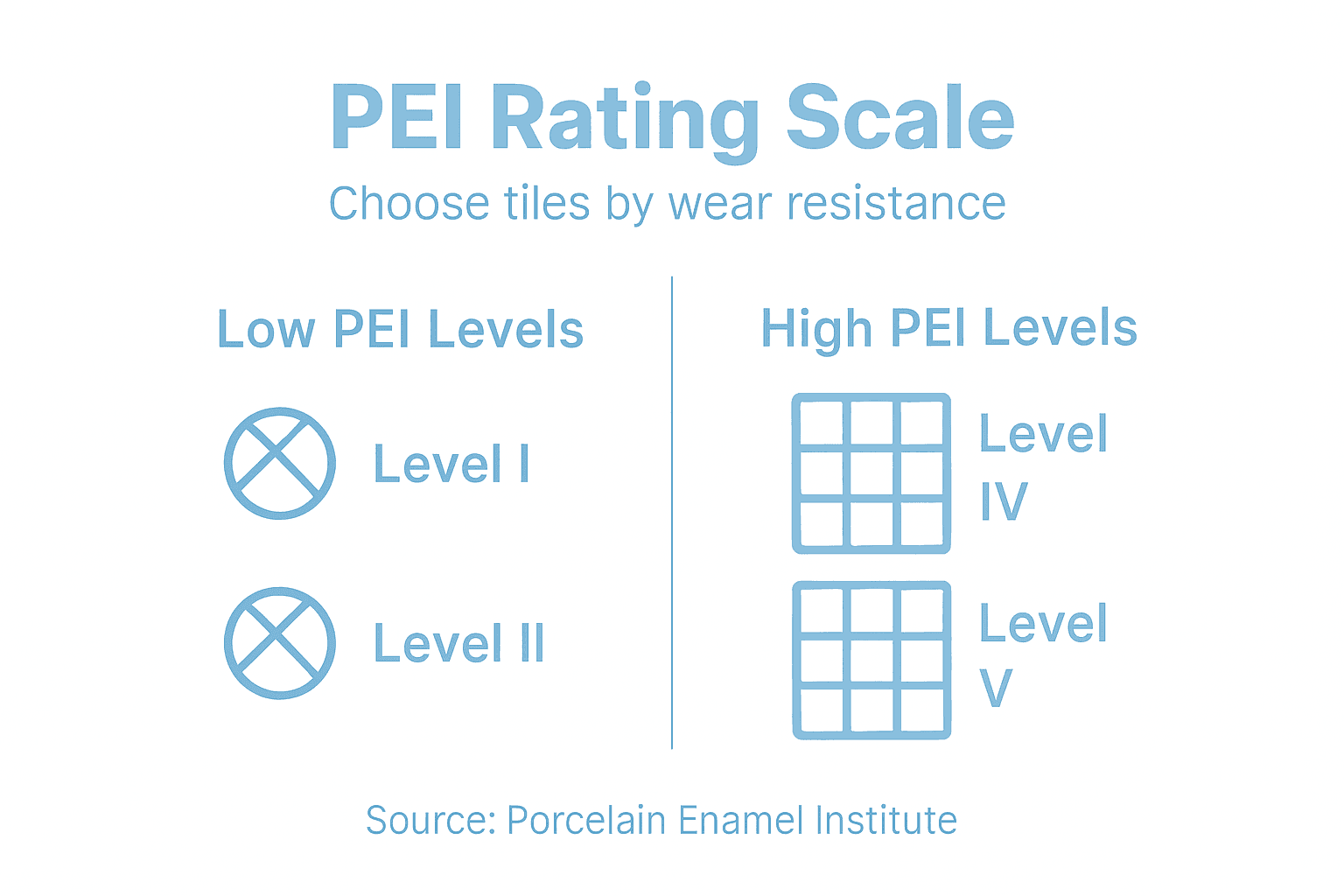
The PEI rating scale ranges from I to V, with each level representing a specific tier of surface durability and recommended usage. Level I tiles are the most delicate, suitable only for wall applications with minimal contact. In contrast, Level V tiles represent the most robust option, capable of withstanding heavy foot traffic in commercial environments like shopping centers, airports, and institutional buildings.
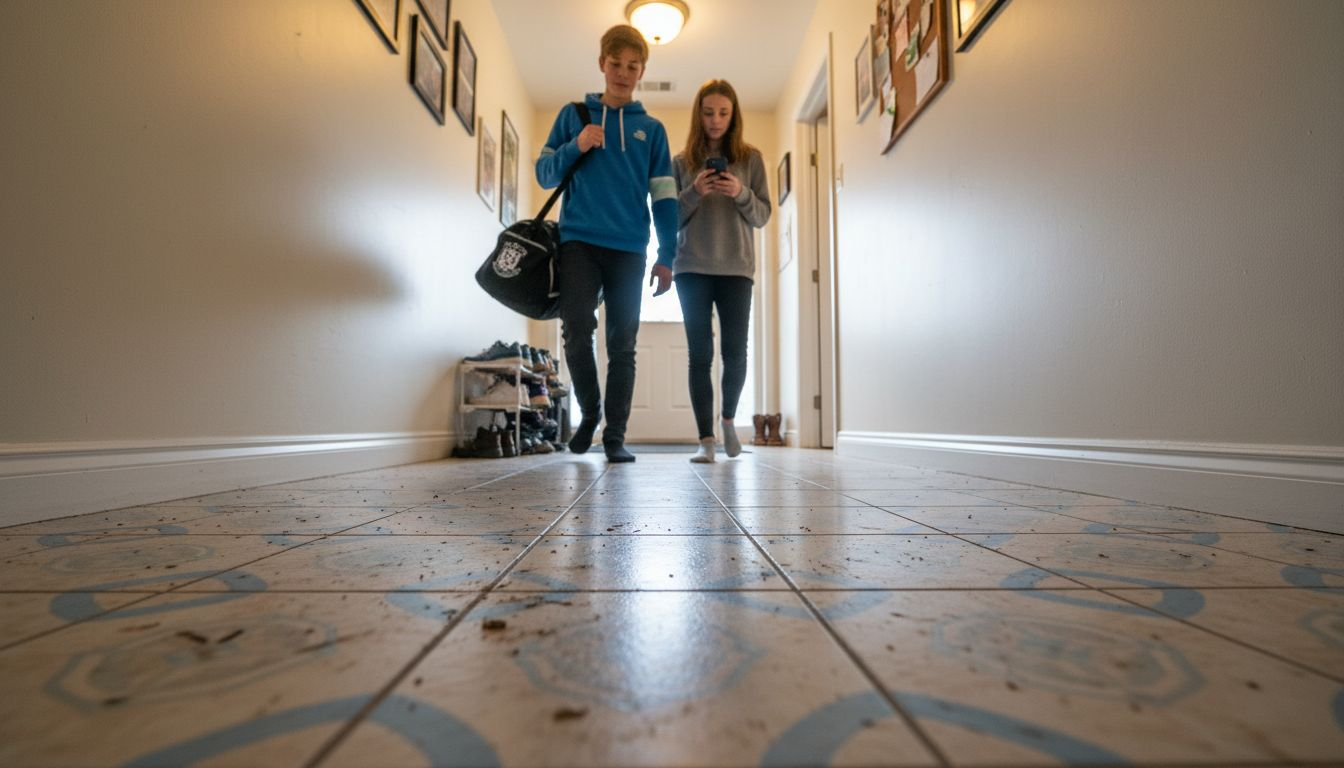
For residential applications, most homeowners typically seek tiles with PEI ratings between II and IV. These ratings provide adequate durability for different home areas. PEI II tiles work well for bathroom walls and low-traffic areas, while PEI III and IV ratings are ideal for kitchen floors, hallways, and living spaces that experience moderate to high daily foot traffic. Understanding these ratings helps prevent premature tile wear and ensures long-lasting, attractive flooring investments.
Pro Tip: Before purchasing ceramic tiles, always match the PEI rating to the specific area’s expected foot traffic and potential wear to maximize durability and aesthetic appeal.
Levels of PEI Rating and Wear Resistance
The Porcelain Enamel Institute (PEI) rating system provides a comprehensive framework for understanding tile durability across five distinct levels, each tailored to specific usage scenarios. Tile wear resistance ratings help homeowners and designers make informed decisions about surface selection based on expected foot traffic and potential abrasion.
-
PEI Level I: Recommended exclusively for wall applications with minimal contact
- Perfect for decorative wall tiles
- Unsuitable for floor surfaces
- Extremely delicate surface finish
-
PEI Level II: Suitable for bathroom walls and areas with light residential use
- Low traffic tolerance
- Best for spaces with minimal foot movement
- Ideal for shower surrounds and accent walls
-
PEI Level III: Designed for moderate residential traffic areas
- Appropriate for kitchen floors
- Handles standard household foot traffic
- Recommended for spaces like dining rooms and hallways
-
PEI Level IV: Engineered for heavy residential and light commercial use
- Withstands significant foot traffic
- Suitable for entryways and high-activity home areas
- Provides enhanced durability for challenging environments
-
PEI Level V: Maximum wear resistance for commercial and institutional spaces
- Handles extreme foot traffic
- Used in shopping centers, airports, and public buildings
- Highest level of surface protection available
Understanding these rating levels allows homeowners to strategically select tiles that match their specific environmental demands. By matching the PEI rating to anticipated wear and tear, consumers can ensure their ceramic tile investments remain visually appealing and structurally sound for years to come.
Here’s a quick reference comparing PEI levels and typical installation environments:
| PEI Level | Recommended Usage Area | Typical Traffic Level | Key Durability Feature |
|---|---|---|---|
| I | Decorative walls | Minimal | Highly delicate |
| II | Shower surrounds | Low | Enhanced surface |
| III | Kitchens, dining rooms | Moderate | Standard household |
| IV | Entryways, hallways | High | Heavy residential |
| V | Airports, shops | Extreme | Maximum wear resistance |
Pro Tip: When selecting ceramic tiles, always consider the specific traffic patterns and potential stress in each area of your home to choose the most appropriate PEI rating.
PEI Classification for Popular Tile Types
Ceramic and porcelain tiles encompass diverse manufacturing techniques that directly impact their ceramic tile standards and corresponding PEI ratings. The classification process considers multiple factors including surface composition, manufacturing method, and intended usage environment.
Glazed Ceramic Tiles
- Typically range from PEI II to IV ratings
- Surface coating provides additional wear protection
- Ideal for residential spaces with moderate foot traffic
- Available in multiple decorative finishes and colors
Porcelain Tiles
- Generally achieve PEI IV to V ratings
- Extremely dense and less porous manufacturing process
- Superior durability and wear resistance
- Suitable for high-traffic commercial and residential areas
Unglazed Ceramic Tiles
- Often achieve PEI III to IV ratings
- Natural, through-body color and texture
- Consistent appearance even with surface wear
- Recommended for spaces requiring robust flooring solutions
The manufacturing nuances significantly influence a tile’s ability to withstand abrasion and maintain aesthetic appeal. Professional tile manufacturers meticulously test their products to ensure accurate PEI classifications that reflect real-world performance expectations.
Below is a summary table showing how tile type influences PEI rating and application suitability:
| Tile Type | Typical PEI Rating Range | Manufacturing Benefit | Common Installations |
|---|---|---|---|
| Glazed Ceramic | II-IV | Added surface coating | Living spaces, bathrooms |
| Porcelain | IV-V | Very dense, less porous | Commercial, high-traffic areas |
| Unglazed Ceramic | III-IV | Color throughout body | Kitchens, hallways, utility rooms |
Pro Tip: Always request product specifications and PEI rating documentation before purchasing tiles to ensure they match your specific installation requirements.
How PEI Influences Tile Selection Decisions
Selecting the right tile involves more than aesthetic considerations - it requires understanding how tile wear resistance impacts long-term performance. The PEI rating system provides homeowners and designers a critical framework for making informed decisions about tile durability and appropriate placement in different environments.
Residential Space Considerations
- Low-traffic areas (bedrooms, formal living rooms)
- Suitable for PEI II-III rated tiles
- Decorative tiles with lighter wear resistance
- Focus on visual appeal and design aesthetics
High-Traffic Home Zones
- Entryways, kitchens, hallways
- Require PEI III-IV rated tiles
- Withstand constant foot traffic and potential abrasion
- Balance between durability and design preferences
Commercial and Institutional Environments
- Shopping centers, airports, public buildings
- Demand PEI V rated tiles
- Maximum surface wear protection
- Engineered for extreme traffic conditions
Understanding the nuanced relationship between PEI ratings and specific environmental conditions empowers consumers to make strategic tile selection choices. By matching tile durability ratings to anticipated usage patterns, homeowners can ensure long-lasting, visually appealing flooring solutions that maintain their aesthetic quality over time.
Pro Tip: Consider mapping out your home’s traffic patterns before purchasing tiles to accurately match PEI ratings with each specific area’s wear expectations.
Common Mistakes When Using PEI Ratings
Homeowners and designers often misunderstand PEI ratings by treating them as a comprehensive measure of tile quality, when in reality they represent only surface wear resistance limitations. Understanding these nuanced rating systems requires a more holistic approach to tile selection beyond a single numerical classification.
Common Misconception #1: PEI Rating Equals Total Tile Quality
- PEI ratings measure only surface abrasion resistance
- Do not indicate overall tile structural integrity
- Cannot predict tile performance in all conditions
- Supplemental factors remain critical for selection
Common Misconception #2: Ignoring Installation Environment
- Traffic patterns vary significantly across home spaces
- Different areas require specific durability considerations
- Bare feet vs. heavy shoes create different wear dynamics
- Underlayment and subfloor conditions impact tile performance
Common Misconception #3: Overlooking Maintenance Requirements
- Higher PEI ratings do not eliminate maintenance needs
- Regular cleaning remains essential for tile longevity
- Improper cleaning can reduce tile surface durability
- Professional maintenance recommendations vary by tile type
Successful tile selection demands a comprehensive evaluation that considers PEI ratings as one component of a broader decision-making process. Homeowners should integrate multiple factors including aesthetic preferences, environmental conditions, traffic patterns, and long-term maintenance capabilities.
Pro Tip: Consult professional tile installers who can provide personalized recommendations based on your specific space requirements and usage patterns.
Find the Perfect Tile with the Right PEI Rating for Your Home
Choosing tiles with the correct PEI rating is essential to ensure your floors and walls stand up to daily wear and maintain their beauty over time. Whether you need durable porcelain tiles for high-traffic areas like kitchens and entryways or decorative ceramic tiles suited for low-traffic spaces, understanding PEI helps you avoid costly replacements and frustration. Key concerns such as matching tile durability with traffic patterns and balancing aesthetics with long-lasting performance are at the heart of every successful home renovation.
At TileChoices.com, we provide an extensive selection of ceramic and porcelain tiles with clearly specified PEI ratings so you can confidently select the right product for each room. Our detailed product descriptions and helpful guides simplify your decision-making process while ensuring you get tiles engineered to meet your durability needs. Don’t wait for tile wear to disrupt your home’s style and function. Explore our collections today to find durable, stylish tiles designed for your unique spaces, and start your project with confidence. Visit TileChoices.com now to browse, compare, and order with ease.