
By the Tile Choices Team | Updated April 2026 | 11 min read
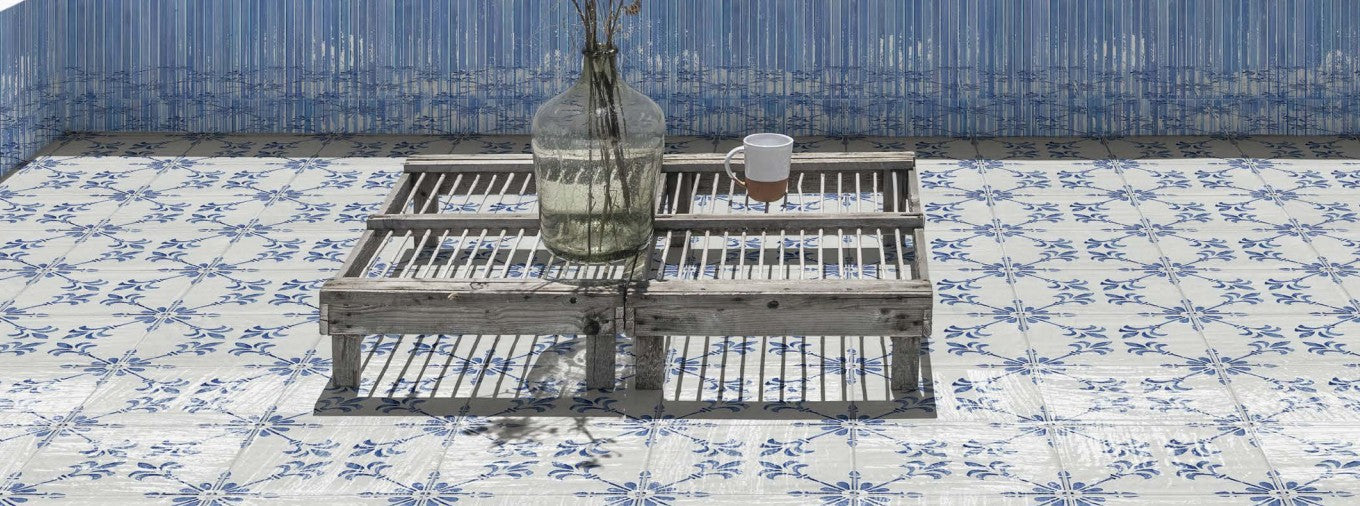
Blue and white is the pairing that design trends have failed to kill for seven hundred years. It appears in 14th-century Chinese porcelain, in the hand-painted azulejos that cover the walls of Portuguese towns, in Dutch Delft pottery, in classic American bathroom design, in the tile work of Mediterranean coastal villages, and in the most-saved kitchen and bathroom images on Pinterest right now. There is a reason this combination keeps coming back, it is not trending. It is simply correct in the way that some combinations are correct regardless of what the style calendar says.
Understanding why it works helps you use it more deliberately. White provides brightness, openness, and visual relief. Blue provides depth, personality, and a calm that most other colors do not create. Each makes the other look better, white makes blue appear more vivid and saturated, blue makes white look crisper and more intentional. Together they create a palette that feels complete. You do not find yourself wanting to add a third color because the two are already doing everything a room needs.
Blue and White Tile in the Kitchen
The Backsplash
The kitchen backsplash is the most natural application for a blue and white tile combination. The classic version, blue subway tile with white grout against white cabinetry, has been executed thousands of times because it works reliably. But blue and white in the kitchen does not require subway tile or white cabinetry. A cobalt blue glass mosaic tile against white marble countertops with light gray cabinetry achieves the same palette balance with a very different character. A blue and white patterned ceramic tile, Portuguese, Moroccan, or Delft-inspired, as an accent behind the range, with simple white subway tile running the rest of the backsplash, introduces the combination in a more artisanal, layered way. The palette is the same; the design language is completely different.
One underused approach worth considering: blue tile for the main field behind the countertop, white tile used as the transition material at the top edge and sides. The blue is dominant and the white functions as trim, cleaner and more finished than running the blue tile to the edge of the cabinetry. It requires planning the installation in advance but the result looks more considered than a standard full-field installation. Browse our kitchen backsplash tile collection to see options that work well in blue and white combinations.
Blue Cabinets with White Tile
The combination also works in reverse, blue cabinetry with a white tile backsplash. Navy, cobalt, or dusty blue cabinet fronts with a simple white subway or large-format white tile backsplash creates the same palette in a different architectural configuration. The blue in this case comes from a painted surface rather than tile, which means the tile can be more textural and interesting, a white zellige or white handmade ceramic against blue cabinets creates a combination that is both bold and layered without being busy.
Blue and White Tile in the Bathroom
The Floor
The bathroom floor is often the highest-impact surface for a blue and white combination because it is visible from every part of the room and the pattern you create is framed by baseboards and the door threshold on all sides. A navy and white penny round basketweave floor is a combination with a direct line back to early 20th-century American bathroom design, it reads simultaneously vintage and completely current. A cobalt blue hex floor with white grout against simple white wall tile creates a room with a strong visual anchor that does not require anything else to be interesting. White penny rounds with a blue grout, rather than white, inverts the typical expectation and creates a subtler version of the combination where the blue comes from the joints rather than the tile itself.
The Shower
A blue and white shower can be executed at several levels of commitment. The most immersive: navy or cobalt subway tile on all four shower walls, white hex or penny round on the floor. The combination is completely contained within the shower enclosure, which means the rest of the bathroom can be simple white without the room feeling like it is trying too hard. A slightly lower commitment: white field tile on three shower walls with blue tile on the back wall and matching blue in the niche. The blue reads as a deliberate focal point rather than an all-over color. The lowest commitment: a white shower with a single band of blue tile as a horizontal accent at eye level, or blue tile reserved only for the niche. For more ideas on how to handle navy specifically in the bathroom, read our guide to navy blue bathroom tile.
Navy and White: The Classic Combination
Of all the shade options, navy and white has the deepest design lineage. Navy subway tile on the lower half of a bathroom wall with white tile above a horizontal divider. Navy hex on the floor with white penny round in the shower. White tile on walls with a navy border strip at chair-rail height. These are configurations with a century of bathroom design precedent behind them, which means they feel neither dated nor trendy, they simply feel right. The key to executing navy and white well is making the decision about where the color stops and the white starts, and committing to it clearly. Blurred or ambiguous transitions between the two read as indecisive. Clean, defined edges read as intentional.
Blue and White Tile for Pools
The most famous version of blue and white tile in residential design is the pool, specifically the blue glass mosaic waterline tile against white plaster that produces the bright turquoise water color that has defined the visual language of swimming pools for generations. The physics are simple: light blue tile at the waterline combined with white plaster below the water reflects light in a way that makes the water appear a vivid, luminous aqua. The white plaster is the second color in a blue and white combination that most pool owners never consciously recognize as a design choice, but it is. Changing the plaster to gray or dark will change the water color even with identical tile. Read our full guide to blue pool tile ideas for everything you need to know before ordering pool tile.
Related Reading
- Blue Tile Backsplash Ideas for Kitchens
- Navy Blue Bathroom Tile Ideas
- Blue Pool Tile Ideas
- Shades of Blue Tile: How to Choose Between Navy, Cobalt, Aqua and More
- Blue Subway Tile Ideas for Kitchens and Bathrooms
Need help choosing? Call us at 614-515-7816 or email sales@tilechoices.com.