By the Tile Choices Team | Updated April 2026 | 10 min read
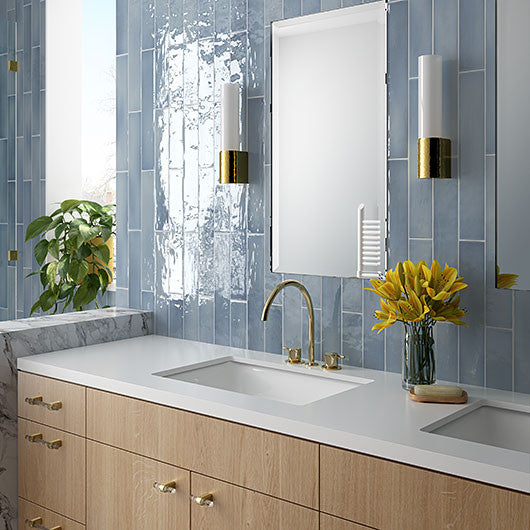
Subway tile has lasted for over a century in residential design for one simple reason: the rectangular format works. It works horizontally, vertically, diagonally. It works in a running bond, stacked, herringbone, or chevron layout. It works in small formats and large ones. And it works in pretty much every room and aesthetic from Victorian to contemporary industrial. In blue, it becomes something more than reliable, it becomes one of the most consistently appealing tile choices available.
The decisions that determine whether blue subway tile looks genuinely good versus merely adequate are not complicated. But they are specific. Layout direction, grout color, shade selection, and where the tile stops and starts are all variables that experienced designers make deliberately and that most homeowners make by default. This guide is about making them deliberately.
Blue Subway Tile in the Kitchen
The Running Bond Backsplash
A standard running bond, each tile offset by half from the row above, is the default layout for a reason. It is what subway tile was designed for and what it does most naturally. In cobalt or navy blue glass, a running bond backsplash with white grout against white cabinetry is a combination that has worked in thousands of kitchens because the variables are balanced. The blue is strong enough to be interesting. The white grout defines the pattern clearly. The white cabinets provide contrast without competing. It is not a surprising combination but it is a genuinely good one. Browse our kitchen backsplash tile collection to see all available blue subway options.
Vertical Stack Behind the Range
Installing subway tile in a vertical stack, each tile directly above the last with no offset, changes the character of the format noticeably. The joints run continuously from countertop to ceiling and the tile reads as more contemporary and architectural. A navy blue vertical stack with white or light gray grout behind a range, flanked by white field tile, creates a focal point that is both current and classic. The range wall is the strongest place in a kitchen to make a tile statement because it is framed by cabinetry on each side, which functions like a picture frame.
Herringbone Blue Subway Tile
Herringbone layout with subway tile introduces V-pattern movement and visual complexity without changing the material. Blue glass subway tile in herringbone is particularly effective because the reflective surface catches light differently at each angle of the V, creating a surface that shifts as you move through the kitchen. The trade-off is installation difficulty and slightly higher waste, herringbone layouts require more cuts and about 15 percent more tile than a running bond of the same area.
Blue Subway Tile in the Bathroom and Shower
Full Shower Surround
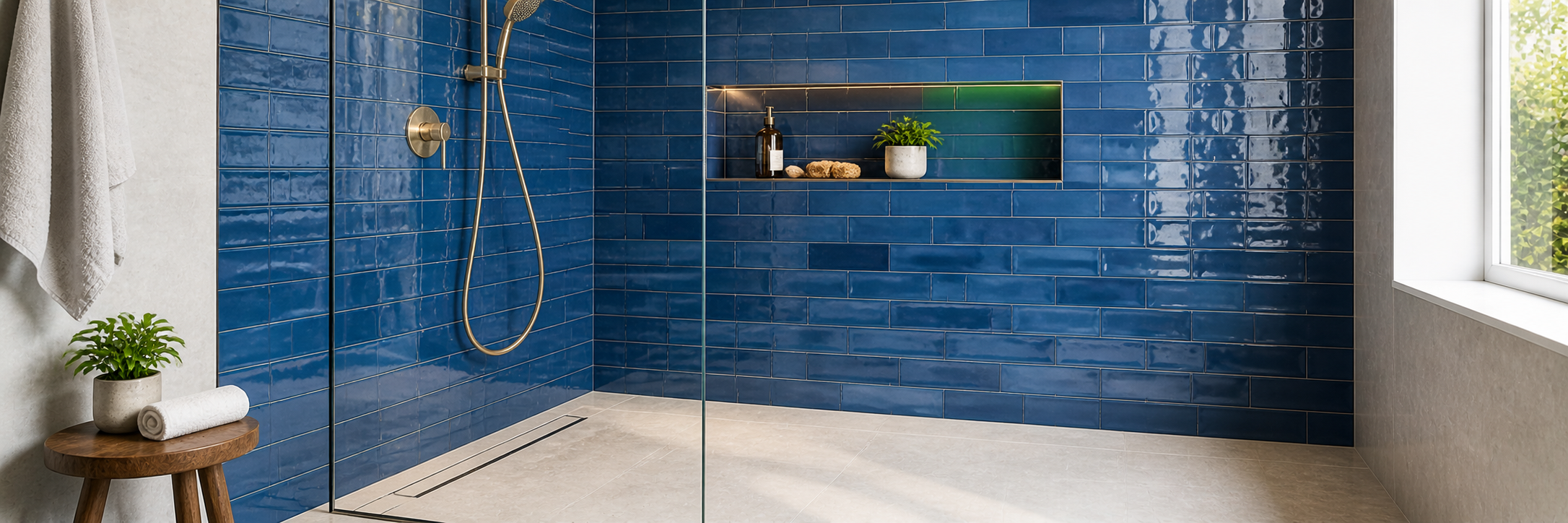
Floor-to-ceiling blue subway tile in a shower enclosure is the most committed and most rewarding of the shower tile choices. The full surround creates a room within a room, a completely defined space with its own character separate from the rest of the bathroom. The key decision here is grout: white grout with blue subway tile makes every tile legible individually and the grid pattern is part of the experience. Dark or matching grout makes the surface read as a unified color field. Both are correct but they produce different results, test grout samples against the actual tile before committing. Pair with a white or contrasting light floor tile. A white hex or penny round floor against a navy or cobalt shower wall is a combination that has proven itself across thousands of bathroom renovations. For more shower ideas with blue tile, read our guide to navy blue bathroom tile.
Feature Wall Only
The back wall of the shower, the one you face when you step in, is the natural location for a feature tile when you do not want to commit to a full blue surround. Blue subway tile on that one wall, with a simple white tile on the three surrounding walls and ceiling, creates a focal point that anchors the shower without enclosing it. This is a more flexible approach that works in both large and small shower enclosures.
Shower Niche
A niche tiled in blue subway tile against an otherwise white shower is one of the best small-scale applications in bathroom design. The niche is already a natural focal point, the blue tile amplifies that. Navy or cobalt in the niche interior with white tile everywhere else creates an effect that punches well above its square footage. It is also a low-commitment way to use blue in a shower without making a decision that affects the whole room.
Related Reading
- Blue Tile Backsplash Ideas for Kitchens
- Navy Blue Bathroom Tile Ideas
- Shades of Blue Tile: How to Choose Between Navy, Cobalt, Aqua and More
- Blue and White Tile Ideas for Kitchens, Bathrooms and Pools
Need help choosing? Call us at 614-515-7816 or email sales@tilechoices.com.