By the Tile Choices Team | Updated April 2026 | 10 min read
Most homeowners choosing pool tile focus on what the tile looks like dry, in a showroom or on a website. What they should be thinking about is what the tile looks like when it is underwater and how it affects the color of the water above it. Because that is the actual experience of owning a pool, not the tile itself, but what the tile does to the water every single day.
Blue pool tile has been the dominant choice in residential and commercial pool design for generations, and the reason is not purely aesthetic preference. It is physics. The tile color you install at the waterline and on the pool interior directly influences how the water above it looks. Blue tiles make pool water appear blue, but the specific shade of tile determines whether that water reads as bright tropical turquoise, deep mysterious teal, or the classic luminous aqua that everyone pictures when they imagine a beautiful pool.
How Tile Color Affects Pool Water Color
Water is technically clear. The blue color we perceive in a pool comes from a combination of factors, the Rayleigh scattering effect that makes water molecules absorb longer wavelengths of light while reflecting shorter wavelengths (blues and greens), combined with the color of the surfaces beneath and surrounding the water. The tile is the most powerful design variable you control.
Light blue or sky blue tile makes the water appear bright, vivid turquoise in full sun, the classic resort pool look that hotel and spa designers have standardized on for decades. Medium blue tile deepens the water color to a richer aqua. Dark navy tile makes the water appear a deep teal or ocean blue that is more dramatic and more like a natural body of water. Aqua and turquoise tile with green undertones gives the water a tropical lagoon quality that is especially beautiful in pools surrounded by lush landscaping.
White tile makes the water appear sky blue regardless, the light reflects through clear water and produces a clean, bright blue. This is why many luxury spas use white mosaic interiors, the water appears perfectly pure and bright.
Why Blue Glass Tile Is the Right Material for Pools
This is not a preference, it is a material science question. Standard ceramic tile, even high-quality glazed ceramic, is not appropriate for pool environments. Ceramic absorbs water, and under constant submersion combined with pool chemicals and freeze-thaw cycling, it will fail. Grout will deteriorate, tiles will pop, and you will be looking at a pool renovation years sooner than you planned.
Glass pool tile is purpose-built for aquatic environments. The color is fired into the glass itself rather than applied as a surface coating, so it cannot fade regardless of UV exposure, chemical treatment, or decades of sun. Glass is non-porous, zero water absorption, which means it resists algae growth, staining, and chemical damage. It is frost-proof, rated for freeze-thaw cycling, and will outlast virtually any other pool surface material. Browse our glass pool tile collection for all available blue options rated for aquatic environments.
Porcelain mosaic is the second appropriate option, but only porcelain with a water absorption rate below 0.5%, which is a specification you need to verify on the product data sheet before purchasing.
Blue Pool Tile Ideas by Shade
Sky Blue and Light Blue
Light blue is the most classic and universally appealing pool tile choice. It produces bright, vivid turquoise water in full sun and works with virtually every pool surround material, white plaster, natural stone coping, concrete, and pavers in any neutral tone. If you want a pool that looks beautiful in person and photographs as the classic backyard pool should, light blue glass mosaic at the waterline against white plaster is the foundational combination that professional pool designers return to over and over.
Medium Blue and Cobalt
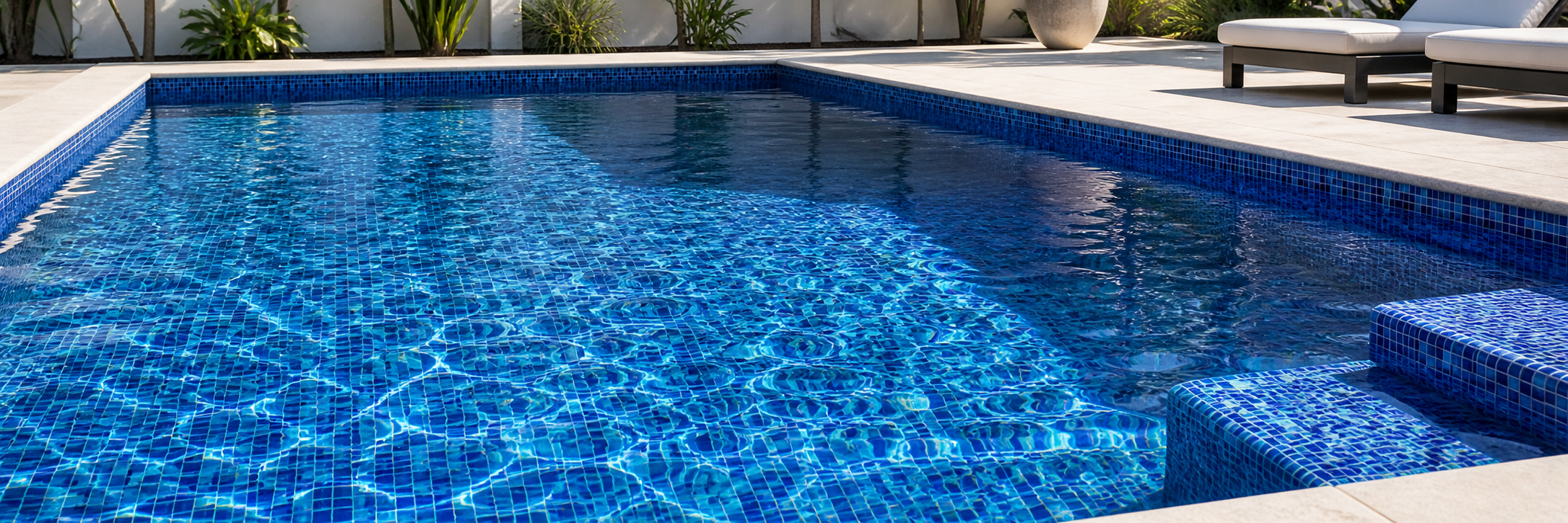
Medium blue and cobalt tile produces richer, deeper water color, a vivid aqua in direct sun that deepens to teal in shade. This shade works especially well in pools with a contemporary design and clean architectural lines, and in pools that get significant direct sunlight throughout the day. Pools in Florida, California, and the Southwest particularly suit cobalt tile because the strong sun amplifies the color rather than washing it out.
Navy Blue
Navy pool tile produces the most dramatic effect. The water above navy tile reads as deep teal or ocean blue, not the bright turquoise of lighter tiles but something darker and more like a natural body of water. This is the infinity pool and resort look, the kind of pool that feels like it belongs in a design magazine rather than a neighborhood. Navy works best in pools with a minimalist, contemporary aesthetic surrounded by dark stone, concrete, or clean architectural hardscaping. One practical note: very dark pool tile can make the pool bottom harder to see, which is a safety consideration worth discussing with your pool builder.
Aqua and Turquoise Iridescent Glass
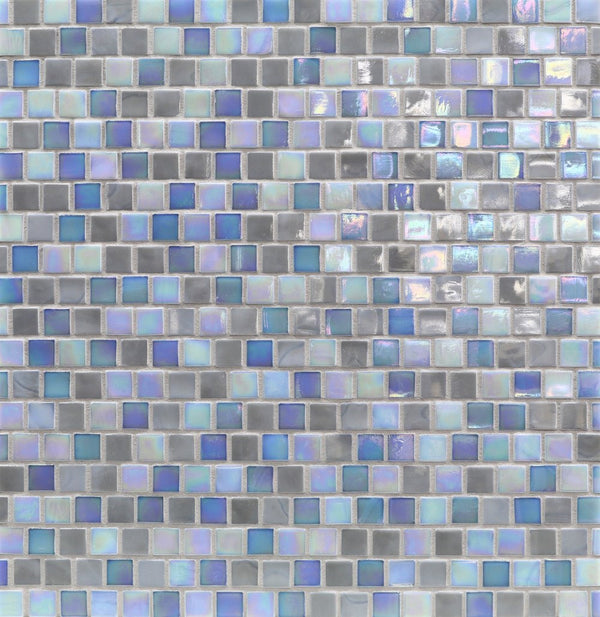
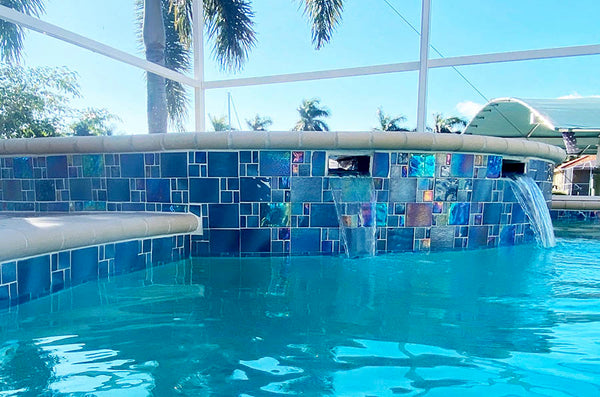
Aqua and turquoise glass mosaic, particularly in iridescent finishes, creates the most tropical and visually animated pool effect available. Iridescent tile shifts color as the angle of light changes and as water moves across the surface, producing a shimmering quality that standard tile cannot replicate. This is the right choice for pools surrounded by lush tropical landscaping, for homeowners who want their pool to feel like a destination, and for anyone who has seen a Caribbean resort pool and wants to recreate that specific quality of light at home. Browse our iridescent pool tile collection for available aqua and turquoise options.
Where to Use Blue Tile in a Pool
The Waterline
The waterline is the most common application, a band of glass mosaic tile, typically 6 inches tall, installed at the water level around the full perimeter of the pool. It serves two functions: it protects the pool shell from chemical exposure and calcium buildup at the zone where water meets air, and it creates the defining visual frame of the pool. Browse our waterline pool tile collection for options sized specifically for this application.
Full Interior
Tiling the full interior of a pool, walls and floor, is a premium approach that produces the most beautiful result and the longest-lasting surface. A fully tiled pool does not need replastering on the same cycle as a standard plaster pool, making it a long-term investment as well as an aesthetic one. Full interior tile typically uses a smaller format mosaic, 1 inch by 1 inch or 2 inch by 2 inch, for flexibility around curves, steps, and corners.
Steps and Benches
Steps and bench surfaces benefit from a contrasting or lighter tile than the main pool interior. A white or lighter blue tile on steps against a darker pool interior makes the step edges visible underwater, this is a safety feature as much as a design one.
Related Reading
- Blue Tile Backsplash Ideas for Kitchens
- Navy Blue Bathroom Tile Ideas
- Shades of Blue Tile: How to Choose Between Navy, Cobalt, Aqua and More
- More Pool Design Guides
Need help choosing? Call us at 614-515-7816 or email sales@tilechoices.com.