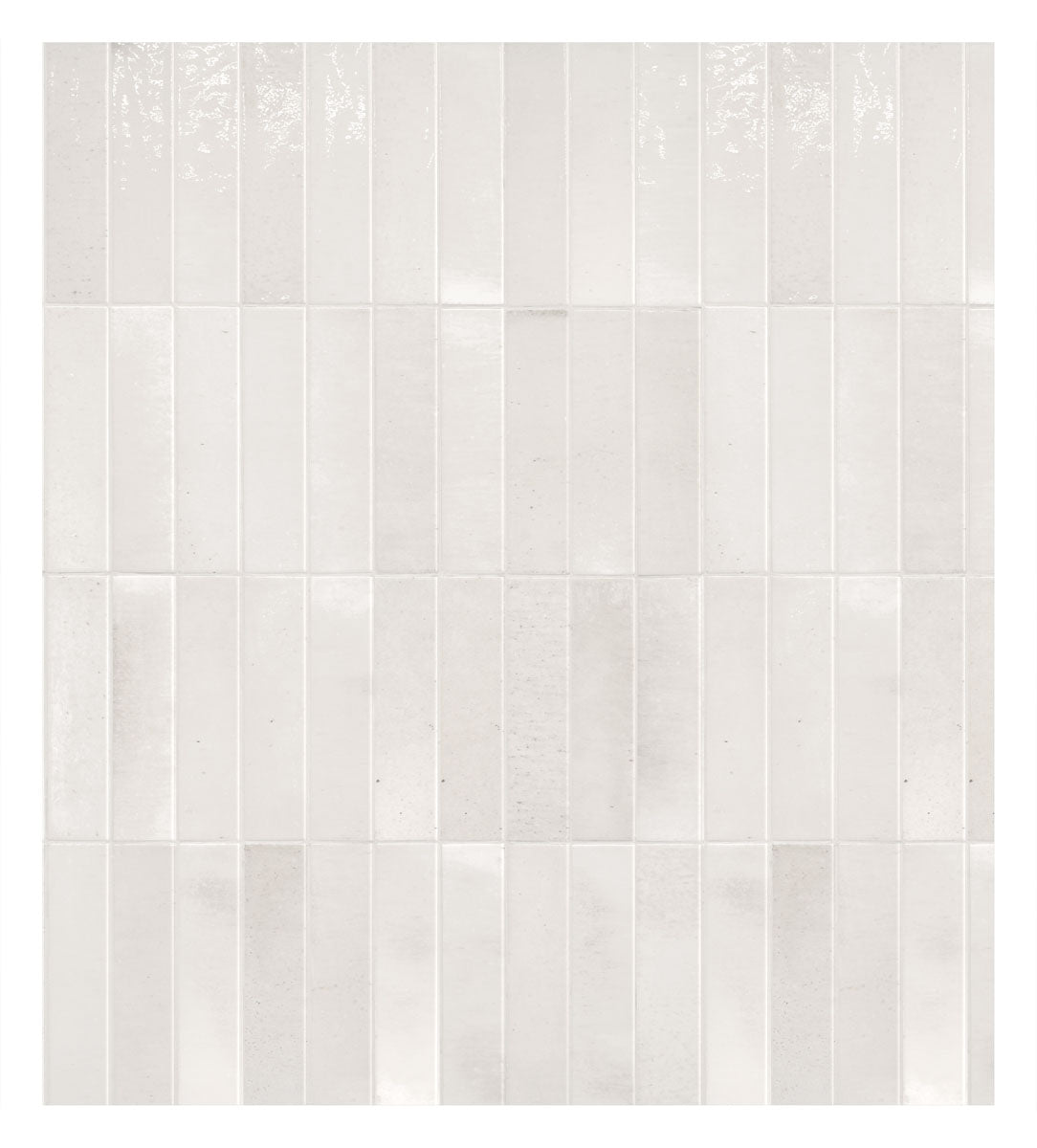
White Tile for Every Room and Application
White tile is versatile enough to work in virtually every room of the home, but the right choice depends on the surface, the level of moisture exposure, and the look you want. Here is how to think through each application.
White Tile for Kitchen Backsplashes
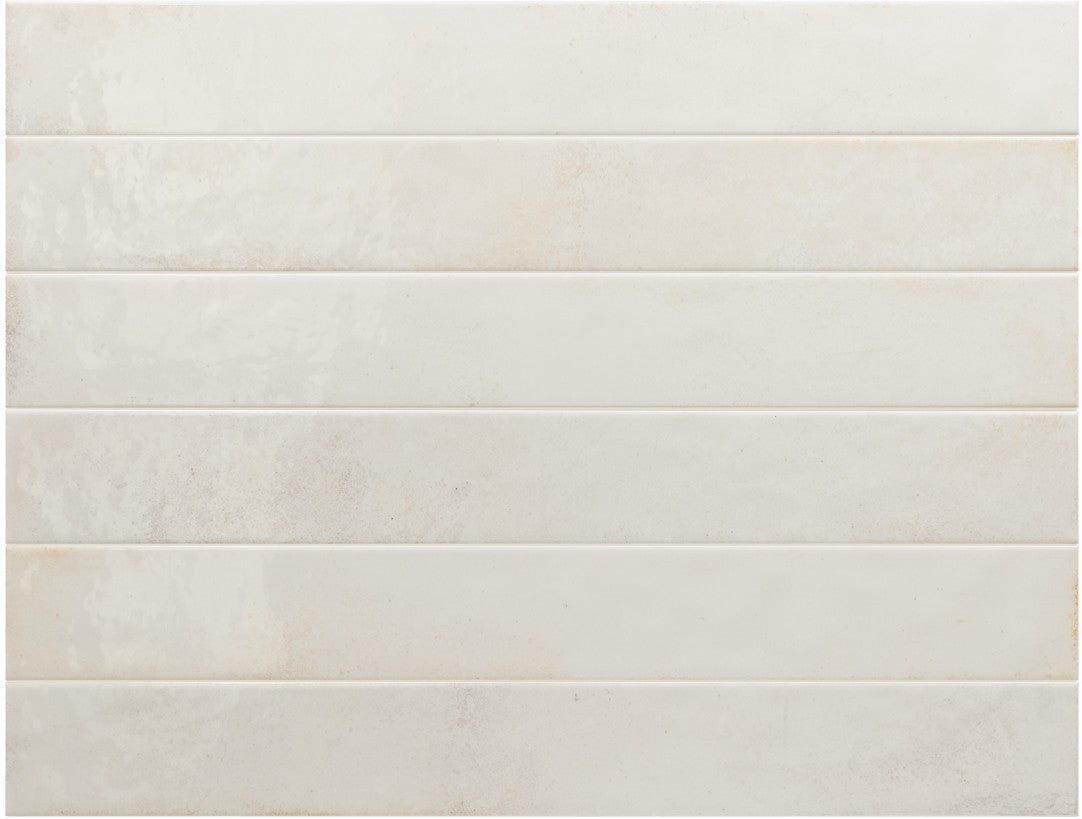
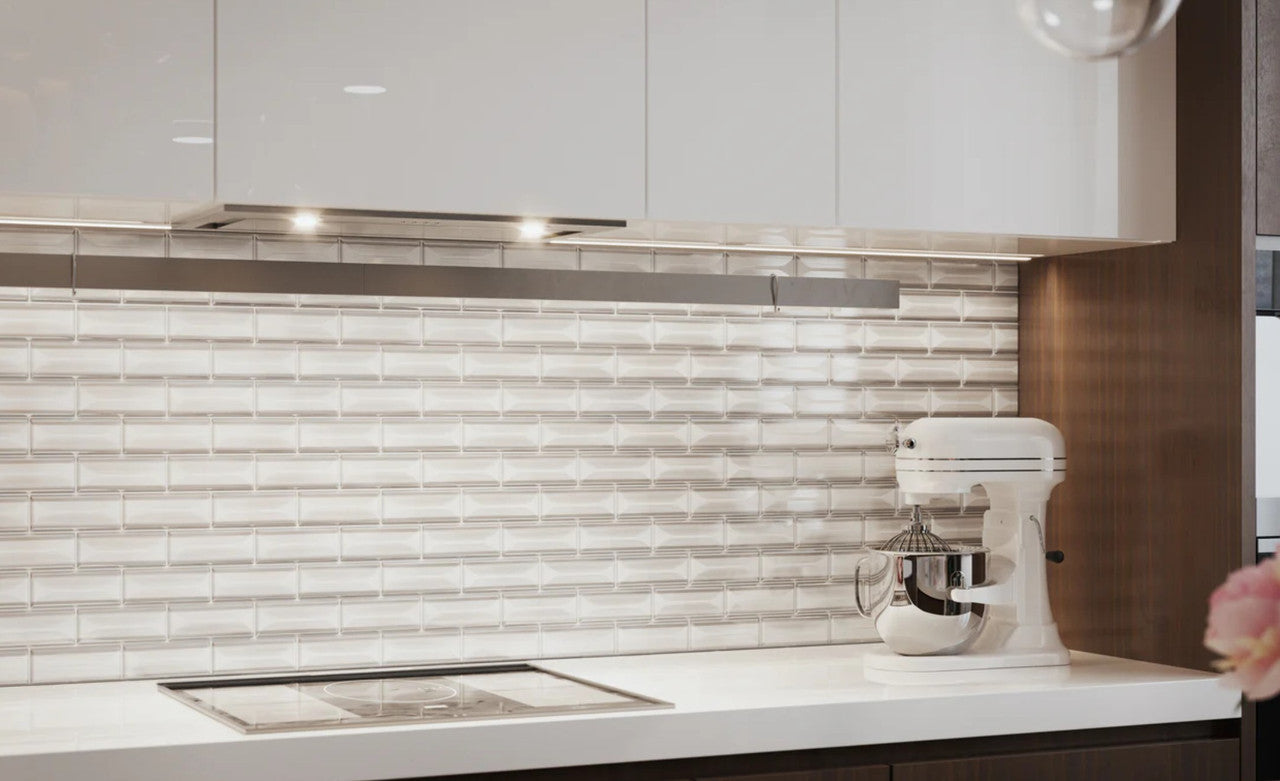
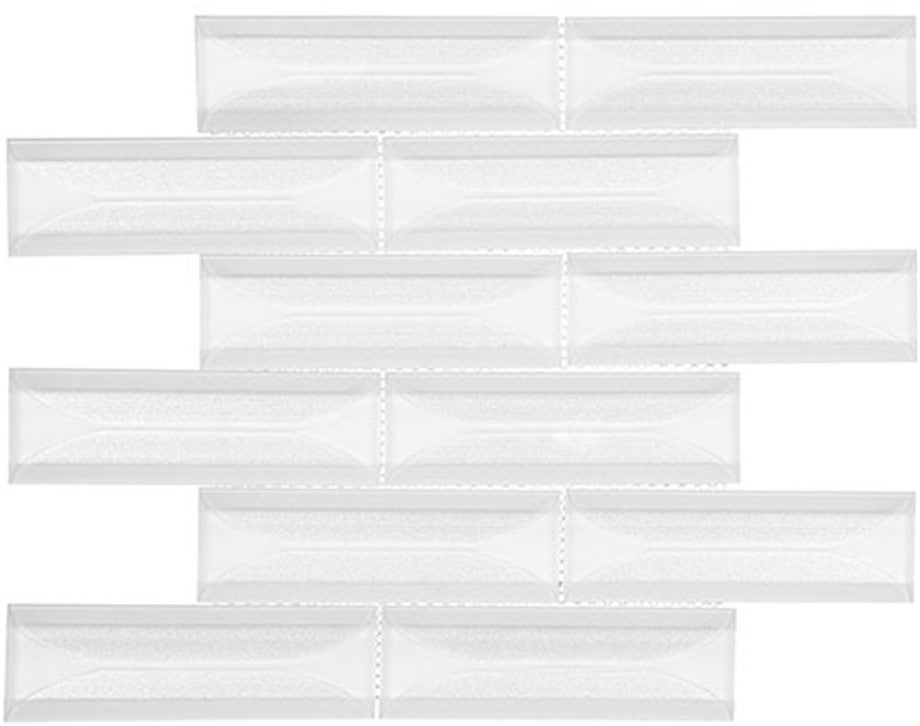
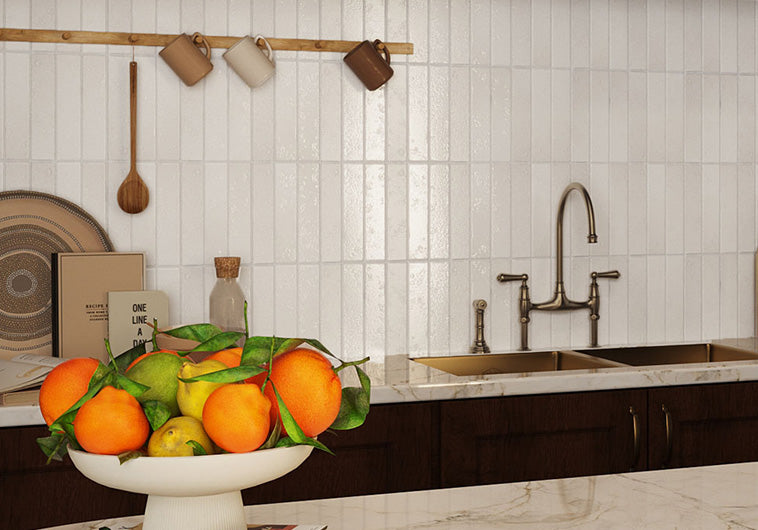
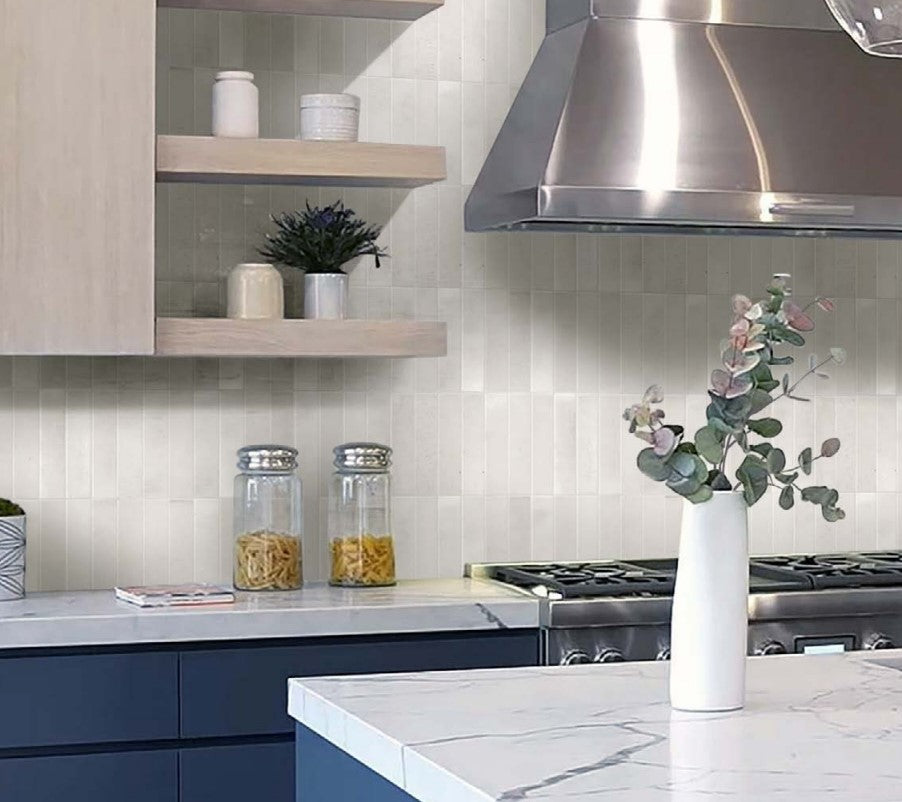
The kitchen backsplash is where white tile does some of its best work. It brightens the space, wipes clean after cooking, and pairs with everything from dark navy cabinets to warm natural wood to classic white shaker. The most popular choice by a wide margin is white subway tile, timeless, affordable, and available in a range of formats from the classic 3x6 to elongated styles that read as more modern. White glass mosaic is a premium option that adds luminosity and a high-end quality. For something more current, textured zellige-style white tile is having a significant moment, adding warmth and handcrafted character while keeping the palette clean and neutral.
For a full breakdown of styles, materials, and how each performs behind different cabinet colors, see our guide to white kitchen backsplash tile.
White Tile for Bathrooms
White bathroom tile is the design choice that never fails. Floor to ceiling on every wall, it makes even a small bathroom feel like a spa. Used selectively, on the shower walls, around the tub, or as wainscoting, it provides a practical, easy-to-clean surface exactly where it matters most. The key decisions in a bathroom are format, finish, and grout.
For walls, a glossy or satin white tile maximizes light reflection, which is particularly valuable in windowless bathrooms. For floors, a matte or textured white porcelain with a PEI rating of 3 or higher provides the slip resistance the surface requires. Mixing finishes — glossy walls, matte floor — is a simple and effective way to add subtle sophistication to an all-white bathroom.
For fifteen proven white bathroom layouts with specific tile and grout recommendations, see our white bathroom tile ideas guide.
White Tile for Showers
Showers are where white tile earns its keep most clearly. The clean, moisture-resistant surface is ideal for a wet environment, and the brightness of white makes enclosed showers feel far less claustrophobic than darker tile choices. For shower walls, large-format white porcelain, 12x24 or larger, is one of the most popular current choices. Fewer grout lines means an easier clean and a cleaner visual. For shower floors, white hexagon mosaic or white penny round mosaic tile is the standard recommendation: the small format conforms to the slope of the shower pan, and the density of grout lines provides essential traction.
Grout choice matters especially in the shower. A light gray stain-resistant grout is the most practical option, it hides soap scum better than white grout while keeping the shower feeling bright. For specific wall and floor combinations that work well together, see our white tile shower ideas guide.
White Tile for Floors
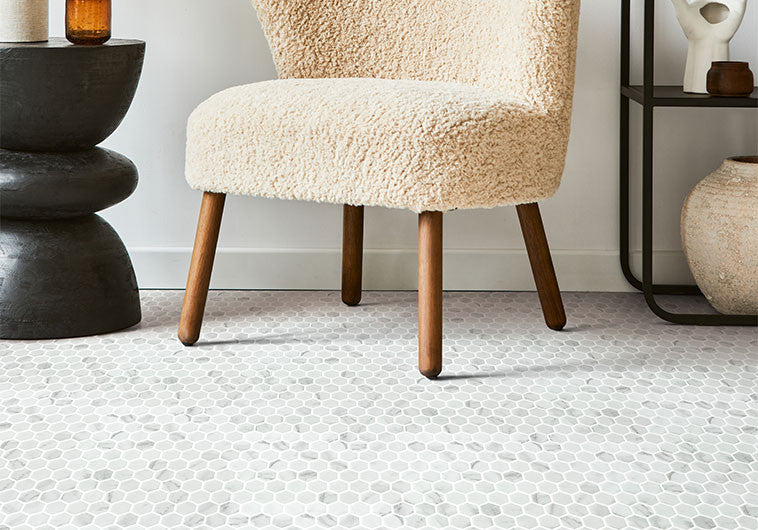
White floor tile brightens any room and creates a clean foundation that works with any design direction. For general floors, white porcelain is the right material, denser and more durable than ceramic, with a water resistance that makes it suitable for kitchens, bathrooms, and entryways alike. Large-format white porcelain tile (24x24 or larger) with minimal grout joints creates the most seamless, open-feeling floor. White hexagon mosaic is a classic alternative that adds pattern and character, particularly in bathrooms and entryways.
White Tile by Material
White Ceramic Tile
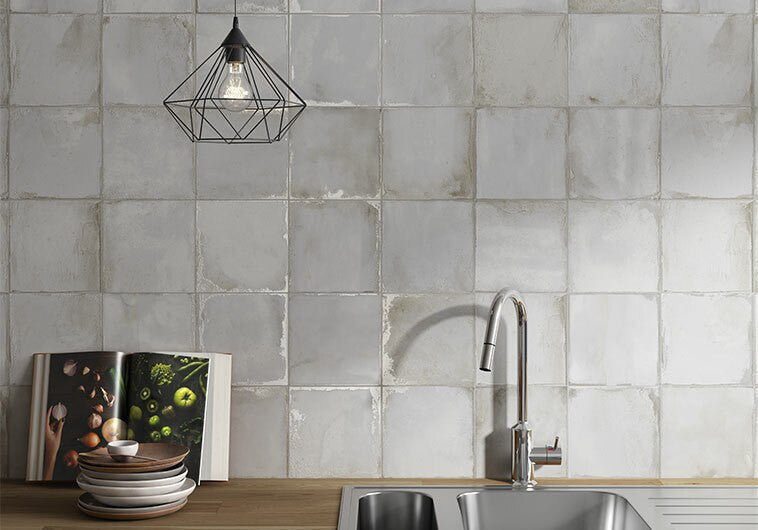
White ceramic tile is the most affordable option in the category and the most widely used for wall applications. Made from natural clay fired at relatively low temperatures, it is lightweight, easy to cut with standard tools, and available in an enormous range of shapes and sizes. For kitchen backsplashes, bathroom walls, and light-traffic areas, white ceramic tile is an excellent choice. For floors, showers, or any high-moisture application, porcelain is the better material.
White Porcelain Tile
White porcelain tile is fired at higher temperatures than ceramic, producing a denser, harder, less porous tile. It is the correct choice for bathroom floors, shower walls, shower floors, and any application that will see heavy moisture or foot traffic. Porcelain is available in large formats that ceramic typically is not, and its hardness makes it suitable for both residential and commercial use. If you are choosing between white ceramic and white porcelain and are not sure which applies to your project, porcelain is the safer choice in most cases.
White Glass Tile
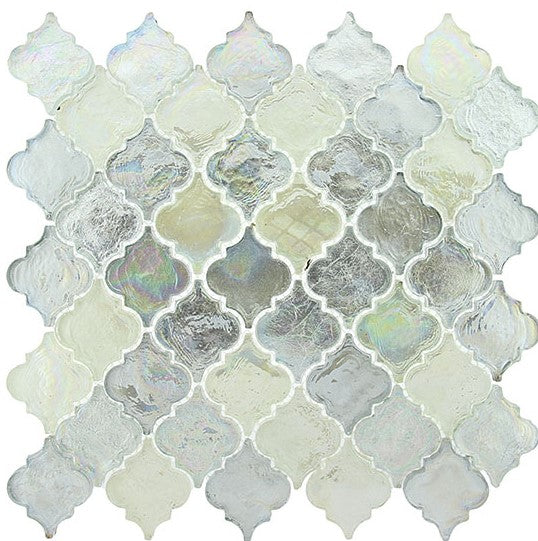
White glass tile reflects light in a way that ceramic and porcelain cannot, from within the tile itself, creating depth and a subtle shimmer that gives a premium quality to kitchen backsplashes and bathroom accent walls. Glass is non-porous by nature, requiring no sealing and resisting staining inherently. It is best used on walls and backsplashes rather than floors, where its hardness makes it susceptible to cracking under heavy loads.
White Mosaic Tile
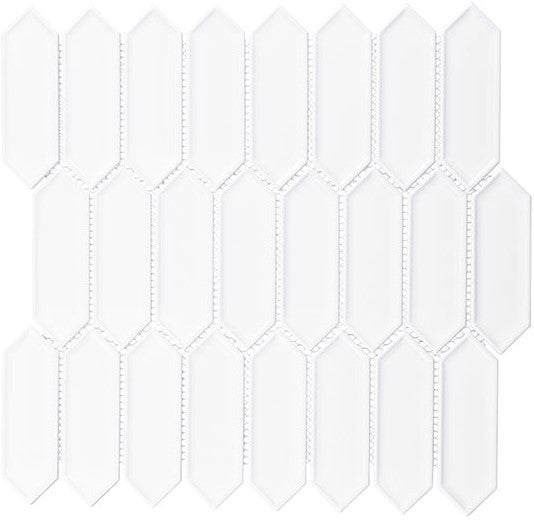
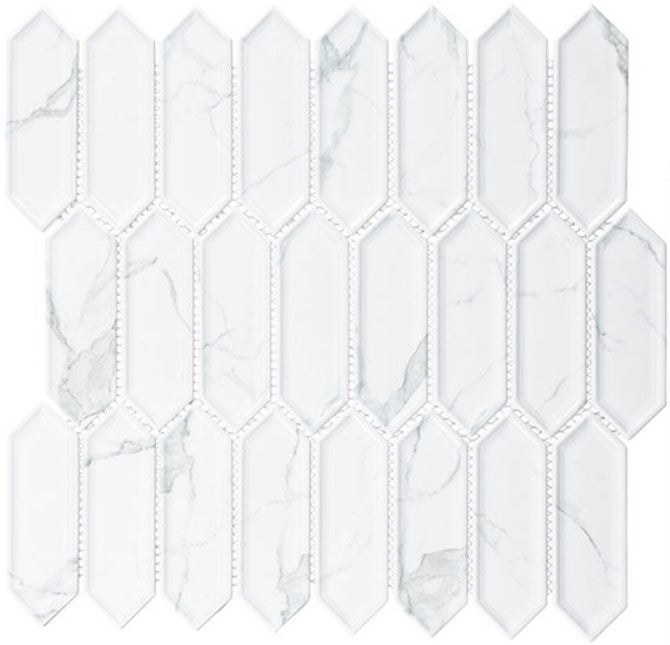
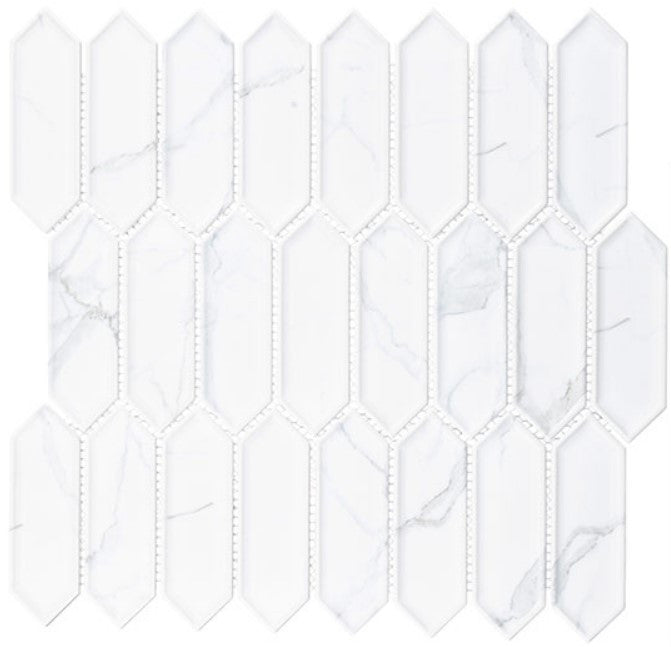
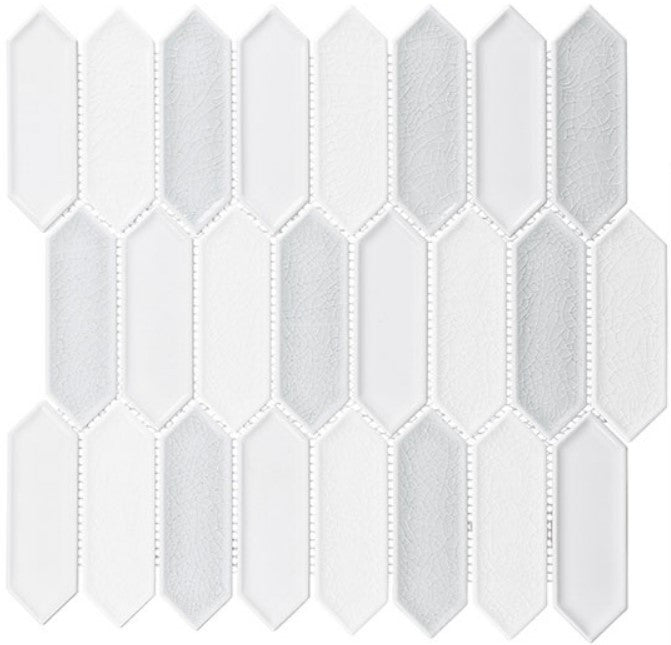
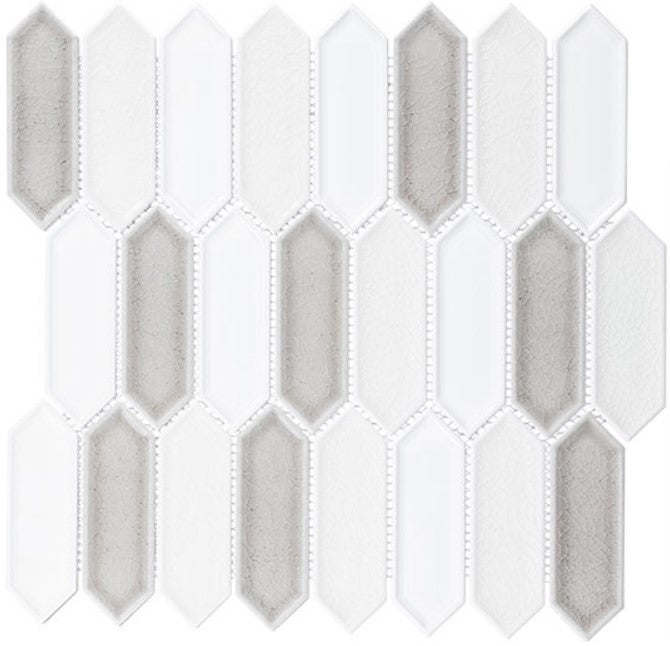
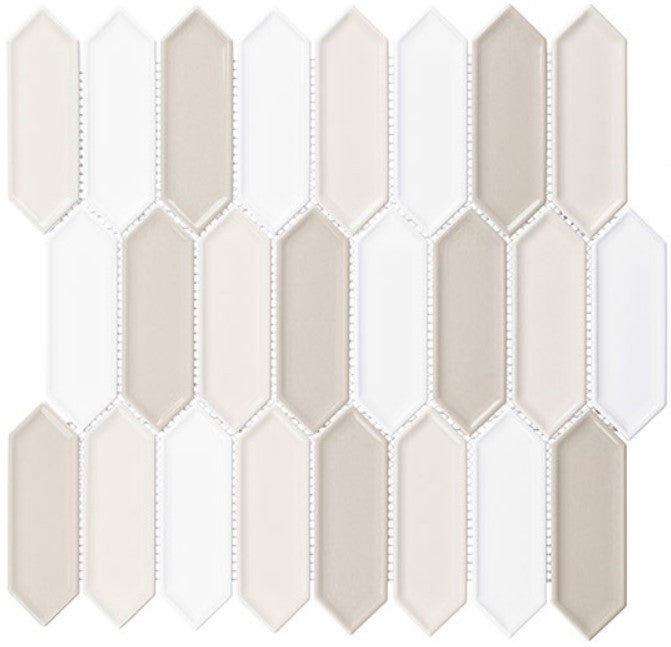
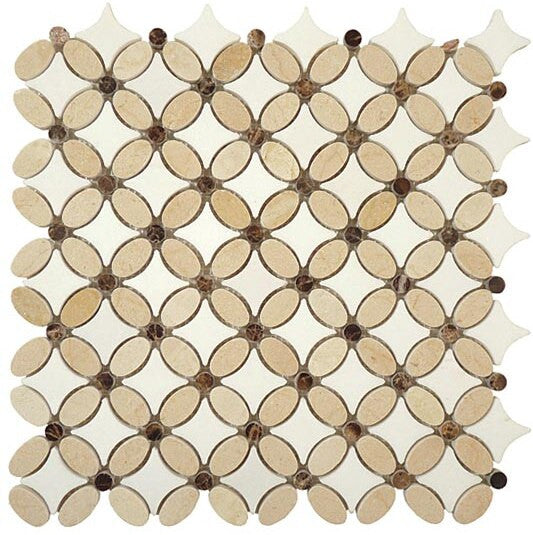
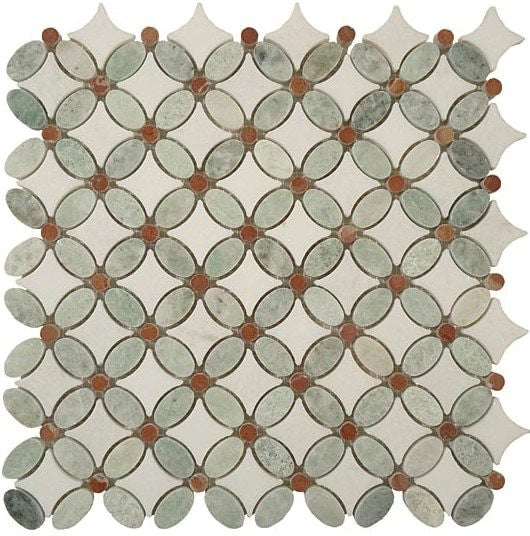
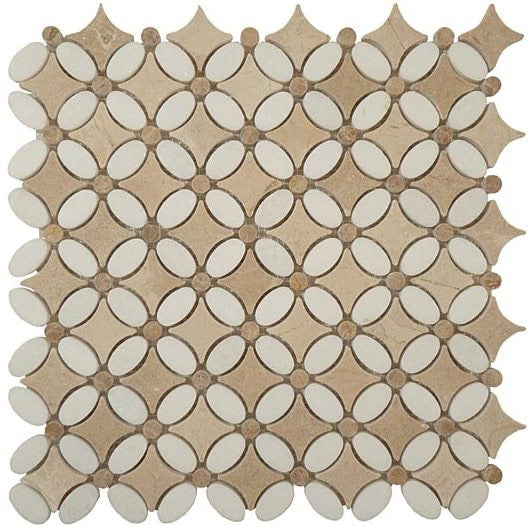
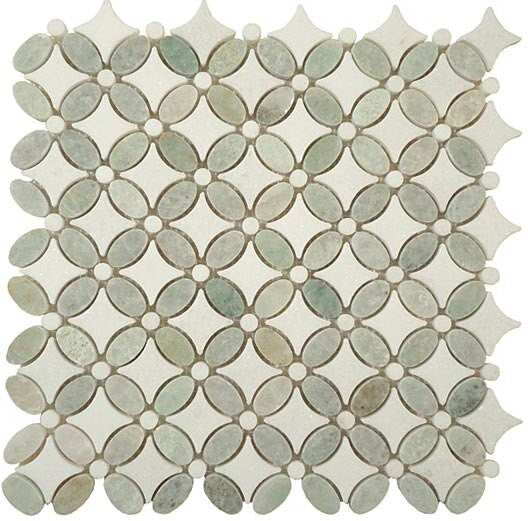
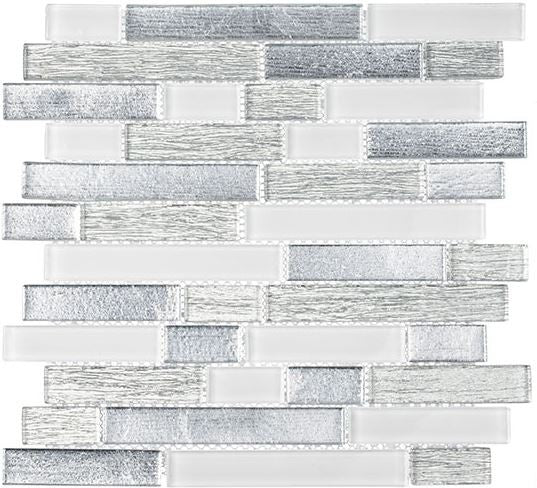
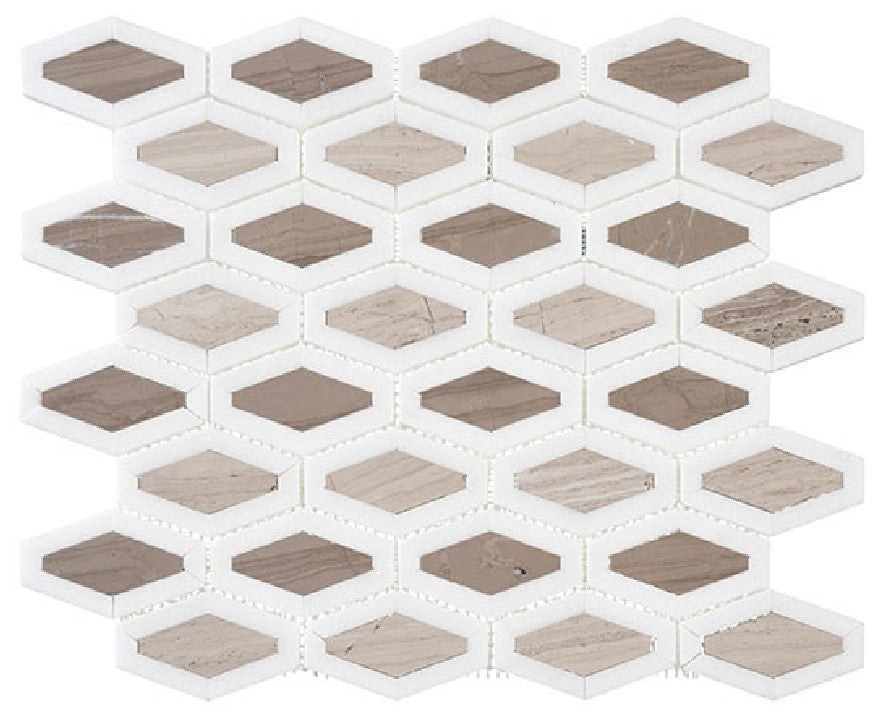
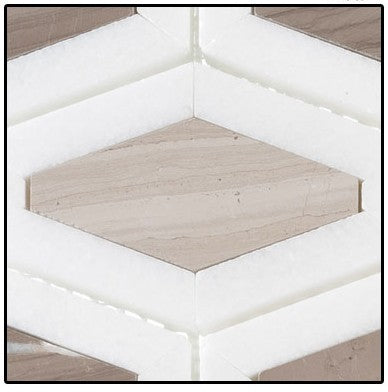
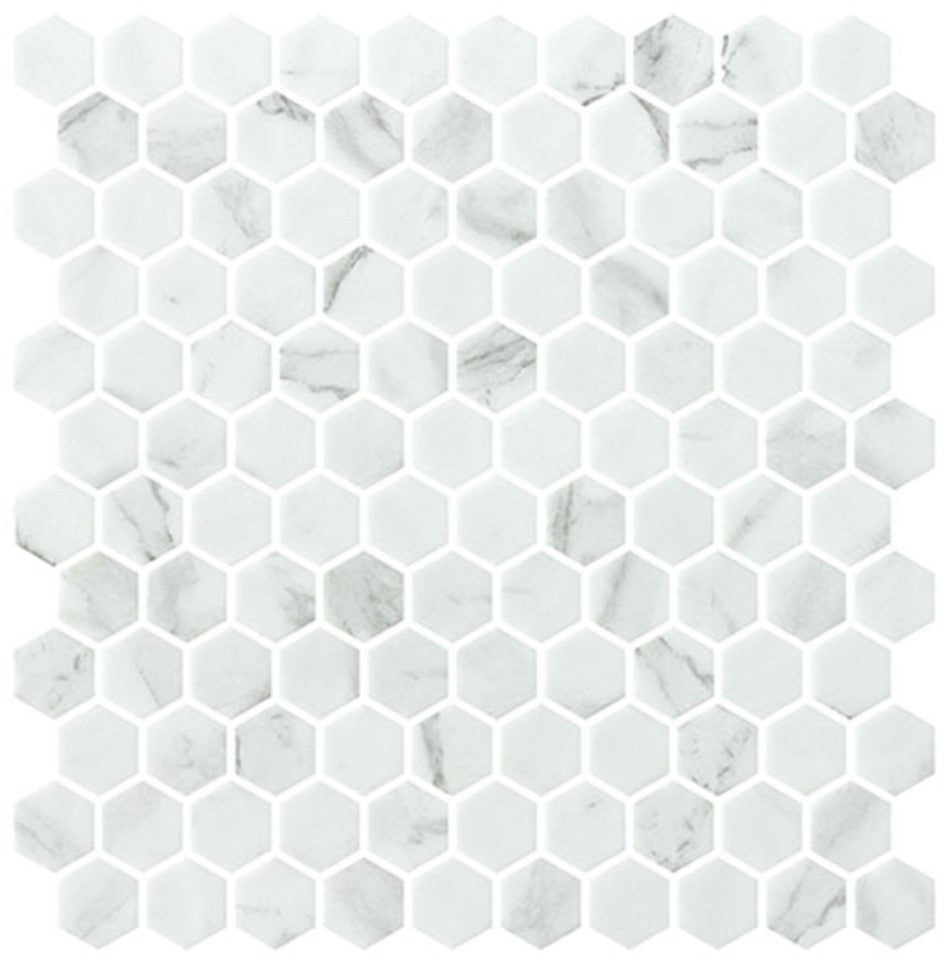
White mosaic tile, in glass, ceramic, or stone, is available in penny round, hexagon, arabesque, and mini brick formats, typically mesh-mounted in 12x12-inch sheets for straightforward installation. It is the top choice for shower floors, where the small format and dense grout lines provide both drainage conformity and traction. It also works beautifully as a decorative band on bathroom walls, inside shower niches, and as a kitchen backsplash where a more textural surface is the goal.
Textured and Zellige-Style White Tile
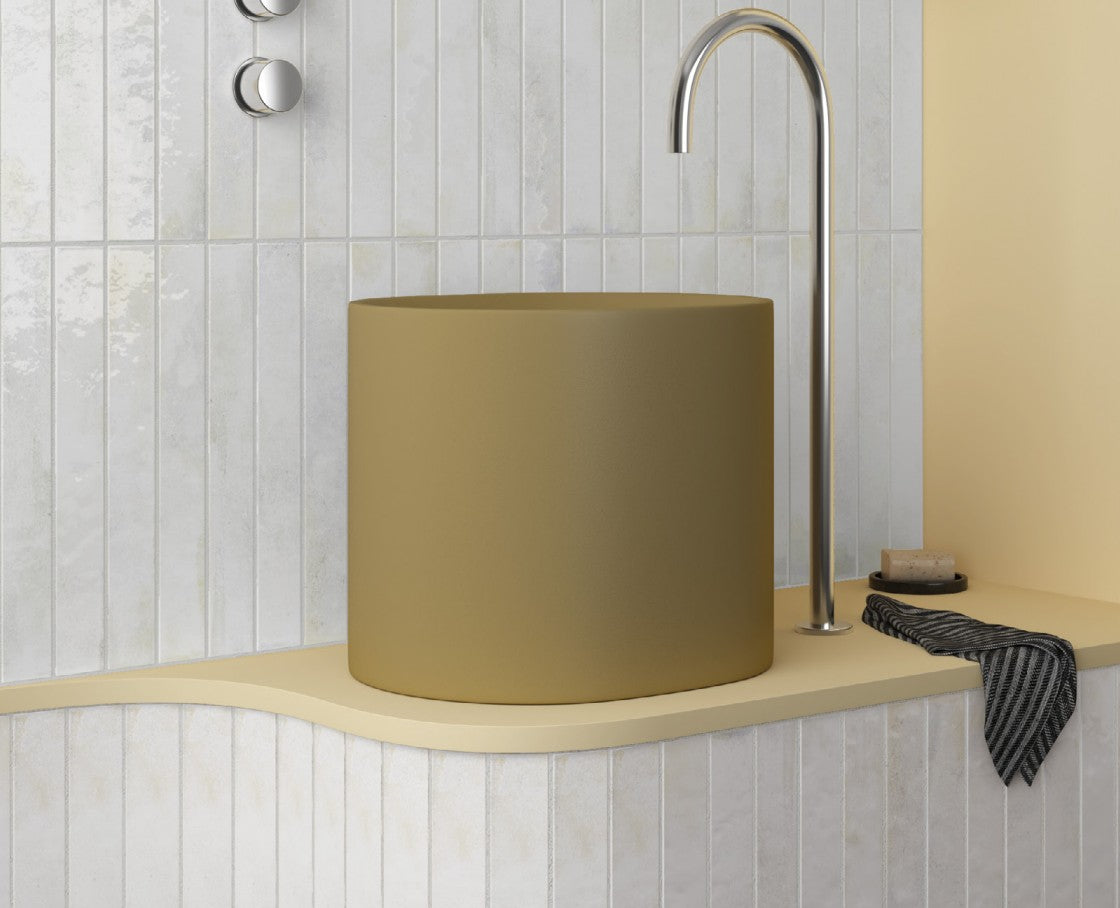
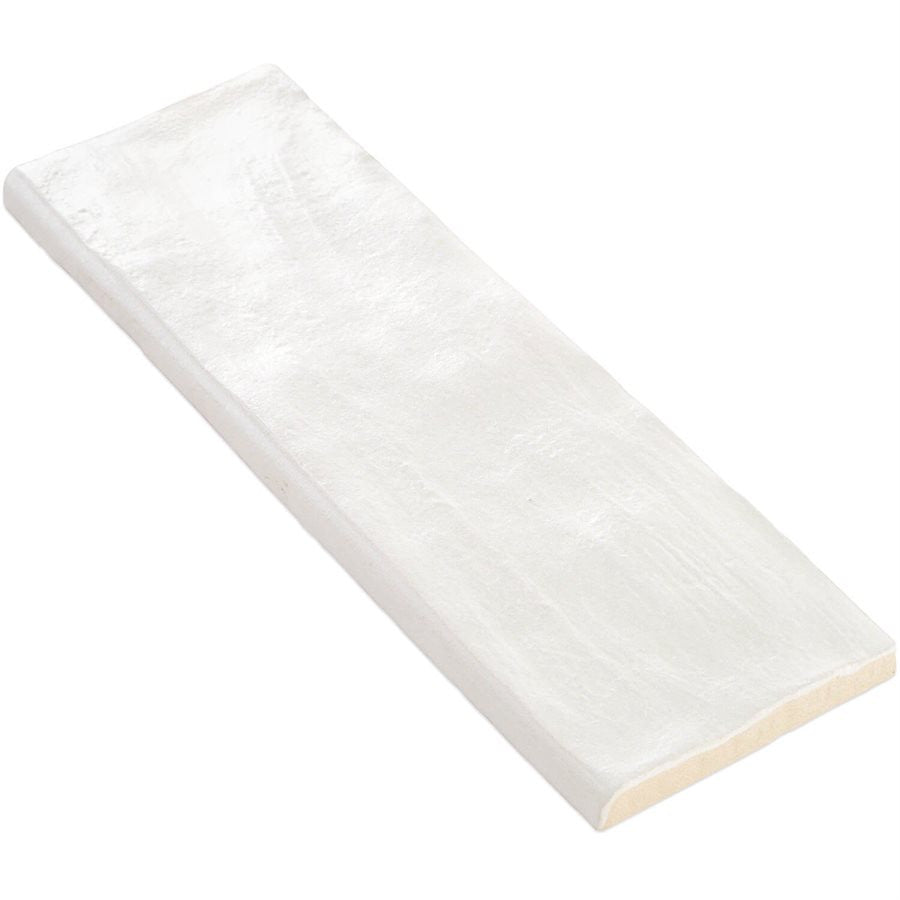
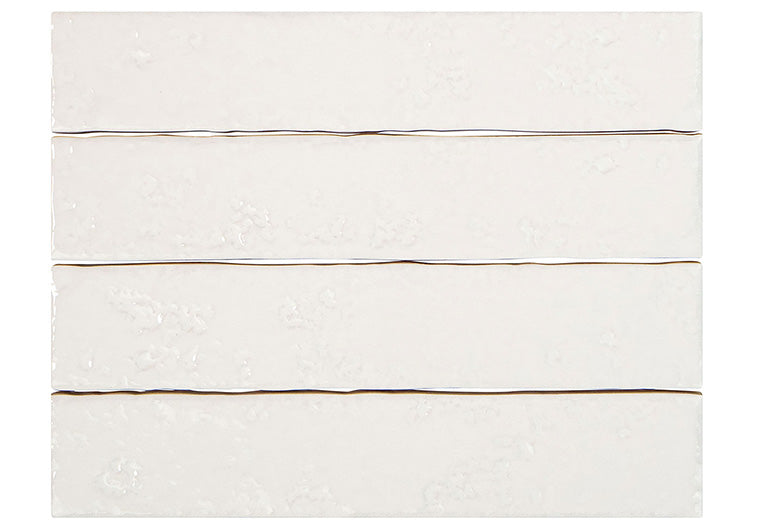
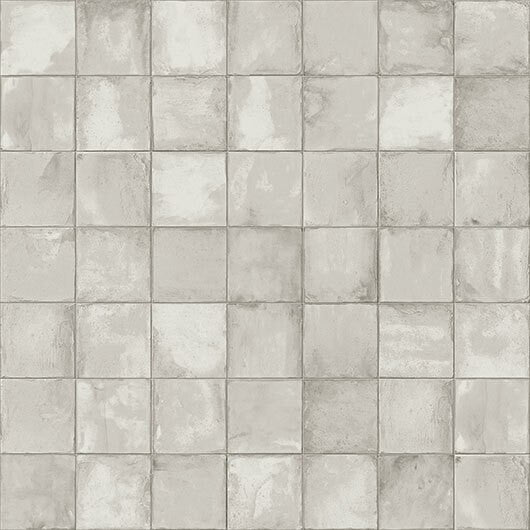
One of the biggest tile trends of the last several years is the rise of textured white tile, zellige-inspired, 3D surface, and handcrafted-look ceramics that bring depth, warmth, and artisan character to a white palette. Unlike flat, smooth white tile, textured white tile catches light at varying angles throughout the day, giving the surface a living, dynamic quality. It works particularly well in kitchens with warm wood tones and brass fixtures, and in bathrooms aiming for an organic, contemporary feel.
Choosing the Right Grout Color for White Tile
Few decisions affect the final appearance of a white tile installation as dramatically as grout color. The same white subway tile installation looks completely different with white grout versus charcoal grout, the former reads as seamless and modern, the latter as graphic and pattern-forward.
White or off-white grout creates the most unified surface. The tile pattern is subtle and the overall effect is clean and contemporary. This works particularly well with large-format tile where minimizing visual breaks is the goal. Light gray grout is the most versatile all-around choice, it defines each tile clearly without harsh contrast, hides everyday soiling better than white, and works with essentially every white tile style. Charcoal or dark gray grout creates the most dramatic result, turning the grout lines themselves into a design element. This is the classic approach for white hexagon tile floors and herringbone subway patterns, and it is genuinely timeless. Warm beige grout is the right choice alongside textured or zellige-style white tile, adding an organic warmth that gray grout does not provide.
For a complete guide to every grout color option and which application each suits best, see our post on the best grout color for white tile.
White Subway Tile: The Most Popular White Tile Style
White subway tile deserves its own discussion because it is, by a significant margin, the most popular white tile style in residential design. The classic 3x6 format in a brick offset pattern is the familiar standard, but the range of what counts as white subway tile today is much broader. Elongated formats like 4x12 and 4x16 have a more modern, architectural quality. Vertical stacking makes walls feel taller. Herringbone layouts add movement and design sophistication. And zellige-style white subway tile in a wavy or irregular format brings warmth and character that smooth tile cannot match.
For a full guide to formats, layout patterns, finishes, and styling ideas, see our white subway tile ideas guide.
White Hexagon Tile: A Pattern That Has Never Gone Out of Style
White hexagon mosaic tile has been used on bathroom floors and kitchen backsplashes for well over a century — and it remains one of the most requested tile patterns we carry. The geometric six-sided shape creates a naturally rhythmic surface that is more visually interesting than a square or rectangular tile without being loud or complicated. On a bathroom floor with charcoal grout, it creates the classic Victorian look that has proven genuinely timeless. On a shower floor, the dense grout lines in a mosaic format provide the traction and drainage conformity that the application requires. On a kitchen backsplash, it adds texture and subtle pattern to a white palette.
For sizing guidance, grout recommendations, and design inspiration across every application, see our white hexagon tile guide.
White Tile Trends in 2025 and 2026
White tile does not go out of style, but the styles within white tile evolve. The dominant current trends are worth knowing about if you want your renovation to feel current rather than dated.
Textured and zellige-style white tile is the most significant trend. Smooth, high-gloss white tile is being joined, and in many spaces replaced, by tiles with irregular surfaces, subtle glaze variation, and a handcrafted quality that adds warmth and depth. Matte finishes have also surged in popularity. The non-reflective surface creates a softer, more sophisticated look, hides water spots and smudging better than gloss, and pairs naturally with the warm wood tones and matte metal fixtures that dominate interior design right now. Warmer off-white tones, linen white, cream white, warm white, are increasingly preferred over stark bright white, particularly in kitchens where the tile will be seen alongside warm natural materials.
Large-format white porcelain continues to grow in popularity for bathrooms and floors. Fewer grout lines create a calmer, more seamless surface, and larger tiles make smaller rooms feel noticeably more open.
From Our Blog: White Tile Design Guides
Have questions? Call our team at 614-515-7816 or email us. Real people, real expertise — no bots.