
The kitchen backsplash is one of the most impactful design decisions in any kitchen renovation, and white remains the most popular choice year after year. White backsplash tile brightens the kitchen, pairs with virtually any cabinet color or countertop material, and creates a clean backdrop that makes the rest of the kitchen's design elements shine.
But white tile is not a single thing. The shape, material, finish, and pattern of your white kitchen backsplash tile determines whether the result feels classic, contemporary, rustic, or luxurious. This guide covers the best white white tile options for kitchen backsplashes, how to choose between them, and which approach works best with your specific kitchen.
Why White Tile Remains the Top Backsplash Choice
White backsplash tile has been the leading kitchen tile choice for generations, and in 2026 it shows no signs of losing that position. Here is why homeowners and designers keep coming back to it:
- Universally compatible: White tile works behind white cabinets, dark cabinets, wood-tone cabinets, and painted cabinets in any color.
- Brightens the space: Especially in kitchens with limited natural light, a white backsplash reflects light and makes the room feel more open.
- Easy to clean: Glazed ceramic and porcelain white tile wipes clean easily from cooking splatter and grease.
- Timeless: A white backsplash will not look dated in five years the way a bold color or very specific pattern might.
- Affordable range: White tile is available at almost every price point, from budget-friendly ceramic to premium glass and stone.
For a broader look at everything white tile offers, visit our white tile collection.
The Best White Kitchen Backsplash Tile Styles
White Subway Tile: The Timeless Standard
The 3x6 white ceramic subway tile is the backsplash tile the rest of the industry is measured against. Introduced in New York City subway stations in the early 1900s, it has been a kitchen and bathroom staple ever since, and for good reason. It is affordable, durable, clean, and available in glossy, satin, and matte finishes. It can be installed in a traditional brick offset pattern, a stacked grid, a vertical stack, or a herringbone layout.
For most kitchens, white subway tile in a classic offset pattern with white or light gray grout is the safest, most universally appealing choice. For a more current version, try an elongated format, 4 x 12 or 3 x 9, in a vertical stack, or a zellige-style glazed subway tile with irregular surface variation. See our full guide to white subway tile ideas for layout inspiration.
Shop our curated white subway tile for kitchen collection.
White Glass Mosaic Tile: High-End Luminosity
White glass tile brings a reflective, luminous quality to a kitchen backsplash that ceramic tile cannot replicate. The way glass reflects both natural and artificial light adds depth and brightness to the kitchen. White glass mosaic is available in mini brick, 1 x 1 square, 1 x 2 stacked, and arabesque shapes, all mesh-mounted for straightforward installation. For a complete breakdown of glass, porcelain, and ceramic mosaic options including shapes and sizes, see our white mosaic tile guide.
Glass is non-porous by nature, which makes it stain-resistant and very easy to clean, important behind a stove or cooktop. It pairs particularly well with modern and contemporary kitchens, with chrome or polished nickel fixtures, and with quartz or marble-look countertops.
Browse our white glass tile collection.
White Zellige-Style Tile: The Current Design Favorite
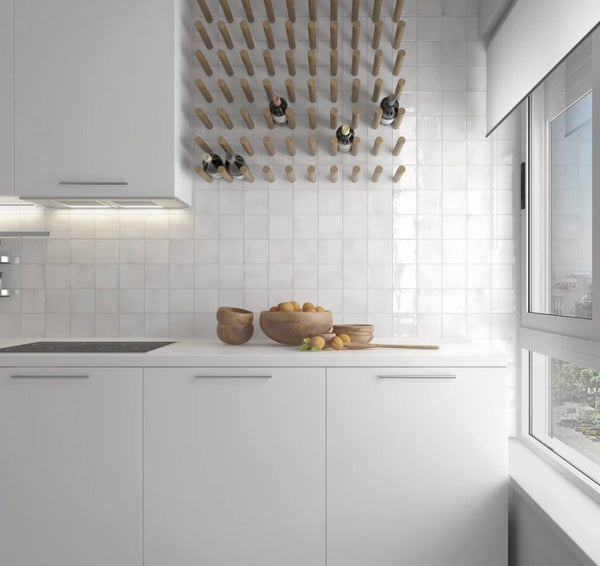
If there is one white backsplash trend dominating design right now, it is the zellige-style tile. Zellige is a traditional Moroccan clay tile with a slightly irregular surface, subtle color variation within the white glaze, and a handcrafted quality that mass-produced tile cannot replicate. The result is a backsplash that is technically white but has an almost living quality, catching light differently throughout the day and adding warmth and personality to a kitchen that smooth white tile cannot.
Zellige-style white tile works particularly well in kitchens that combine white tile with warm wood tones, brass or unlacquered brass fixtures, and natural or honed stone countertops. It sits at a slightly higher price point than standard subway tile, but the visual impact is significant.
Explore our textured white tile collection for zellige-inspired options.
White Herringbone Tile: Pattern Without Color
Herringbone is one of the most popular tile layout patterns, and it works beautifully as a white kitchen backsplash. Taking standard white subway or rectangular tile and arranging it in a herringbone pattern adds movement, dimension, and design sophistication without introducing color. The pattern does the work.
White herringbone backsplash tile reads as more formal and designed than a standard offset subway layout. It works well in transitional kitchens, in kitchens with detailed cabinetry, and in spaces where the backsplash is the primary design feature. Browse our herringbone tile collection for available options.
Large-Format White Tile: Modern and Seamless
For a very clean, contemporary kitchen backsplash, large-format white porcelain tile, 12 x 24 or larger, creates a nearly seamless look with minimal grout lines. This approach is popular in modern and minimalist kitchens where simplicity and clean lines are the priority. The challenge is that large-format tile requires a very flat and even substrate, and installation behind a stove or range can require additional planning around outlets and fixtures.
White Arabesque and Fish Scale Tile: Decorative Shapes
For homeowners who want a white backsplash with more personality, decorative shapes like arabesque (ogee), fish scale (scallop), and fan tiles offer intrinsic visual interest without relying on color. These tiles are popular in eclectic, bohemian, and transitional kitchens. They work especially well as a focal point behind the range, with a simpler tile on the rest of the backsplash.
White Backsplash Tile by Cabinet Color
White Tile with White Cabinets
The all-white kitchen is enduringly popular. To keep white tile from disappearing into white cabinets, use a different finish (matte tile behind glossy cabinets, or vice versa), a different texture (zellige or 3D tile adds dimension), or a contrasting grout color (light gray defines the tile pattern against the white cabinet backdrop).
White Tile with Dark Cabinets
White backsplash tile creates maximum contrast behind dark navy, charcoal, black, or forest green cabinets, and the result is striking. The white tile brings light and balance to a kitchen that might otherwise feel heavy. Glossy white subway tile in a classic offset pattern is a particularly effective choice here.
White Tile with Wood-Tone Cabinets
White tile and warm wood cabinetry is one of the most popular current kitchen combinations. The white tile brightens and balances the warmth of the wood. A zellige-style or slightly warm-toned white tile (rather than a stark bright white) is usually the most harmonious choice alongside natural wood.
White Tile with Gray Cabinets
White tile brings warmth and brightness to gray cabinetry, which can read as cool and heavy on its own. A white or warm gray grout keeps the look cohesive; a bright white grout adds a sharper contrast.
Choosing the Right Grout for a White Kitchen Backsplash
Grout choice significantly affects the final look of a white kitchen backsplash. White or off-white grout creates a seamless, unified surface. Gray grout defines the tile pattern and adds contrast. Behind a kitchen stove or cooktop, a slightly darker grout (light to medium gray) is a practical choice — it hides cooking residue better than pure white grout. For a full guide, see our post on the best grout color for white tile.
How to Choose Between Matte and Glossy White Backsplash Tile
Both finishes work well in kitchens. Glossy white tile reflects light and creates a brighter feel, ideal in kitchens with limited natural light. It also wipes clean very easily, which matters behind a stove. Matte white tile creates a softer, more organic look and is very popular in contemporary and farmhouse kitchens. It hides fingerprints better than gloss but may require slightly more effort to clean grease off the surface. For a complete comparison, see our guide to matte vs glossy white tile.
White Backsplash Tile Installation Tips
Measure Carefully and Order Extra
Measure your backsplash area in square feet and add 10 to 15 percent for cuts and waste. For herringbone and diagonal layouts, add 15 to 20 percent. Always order from the same dye lot. White tile can vary subtly between production batches, and having matching tile for future repairs is invaluable.
Use the Right Adhesive
For kitchen backsplash applications, use a white thinset mortar, especially important with glass tile, where a gray mortar can show through. For heavy or large-format tiles, a premium polymer-modified thinset ensures a strong, lasting bond.
Consider a Professional Installer for Complex Patterns
Standard subway tile in an offset pattern is DIY-friendly for an experienced handyperson. Herringbone, large-format, and mosaic installations benefit from professional installation to ensure straight lines and proper spacing.
Find Your White Kitchen Backsplash Tile
Ready to shop? Browse our complete white tile collection including subway, glass mosaic, zellige-style, herringbone, and large-format options. You can also shop directly by category: white subway tile for kitchens, kitchen backsplash tile, and glass tile. Free samples are available — order and see the exact color and finish in your own kitchen before you buy. Call us at 614-515-7816 for personalized recommendations.
Also worth reading: our complete ceramic tile backsplash guide and our affordable kitchen backsplash ideas for budget-conscious options.