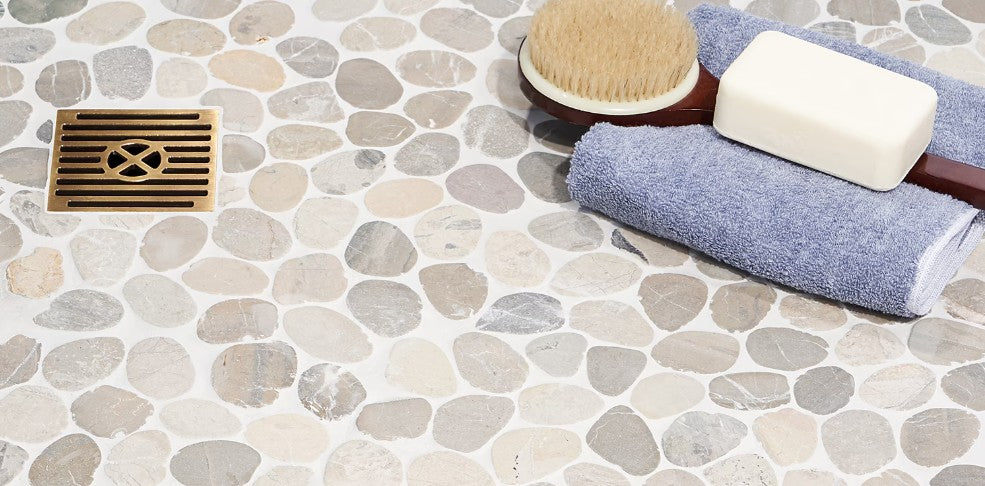

Pebble tile shower floors generate strong feelings. People who have them tend to love them with an enthusiasm that borders on evangelical — the reflexology sensation underfoot, the organic beauty, the unmistakable spa quality of the finished look. People who don't have them sometimes wonder if they're practical, whether they're hard to clean, or whether the texture gets uncomfortable during long showers.
Both camps are working from valid information. Pebble tile has real advantages that no other shower floor format can match, and it has real tradeoffs that are worth understanding before you commit. This is the honest, complete picture.
Browse our pebble tile collection at Tile Choices →
What Is Pebble Tile?
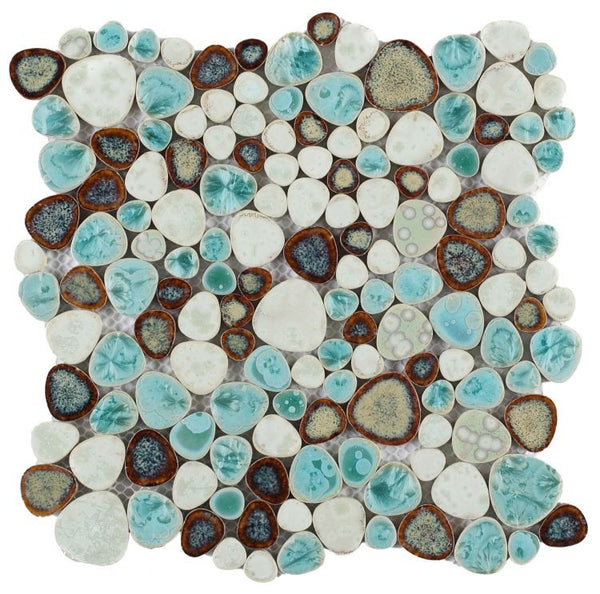
Pebble tile is made from natural river stones — smoothed by water over thousands of years into rounded, organic shapes — that are mounted on mesh backing sheets for easy installation. Each sheet is typically 12×12 inches and contains anywhere from 20 to 60+ individual stones depending on their size. The stones sit slightly proud of the surface, creating the characteristic uneven texture that defines the look and feel of a pebble floor.
Most pebble tile comes in natural stone varieties — basalt, marble, sandstone, and mixed river stone are all common — in color palettes that range from soft gray and white to warm tan and brown to dramatic black and charcoal. Each sheet is genuinely unique; the natural variation in stone color, size, and shape means no two pebble floors look identical.
The Pros of Pebble Tile Shower Floors
Superior Slip Resistance
Pebble tile is among the most slip-resistant shower floor options available — arguably the best. The rounded stones create multiple contact points at varied heights, and the many grout joints between them add further texture. The result is a floor with an exceptional Dynamic Coefficient of Friction (DCOF) rating that far exceeds the ANSI minimum of 0.42 for wet floor surfaces. If slip resistance is your primary concern, pebble tile is your answer. See our full guide on slip-resistant shower floor tiles for more on DCOF ratings.
Outstanding Natural Drainage
The irregular surface of pebble tile creates natural channels between stones that direct water to the drain extremely efficiently. Standing water is rarely an issue on a properly installed pebble floor — water simply flows where it needs to go. This also helps the floor dry faster between uses, reducing the moisture that can contribute to mold and mildew in grout joints.
The Sensory Experience
This is the factor that makes pebble tile devotees so enthusiastic. Walking on a pebble shower floor activates the reflexology points in your feet in a way that is genuinely pleasant for most people — similar to a light foot massage. It's an experience that no flat tile format can replicate, and it makes an ordinary daily shower feel noticeably different.
Organic Aesthetic That Ages Beautifully
Pebble floors don't go out of style because they don't belong to any particular trend — they're genuinely natural. The stones look as appropriate in a Japandi-inspired minimalist bathroom as they do in a mountain cabin or a coastal retreat. And because each floor is unique, there's no risk of it looking "generic" or matching every other house in the neighborhood.
Works in Any Shower Size
Unlike large-format tiles, which can look out of proportion in small showers and require precise installation, pebble tile works beautifully in any shower size. The organic pattern doesn't have a rigid grid that emphasizes the dimensions of the space. Read our piece on the best shower floor tiles for small showers to see why pebble is consistently recommended for compact spaces.
The Cons of Pebble Tile Shower Floors
More Involved Cleaning
This is the most commonly cited drawback, and it's legitimate. The spaces between pebble stones — particularly in the deeper crevices — can collect soap residue, shampoo buildup, and eventually mildew if not cleaned regularly. Flat tile is simply easier to wipe down.
The fix: clean with a soft-bristle brush (an old toothbrush works well in tight spots) and a pH-neutral tile cleaner weekly. Rinse the floor thoroughly after each shower to prevent soap from accumulating. Seal the grout annually. With these habits in place, pebble floors are entirely manageable — but they do require more active maintenance than flat tile.
The Uneven Surface
Most people find the texture of a pebble floor pleasant. Some people — particularly those who stand in the shower for extended periods or who have sensitive feet — find it uncomfortable over time. This is a genuinely subjective factor that you can't fully evaluate without standing on the tile. If possible, visit a tile showroom where pebble floor samples are on display and try standing on one for a few minutes.
Grout Requirements
Pebble tiles require significantly more grout than standard flat tiles because the gaps between stones are larger and more irregular. This means more grout material, more time spent grouting, and more surface area that needs to be sealed. Epoxy grout is strongly recommended for pebble shower floors — it's non-porous, stain-resistant, and doesn't require annual sealing the way cement grout does choosing the right grout for pebble tile.
Installation Complexity
While pebble tile on mesh sheets is not the hardest tile to install, getting the grout right requires patience. The grout needs to fill all the spaces between stones without covering the tops of the stones completely — grout lines that are too high reduce the characteristic texture. This is a step where first-time tile installers can run into trouble; hiring a professional experienced with pebble tile is worth considering.
Pebble Tile Maintenance: A Practical Guide
Daily
Rinse the floor with clean water at the end of each shower. This prevents soap, shampoo, and conditioner from drying in the spaces between stones — where they're much harder to remove once set. A quick rinse takes 30 seconds and dramatically reduces deep cleaning frequency.
Weekly
Clean with a soft-bristle brush and a pH-neutral tile cleaner. Work the brush between the stones in a circular motion, then rinse thoroughly. Most pebble floors can be kept immaculate with a weekly 5-minute cleaning routine.
Annually
If you've used cement grout (rather than epoxy), reseal the grout lines annually. Use a penetrating impregnator sealer designed for natural stone and grout. Apply with a small brush, let it penetrate for the manufacturer's recommended time, then wipe off the excess. This step is critical for preventing staining and mildew in the grout.
As Needed
For mineral deposits or hard water stains, use a cleaner specifically formulated for natural stone — never vinegar or other acidic products, which can etch the stone surface. For stubborn soap scum, a baking soda paste worked in with a soft brush and rinsed thoroughly is an effective, stone-safe solution.
Is Pebble Tile Right for You?
Pebble tile is the right choice if you want maximum grip, outstanding drainage, a genuine spa aesthetic, and a floor that is truly one-of-a-kind. It's not the right choice if you want the lowest-maintenance shower floor possible or if you're uncertain about the comfort of the uneven surface under bare feet.
For a broader comparison of all shower floor tile materials — including how pebble stacks up against porcelain, mosaic, and natural stone — see our comprehensive guide to the best shower floor tile options.
Shop pebble tiles at Tile Choices →
Have questions about pebble tile? Call us at 614-515-7816 or email sales@tilechoices.com.