Slip-and-fall accidents in the bathroom are among the most common causes of home injury, and the shower floor is ground zero. Choosing a tile that looks beautiful but performs poorly in wet conditions is a safety risk that's entirely avoidable. The good news is that the tile industry has well-established standards for measuring slip resistance, and once you understand what to look for, choosing a safe shower floor tile becomes straightforward.
This guide breaks down everything you need to know about slip resistance ratings, which tile types perform best, and how to make a confident, informed decision for your shower renovation.
Shop slip-resistant shower floor tiles at Tile Choices →
What Is Slip Resistance and How Is It Measured?
Slip resistance describes how much friction a tile surface provides when contact is made with it, specifically by a wet foot in motion. It's measured numerically, and two terms come up most often: COF and DCOF.
COF — Coefficient of Friction
COF is the older, broader term for friction measurement. It was used for years in tile specifications and you'll still see it referenced in older documents and product listings. COF measurements were taken with a static (stationary) test method, meaning they measured how much friction existed before movement began, not during movement, which is when slips actually occur.
DCOF — Dynamic Coefficient of Friction
DCOF (Dynamic Coefficient of Friction) is the current standard and the more relevant measurement for wet floor safety. "Dynamic" means the friction is measured while motion is occurring — specifically simulating a person walking on the tile surface. This is a much more realistic test of how a tile actually behaves underfoot in a wet shower.
The current ANSI A137.1 standard (the primary American tile standard) specifies that tiles intended for wet floor use must have a DCOF of 0.42 or higher. This is the number you want to confirm when evaluating any tile for a shower floor.
What the Numbers Mean in Practice
| DCOF Value | Classification | Suitable for Shower Floor? |
|---|---|---|
| Below 0.42 | Below standard | No — not recommended for wet floors |
| 0.42–0.59 | Meets ANSI standard | Yes — acceptable for wet floor use |
| 0.60–0.79 | Good | Yes — well suited to shower floors |
| 0.80 and above | Excellent | Yes — ideal for high-safety applications |
What Determines a Tile’s Slip Resistance?
Several factors determine how slip-resistant a tile is, and understanding them helps you evaluate any tile you're considering, even if you don't have the DCOF number handy.
Surface Finish
This is the single biggest factor. A tile's surface finish determines how much texture and micro-friction it provides.
- Matte / Frosted finishes — Very good to excellent grip. The slightly rough surface creates friction. Highly recommended for shower floors. Shop matte finish tiles →
- Textured finishes — Excellent grip. Raised or varied surface patterns increase contact friction dramatically. Shop textured tiles →
- Satin / Honed finishes — Good to very good. Softer sheen than polished but more grip. A solid middle ground for natural stone.
- Glossy finishes — Lower grip when wet. Generally not recommended as the primary surface for shower floors. Can work in small quantities or if the DCOF is confirmed to meet the standard.
- Polished finishes — Low grip. Beautiful but slippery when wet. Avoid for shower floors entirely unless you have DCOF confirmation of 0.42+.
Tile Size and Grout Line Density
Grout joints add texture and grip, they act like micro-treads on a tire. The more grout lines per square foot, the more grip the overall floor surface provides, regardless of the tile's own finish. This is why small mosaic tiles are inherently safer than large-format tiles: a 1-inch mosaic can have 20+ grout joints per square foot, while a 12×12 tile has just one or two.
Material
Different tile materials have different inherent surface characteristics that affect DCOF even before surface finish is considered.
- Porcelain (textured or matte) — Reliably high DCOF. The density of the material allows for consistent, long-lasting surface texture.
- Natural slate — Very high DCOF due to natural cleft texture. One of the most inherently slip-resistant stone options.
- Travertine (unfilled) — High DCOF due to natural surface porosity and texture. Filling the pores reduces grip.
- Pebble stone — Among the highest DCOF of any tile format. The rounded organic surfaces and multiple contact points provide exceptional grip.
- Marble (honed) — Moderate DCOF. Better than polished but requires careful finish selection.
- Glass (textured or frosted) — Good to very good DCOF when the right finish is chosen.
The Tile Types with the Best Slip Resistance
1. Pebble Tile
Pebble tile consistently ranks among the most slip-resistant shower floor options available. The individual rounded stones create multiple contact points with varied heights, and the many grout joints between them add even more grip. Aesthetically, pebble creates a nature-inspired, spa-like floor that's as beautiful as it is safe.
2. Small Mosaic Tile (1-inch and Under)
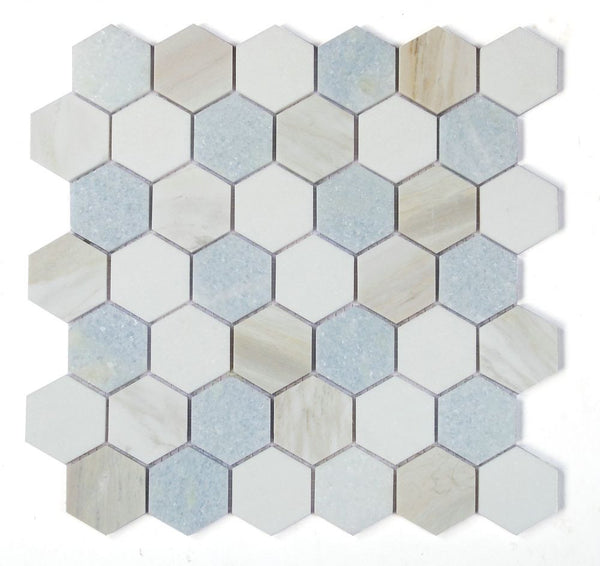
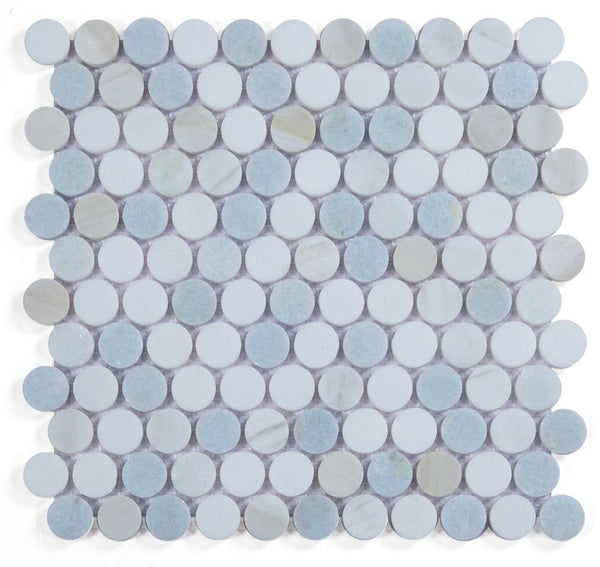
Any 1-inch or smaller mosaic tile, hexagon, penny round, square, or any specialty shape, provides excellent slip resistance through its high grout line density. The tile material itself (porcelain, ceramic, glass, recycled glass, natural stone) determines additional DCOF contribution, but the format alone significantly boosts safety.
Shop Hexagon Mosaics → | Shop Penny Rounds →
3. Textured Porcelain
Porcelain tiles with raised, embossed, or deeply textured surfaces are purpose-designed for wet floor safety. Many are specifically tested and rated for commercial wet environments, which means they meet or exceed residential shower floor requirements. Available in wood-look, stone-look, geometric, and abstract textures.
4. Natural Slate
Slate's naturally cleft, layered surface provides texture that no manufactured tile can replicate. In most formats, honed or natural-finish slate will comfortably exceed the 0.42 DCOF minimum. Its deep charcoal, green, and rust tones also work beautifully in spa-style bathrooms.
5. Basketweave & Herringbone Mosaics
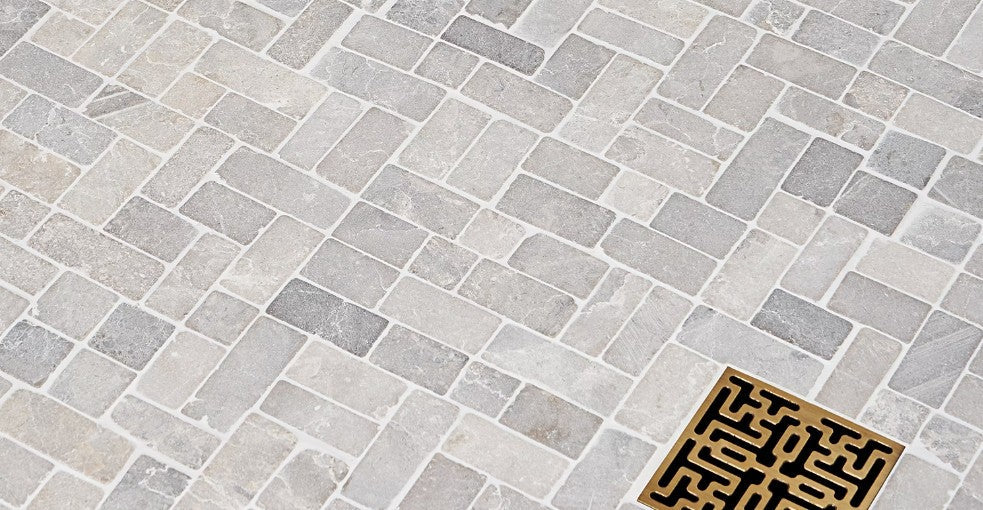
These pattern formats, made up of small rectangular or square pieces in an interlocking arrangement, provide grip both through their grout line density and the slight directional change created by the pattern itself. Basketweave in particular has been used on bathroom floors for over a century, in part because it works so well.
Shop Basketweave Tiles → | Shop Herringbone Tiles →
What to Avoid on a Shower Floor
Knowing what not to use is just as important as knowing what works. These are the tile types most likely to create a slip hazard in a shower:
Polished or High-Gloss Large Format Tiles
Large polished tiles, the kind used on hotel lobby floors or high-end interior floors, are extremely beautiful and extremely slippery when wet. Many have DCOF ratings well below 0.42. They are not appropriate for shower floors regardless of how good they look in a showroom.
Polished Marble
Polished marble has an elegant mirror finish that's stunning on walls. On a shower floor, it becomes a slip hazard. If you love marble, choose a honed finish (matte) and verify the DCOF rating. Honed marble with additional texture treatment can meet the 0.42 threshold.
Any Tile Rated for Wall Use Only
Some tiles, particularly decorative glazed ceramics, glass mosaics with highly polished surfaces, and specialty decorative tiles, are manufactured and rated for wall applications only. These will have a PEI rating of 0 or 1 and should never be used on any floor surface, let alone a wet shower floor.
Beyond the Tile: Other Factors That Affect Shower Floor Safety
The tile itself is the most important safety factor, but it's not the only one. These additional elements also affect how safe your shower floor is in practice.
Grout Color and Width
Wider grout joints provide more grip than narrow ones, all else being equal. But grout width is determined largely by tile size, so this is really just another way of saying smaller tiles are safer. Grout color doesn't affect slip resistance, but darker grout hides soap scum and mildew better in shower environments.
Grout Type
Epoxy grout is non-porous, stain-resistant, and maintains its surface texture better over time than cement grout, which can erode in wet environments. In a shower, epoxy grout is worth the extra cost, both for safety (consistent surface) and for maintenance (no annual sealing required).
Cleanliness
Soap scum, shampoo residue, and conditioning products can dramatically reduce the effective grip of any tile surface, even a high-DCOF textured tile. Regular cleaning with a non-residue cleaner and rinsing the floor after each use maintains the tile's actual performance. This is one reason textured tiles and tiles with grout lines are preferred, they maintain grip even when slightly dirty.
Shower Mat or No Shower Mat
A suction-cup shower mat adds an extra layer of safety regardless of tile choice. However, mats can trap moisture and soap residue underneath, creating mold problems if not removed and dried regularly. A slip-resistant tile floor is a better long-term solution than relying on a mat to compensate for a poor tile choice.
How to Verify DCOF Before Buying
When you're evaluating a specific tile for your shower floor, here's how to find its DCOF rating:
- Check the product specifications — Reputable tile manufacturers list DCOF in the product data sheet (often downloadable from the product page)
- Ask the retailer — If DCOF isn't listed online, call or email the retailer. Any tile being sold for wet floor use should have this data available
- Look for "suitable for wet floor use" language — Products specifically marketed for shower floors almost always meet the 0.42 threshold; verify if there's any doubt
- When in doubt, choose smaller — If you can't verify DCOF for a specific tile, defaulting to a small-format mosaic or pebble tile gives you built-in safety through grout line density
At Tile Choices, our team is happy to help you verify slip resistance ratings for any tile in our collection. Call us at 614-515-7816 or email sales@tilechoices.com.