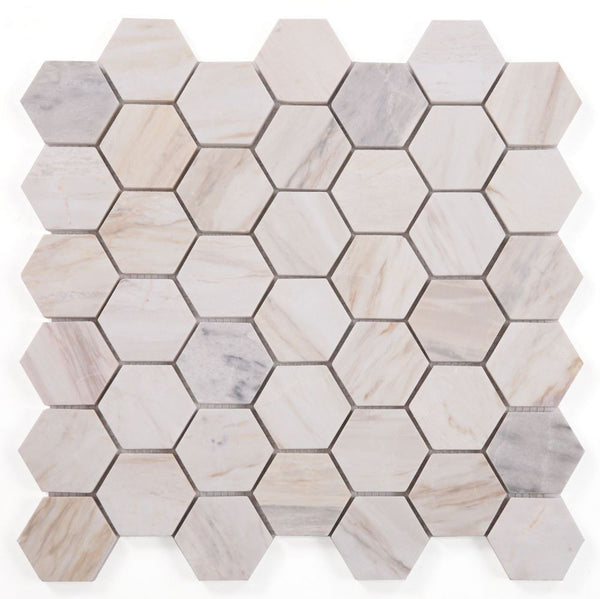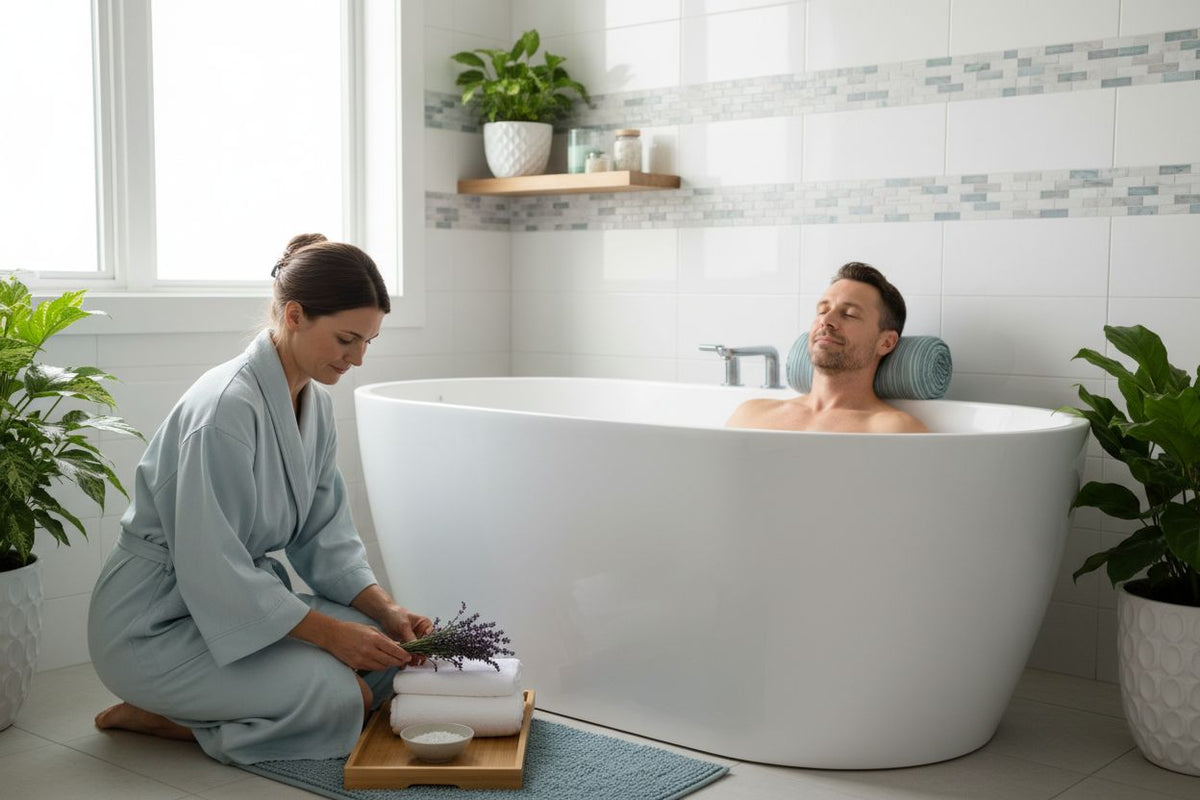
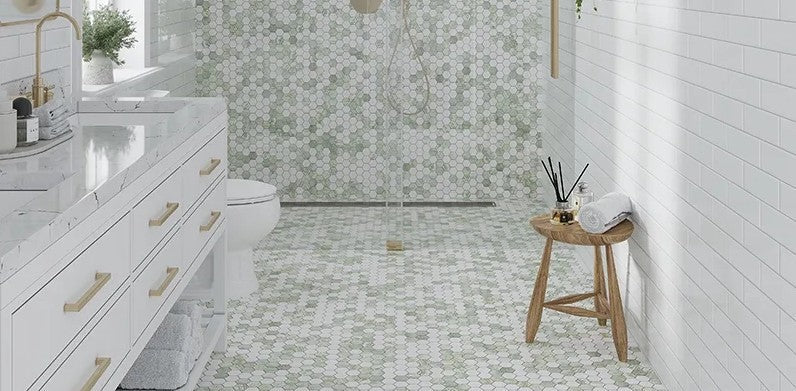
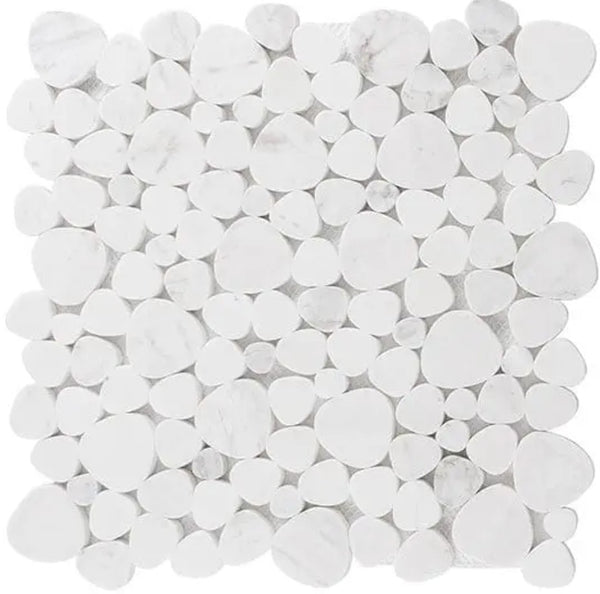
No manufactured tile can replicate what natural stone brings to a shower floor. The natural variation in veining, the depth of color, the genuine uniqueness of every slab and tile, these are qualities that are simply beyond the reach of porcelain or ceramic, no matter how sophisticated the printing technology. A marble mosaic shower floor, a travertine pebble floor, or a slate tile shower is something that looks better in person than in any photograph and better with each passing year.
But natural stone is not a low-maintenance material, and the shower is not a forgiving environment. Understanding exactly what stone requires, and what it rewards, is the only way to make a confident decision about whether it's right for your bathroom. This is the complete, honest guide.
Browse our natural stone tile collection at Tile Choices →
The Most Popular Natural Stone Options for Shower Floors
Marble
Marble is the prestige choice, the material that has defined luxury bathrooms across every era of design history. Its dramatic veining, translucent depth of color, and unmistakable elegance are unmatched. In a shower, well-chosen and properly maintained white Carrara or gray Bardiglio marble creates a spa experience that genuinely transforms the daily routine.
The honest tradeoffs: Marble is relatively soft (rated 3–4 on the Mohs scale) and porous, making it vulnerable to etching from acidic substances, including common soap, shampoo, and cleaning products. Polished marble can be too slippery for shower floors; honed (matte) marble is required. Marble must be sealed before installation and resealed every 6–12 months. Consistent maintenance is non-negotiable.
Best formats for shower floors: 1×1, 1×2, or 2×2 mosaic; penny round; small hex. Small formats adapt naturally to the shower floor slope and provide additional grip through grout line density. See our shower floor tile size guide for more on why small format works best on sloped surfaces.
Travertine
Travertine is a form of limestone with a distinctive pitted, honeycomb-like internal structure that gives it a warm, earthy texture unlike any other stone. Its natural color palette, warm creams, tans, walnuts, and golds, works beautifully in spa-inspired, Mediterranean, and organic-modern bathrooms. Travertine's natural surface texture makes it one of the more inherently slip-resistant stone options.
Filled vs. unfilled: Travertine tiles come either unfilled (with natural pits and voids in the surface) or filled (with grout or epoxy compound). For shower floors, unfilled travertine provides better grip because the surface irregularity creates natural traction. Filled travertine has a smoother surface and requires careful finish selection for safe wet-floor use. Either way, travertine must be sealed regularly.
Best formats for shower floors: 2×2 mosaic, tumbled stone (naturally rounded edges that reduce chipping), or small pebble format. Tumbled travertine has a softened, antique quality that works particularly well in rustic and Mediterranean-inspired bathrooms.
Slate
Slate is arguably the most practical natural stone for shower floors. Its naturally cleft, layered surface provides outstanding grip, the texture is created by the geology of the stone rather than by surface treatment, which means it doesn't smooth out or wear off over time. Slate is also more moisture-resistant than marble or travertine, requiring less frequent sealing.
In color, slate ranges from deep charcoal and blue-black through forest greens and warm rusty reds to gray-brown mixed tones. This variety makes it adaptable to a wide range of bathroom aesthetics. Dark slate is particularly striking in contemporary bathrooms with crisp white walls and matte black fixtures.
Best formats for shower floors: Slate works in small mosaic format as well as medium formats like 4×4 and 6×6, its textured surface compensates somewhat for fewer grout joints compared to mosaic tiles. Always verify DCOF regardless of format.
Limestone
Limestone is softer and more porous than marble, making it more demanding in terms of maintenance in a shower environment. It's more vulnerable to etching and staining and requires frequent sealing. However, limestone's muted, chalky tones, soft whites, warm grays, and beiges, create a beautifully quiet, natural aesthetic that is genuinely distinctive. If you choose limestone for a shower floor, commit fully to the sealing and maintenance routine.
Granite
Granite is the hardest and densest natural stone option, more durable than marble, travertine, or limestone, and more resistant to moisture absorption. It still requires sealing but less frequently than softer stones. The main consideration for granite on a shower floor is finish: polished granite is dangerously slippery when wet. Honed or flamed granite provides adequate grip for wet floor use. Granite's speckled, varied patterns are less dramatic than marble's veining but have their own confident, modern quality.
The Sealing Requirement: What You Need to Know
Sealing is the non-negotiable maintenance requirement for any natural stone shower floor. Understanding why it's necessary helps motivate consistent follow-through.
Why Stone Must Be Sealed
Natural stone is porous, it has microscopic channels and voids that allow liquid to penetrate the surface. In a shower, this means water, soap, shampoo, and conditioner can work their way into the stone. Without sealing, this leads to staining (soap scum becomes embedded in the stone), discoloration, and, in the worst cases, moisture penetrating through to the subfloor and causing structural damage.
How to Seal Properly
- Before installation: Apply a penetrating impregnator sealer (not a topical coating) to the stone tiles before setting them. This protects the stone from the inside out and helps prevent grout from staining the stone face during grouting.
- After grouting: Once the grout has cured fully (typically 48–72 hours), apply sealer again to both the stone and the grout joints.
- Resealing schedule: Marble and limestone, every 6–12 months. Travertine and granite, annually. Slate, every 1–2 years depending on usage. Test by dripping water on the surface; if it absorbs rather than beads, it's time to reseal.
Slip Resistance for Natural Stone Shower Floors
Natural stone's slip resistance varies more than manufactured tile because it depends on both the stone type and the surface finish. In general:
- Slate and textured travertine — Among the highest slip resistance of any shower floor material; the natural surface texture provides excellent DCOF
- Honed marble and limestone — Moderate slip resistance; adequate for shower floors when in small mosaic format with dense grout lines
- Polished marble, travertine, and granite — Not recommended for shower floors; polished surfaces have low DCOF when wet
- Honed granite — Good slip resistance; adequate for shower floor use
Always verify the DCOF rating of your specific stone tile before installation. Our guide on slip-resistant shower floor tile and DCOF ratings explains the full measurement standard and what numbers to look for.
Cleaning Natural Stone Shower Floors
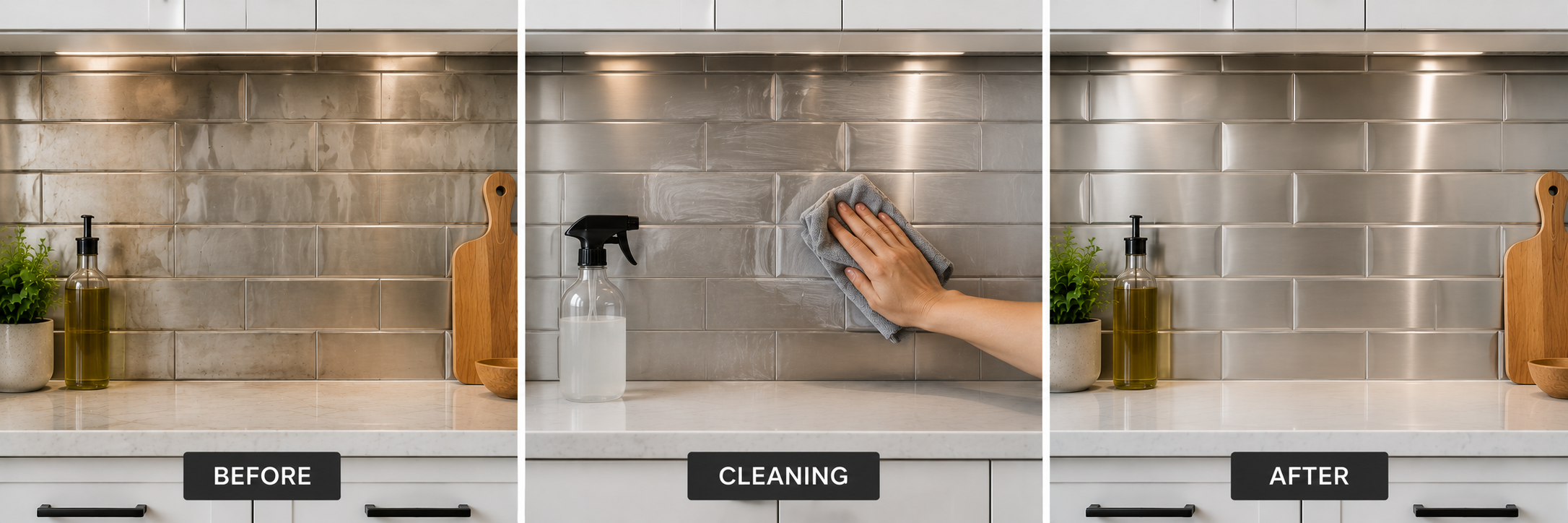
The cleaning rules for natural stone are strict, not because stone is fragile in general, but because the wrong products cause permanent damage that is expensive to repair or impossible to reverse.
- Use pH-neutral cleaners only — Products specifically formulated for natural stone. Never use vinegar, citrus, bleach, or generic bathroom cleaners on stone.
- Rinse after every shower — Soap, shampoo, and conditioner are mildly acidic and will gradually etch stone surfaces if allowed to dry on them repeatedly.
- Dry when possible — A quick squeegee after showering dramatically reduces mineral deposits and extends the time between deep cleanings.
- Address stains promptly — Most stains can be removed from sealed stone if addressed within hours. Set stains are much harder to treat.
Is Natural Stone Right for Your Shower?
Natural stone shower floors are the right choice for homeowners who want a genuinely luxurious, one-of-a-kind bathroom surface and are willing to commit to proper maintenance. The rewards, beauty, uniqueness, long-term character, are real and meaningful. The requirements, sealing, pH-neutral cleaning, periodic maintenance, are entirely manageable with the right habits in place.
For a full comparison of natural stone against porcelain, glass mosaic, pebble, and ceramic, see our comprehensive guide to the best shower floor tile options. For everything you need to know about size selection for stone mosaic shower floors, see our shower floor tile size guide.
Shop natural stone tiles at Tile Choices →
Questions about stone tile? Our team is here to help — call 614-515-7816 or email sales@tilechoices.com.