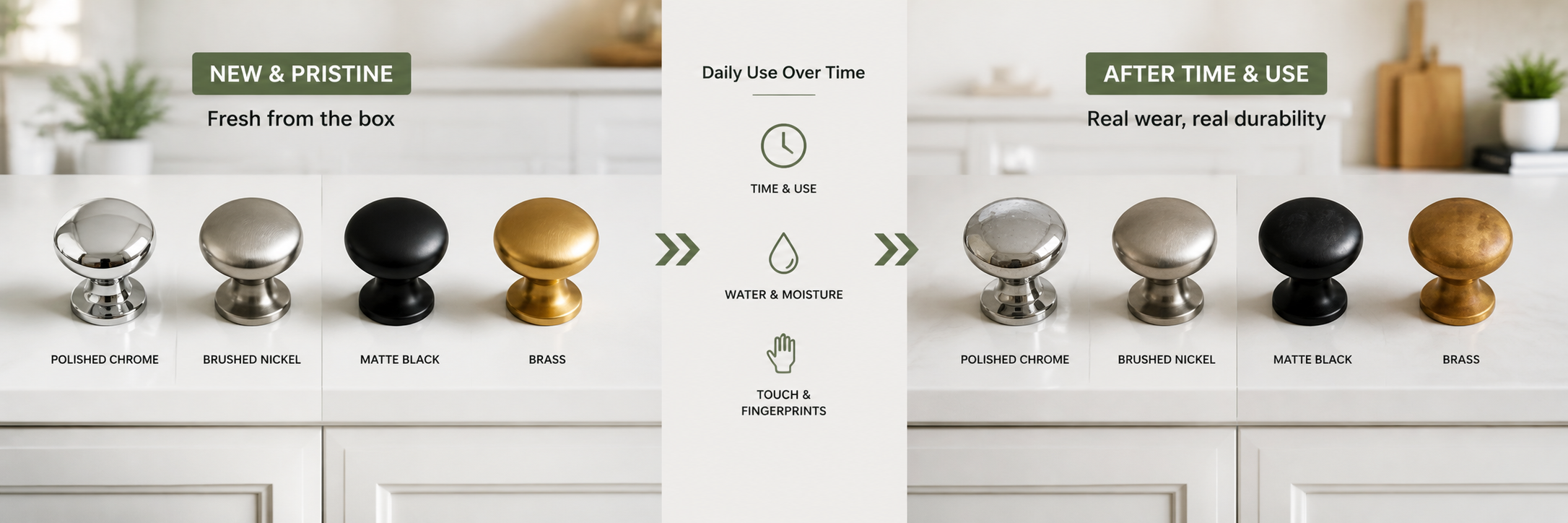
Every conversation about cabinet hardware finishes eventually turns to design, which finish looks best with which tile, which finish is trending right now, which finish coordinates with the faucet. Those are real and important questions. But there is another question that deserves equal attention before you commit to a finish for hardware that will be touched dozens of times a day for the next decade: which finish actually holds up?
Not all hardware finishes are created equal. The way a finish is applied, what it is applied over, and how it interacts with daily contact, moisture, cleaning products, and UV exposure determines whether that Matte Black knob still looks like the day it was installed five years from now, or whether it shows wear at every touch point, fades unevenly, or develops the kind of patchy appearance that makes you regret the choice every time you walk into the kitchen.
This guide covers how cabinet knob finishes are applied, which finishes perform best in high-use and high-humidity environments, and what the Jeffrey Alexander limited lifetime warranty covers in practical terms. By the end you will have a clear picture of which finish is the right long-term choice for your specific kitchen or bathroom, separate from, and in addition to, the design question of which finish looks best. For the design side of the finish decision, the hardware finish and tile pairing guide covers every major palette combination in full.
How Cabinet Hardware Finishes Are Applied
Understanding finish durability starts with understanding how finishes are applied, because the application method determines both the adhesion quality and the long-term wear characteristics of the surface.
The majority of cabinet hardware finishes, including most of those in the Jeffrey Alexander line, are applied through a multi-step process that involves surface preparation, a base coat or plating layer, and a topcoat sealer. The base material matters: Jeffrey Alexander knobs are cast from solid zinc alloy, which provides a stable, non-porous substrate that accepts applied finishes evenly and does not flex under load. Hollow or stamped hardware is more prone to finish separation at stress points because the thin base material flexes when force is applied, over time, that flexing breaks down the adhesion between the finish and the substrate.
Polished finishes, Polished Chrome, Polished Nickel, Polished Brass, are typically achieved through electroplating, a process that deposits a thin layer of the finish metal directly onto the substrate through an electrochemical process. Electroplated finishes are highly durable when the plating layer is thick enough and the substrate is properly prepared, but thinner plating on lower-quality hardware can wear through at contact points over time.
Brushed and matte finishes, Brushed Gold, Satin Nickel, Matte Black, Brushed Oil Rubbed Bronze, are applied through a combination of plating and mechanical or chemical surface treatment that produces the directional grain or flat appearance. The brushed texture is not just aesthetic: the micro-texture created by brushing disperses light differently than a smooth polished surface, which is what makes brushed finishes more forgiving of fingerprints, minor surface contact, and everyday wear.
Specialty and antiqued finishes, Distressed Antique Brass, Lightly Distressed Antique Brass, Distressed Oil Rubbed Bronze, involve additional patination steps that create deliberate surface variation. These finishes are designed to evolve slightly over time, which is part of their character but also means they are the most variable in long-term appearance.
Finish Performance in Kitchen Environments
The Kitchen Durability Challenge
Kitchens subject cabinet hardware to a specific combination of stresses that most other rooms do not: heat from cooking, steam and grease aerosols from the stovetop, repeated daily contact with hands that may carry oils, food residue, or cleaning product residue, and the occasional contact with a damp cloth during cleanup. A finish that performs well in a bedroom or living room application may not hold up as well in a kitchen environment that runs hot and humid for hours each day.
The finishes that consistently perform best in high-use kitchen environments share two characteristics: they are applied over solid substrate material rather than hollow or stamped metal, and they have a surface texture or treatment that conceals minor contact marks rather than displaying them. Both of those characteristics are present across the Jeffrey Alexander line, which is part of why the brand supports its hardware with a limited lifetime warranty, the construction quality behind the finish is sufficient to make that warranty practical rather than theoretical.
Brushed Finishes: The Kitchen Workhorse
Brushed finishes, Brushed Gold, Satin Nickel, Brushed Oil Rubbed Bronze, Brushed Pewter, Satin Bronze, are the best performers in kitchen environments for one simple reason: the micro-texture of the brushed surface disperses fingerprints and minor surface marks in a way that polished and matte surfaces cannot. When you touch a brushed gold knob with a slightly oily hand, the oils distribute into the surface texture rather than sitting on top as a visible smudge. The knob may need wiping, but between cleanings it does not look dirty. A polished chrome knob or a matte black knob in the same situation shows the mark clearly and continuously until wiped.
Among brushed finishes, Satin Nickel has the longest track record of any hardware finish in residential kitchens, decades of consistent performance across millions of installations is as close to proven durability data as the hardware category gets. Brushed Gold has become the second-most used finish in contemporary kitchen hardware and is showing the same long-term stability characteristics as Satin Nickel based on its performance since becoming mainstream. Brushed Oil Rubbed Bronze has been a consistent performer in traditional and transitional kitchens for many years. All three are strong choices for kitchen cabinet knobs from a durability standpoint.
Polished Finishes: High Impact, Higher Maintenance
Polished Chrome and Polished Nickel are electroplated finishes with a mirror-bright surface that shows fingerprints, water spots, and contact marks immediately and continuously. In a kitchen that is wiped down after every use, a professional kitchen, a home where countertops are cleaned daily. polished finishes can look consistently excellent. In a family kitchen where the hardware gets touched many times before anyone wipes it down, polished finishes require more frequent cleaning to maintain their appearance.
This is a maintenance difference, not a durability difference. Polished Chrome and Polished Nickel are among the most structurally durable finishes available because the electroplating process deposits a hard, dense layer of chromium or nickel directly onto the substrate. The finish does not wear off in the way softer applied coatings can. What polished finishes do show is surface contact, they display the evidence of use more visibly than brushed alternatives. For kitchens where maintenance is not a concern or where the kitchen design specifically calls for the brightness and reflectivity of a polished finish, Polished Chrome and Polished Nickel are excellent long-term choices. For high-traffic family kitchens, brushed alternatives are the lower-maintenance option without sacrificing durability.
Matte Black: Strong Visually, Requires Consistent Care
Matte Black is one of the most visually compelling finishes in the Jeffrey Alexander line, it photographs well, reads as intentional and modern, and creates strong contrast against light tile and cabinetry. In terms of durability, quality Matte Black finishes on solid zinc substrate are stable and do not show wear in the structural sense, the finish does not flake, peel, or degrade the way lower-quality coated finishes can over time.
The practical challenge with Matte Black in kitchen environments is fingerprint visibility. The flat, non-reflective matte surface shows fingerprints and skin oils clearly because there is no surface texture or reflectivity to disperse or disguise them. In a kitchen that is used heavily throughout the day, Matte Black knobs may need wiping more frequently than brushed alternatives. Cleaning is straightforward, a damp cloth, no abrasive cleaners, but the frequency is higher. For kitchens where the design commitment to Matte Black is strong and maintenance is manageable, it remains an excellent finish choice. For busy family kitchens where low-maintenance hardware is a priority, Brushed Gold or Satin Nickel provides comparable visual impact with noticeably easier daily care.
Finish Performance in Bathroom Environments
Bathrooms present a different durability challenge than kitchens. The primary stressor is moisture, steam from showers, condensation from temperature changes, and the generally higher ambient humidity of a closed bathroom environment. Hardware finishes in bathroom applications need to resist the effects of sustained moisture exposure without oxidizing, developing surface blooms, or losing their applied finish over time.
Best Finishes for High-Humidity Bathrooms
Satin Nickel and Polished Chrome are the most moisture-resistant finishes in the Jeffrey Alexander line for bathroom applications, and they have been the standard choices for bathroom hardware precisely because of their proven performance in humid environments. The electroplating processes used for both finishes produce a surface that does not interact with moisture in ways that cause degradation over normal use timelines.
Brushed Gold has proven equally durable in bathroom environments in the years since it became a mainstream hardware finish, and its warm tone makes it a natural choice for bathrooms with warm tile palettes, travertine, warm ceramic, cream subway tile, or any of the warmer options in the bathroom tile collection. Polished Nickel is another strong bathroom performer, slightly warmer than Chrome, it bridges the gap between the cool clarity of Chrome and the warmth of Gold finishes. For coordinating bathroom hardware with specific tile and fixture combinations, the cohesive design guide covers bathroom applications in detail.
Finishes to Use With Care in Wet Environments
Specialty patinated finishes, Distressed Antique Brass, Distressed Oil Rubbed Bronze, are applied finishes that include deliberate surface variation as part of their character. In high-humidity bathroom environments, these finishes can evolve more quickly than in dry applications, sometimes developing additional patination beyond the original finish character. This is not always a problem, many homeowners appreciate the living quality of a patinated finish that develops naturally in use, but it is worth understanding before selecting these finishes for bathroom hardware. If finish consistency over time is a priority, the standard Brushed or Satin finishes are the more predictable choice for bathroom applications.
What the Jeffrey Alexander Lifetime Warranty Actually Covers
Jeffrey Alexander backs all hardware with a limited lifetime warranty, and understanding what that warranty covers in practical terms is part of the finish durability picture. The warranty covers defects in materials and workmanship under normal residential use, meaning finish failures that result from manufacturing defects rather than abusive use or improper cleaning. A finish that peels, flakes, or separates from the substrate under normal use conditions is a warranty issue. A finish that develops wear marks at contact points after years of daily use is normal aging, not a manufacturing defect.
The practical implication is that the warranty provides meaningful protection against premature finish failure but is not a guarantee of permanent appearance. The finishes in the Jeffrey Alexander line are durable enough that premature failure is rare, which is the actual value of the warranty as a quality signal. A brand that cannot back its hardware with a lifetime warranty is signaling that it does not expect the hardware to last a lifetime. Jeffrey Alexander's willingness to make that commitment reflects the construction quality behind the finish. For specific warranty questions on hardware purchased through Tile Choices, contact the team at sales@tilechoices.com or +1 614-515-7816.
Finish Cleaning and Maintenance by Type
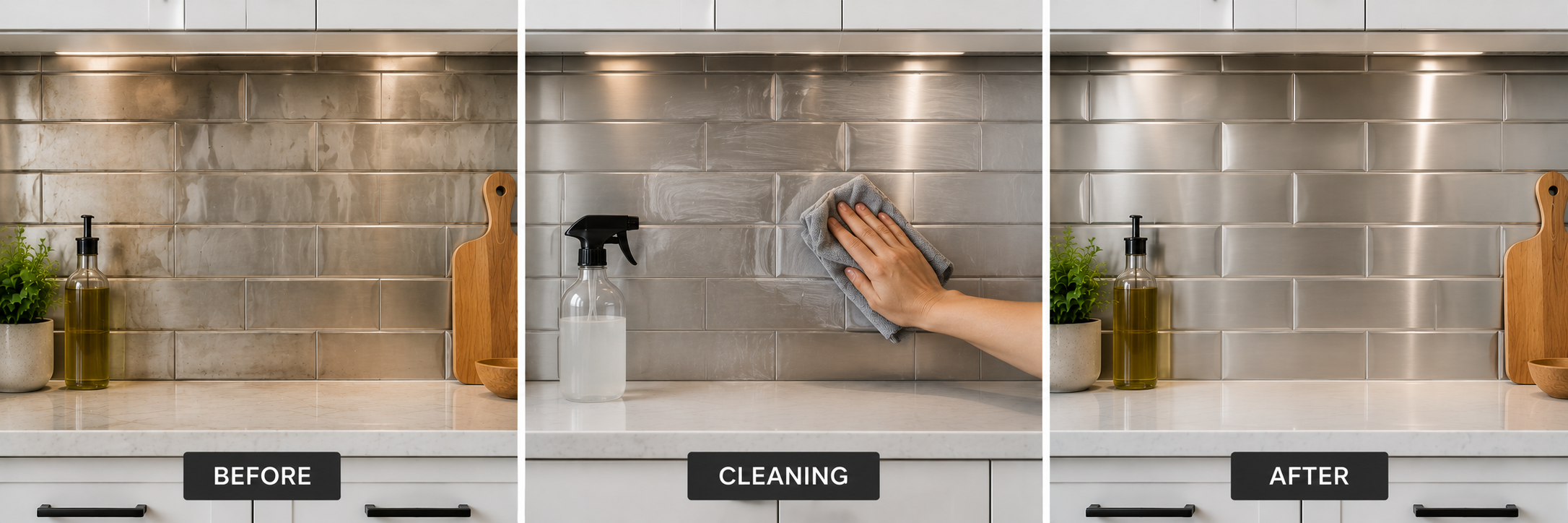
Finish longevity in installed hardware is as much about maintenance as construction quality. The wrong cleaning approach, abrasive cleaners, harsh chemicals, steel wool, can damage even the best-applied finishes over time. The right approach keeps hardware looking its best with minimal effort.
For all Jeffrey Alexander finishes, the baseline maintenance recommendation is the same: a damp soft cloth for regular cleaning, mild dish soap for grease or food residue, and thorough drying after any wet cleaning. Never use abrasive scrubbers, steel wool, bleach-based cleaners, or acidic cleaners on any applied hardware finish. These products damage the topcoat layer that protects the finish and base material, and the damage is cumulative and irreversible.
Polished finishes benefit from occasional application of a hardware-safe metal polish to maintain their mirror surface. Brushed finishes should always be wiped in the direction of the grain — against the grain can disrupt the micro-texture that gives the finish its character. Matte finishes require no special treatment beyond the standard damp-cloth routine. Patinated and distressed finishes should never be treated with polish or brightening agents, as these products remove the patination that defines the finish's character.