

Renovating your kitchen means every detail counts, especially when it comes to choosing tiles that will stand up to everyday life while looking beautiful for years. For many American homeowners, the right tile not only brings style but also impacts daily usability and upkeep. With so many materials, patterns, and finishes available, finding a balance between visual appeal and performance can be challenging. This guide breaks down how to assess your unique kitchen needs and select the most stylish, durable tile options for lasting results.
Table of Contents
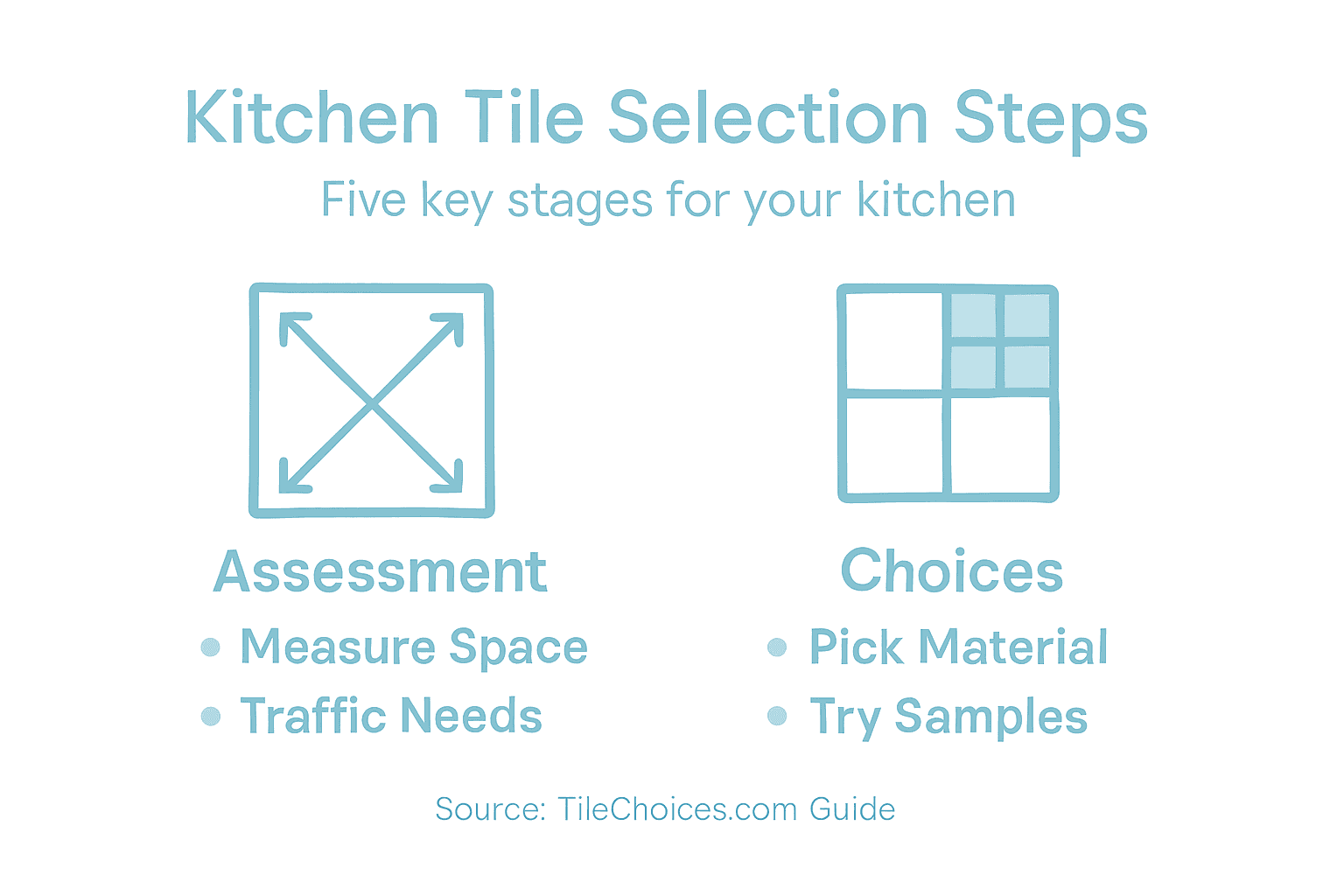
- Step 1: Assess Your Kitchen’s Tile Requirements
- Step 2: Explore Suitable Tile Materials and Finishes
- Step 3: Select Colors and Patterns to Match Your Style
- Step 4: Evaluate Durability and Maintenance Needs
- Step 5: Verify Fit by Ordering Samples
Quick Summary
| Key Point | Explanation |
|---|---|
| 1. Assess Your Tile Requirements | Evaluate kitchen layout, traffic, and moisture areas for informed tile selection. |
| 2. Choose the Right Tile Materials | Select from ceramic, porcelain, natural stone, or glass based on durability and maintenance needs. |
| 3. Consider Colors and Patterns | Opt for colors and patterns that create harmony and balance with your existing kitchen elements. |
| 4. Evaluate Durability Factors | Research wear and stain resistance to ensure tiles will withstand kitchen use over time. |
| 5. Order Samples for Evaluation | Request tile samples to test color, texture, and fit in your kitchen before finalizing your choice. |
Step 1: Assess Your Kitchen’s Tile Requirements
Selecting the right tile for your kitchen involves understanding your specific space’s functional needs and design goals. This critical first step helps you make an informed decision that balances aesthetic appeal with practical performance.
To effectively assess your kitchen’s tile requirements, you’ll want to evaluate several key factors:
- Kitchen Layout: Consider the specific areas requiring tile - backsplash, flooring, countertop accent
- Traffic Patterns: High-traffic zones need more durable tiles with higher wear resistance
- Moisture Exposure: Areas near sinks and cooking zones demand tiles with superior water and stain resistance
- Maintenance Preferences: Some tiles require more upkeep than others
The National Kitchen & Bath Association’s planning guidelines recommend thoroughly examining your kitchen’s functional needs before selecting tiles. This means understanding how different tile materials perform under specific conditions like heat, moisture, and daily wear.
A comprehensive tile assessment also involves measuring your specific spaces precisely. Take detailed measurements of areas like backsplashes and flooring to determine exact tile quantities and potential cutting requirements. Remember that professional tile installation standards emphasize proper substrate preparation and material selection.
Pro tip: Always purchase approximately 10% extra tiles beyond your measured area to account for potential breakage, cuts, and future replacements.
Step 2: Explore Suitable Tile Materials and Finishes
Selecting the right tile materials and finishes for your kitchen is a critical decision that impacts both aesthetics and functionality. Understanding the unique characteristics of different tile options will help you make an informed choice that meets your design and performance needs.
Kitchen tiles come in several primary materials, each with distinct advantages:
- Ceramic Tiles: Affordable, versatile, and available in countless colors and patterns
- Porcelain Tiles: Extremely dense, less porous, and highly durable for high-traffic areas
- Natural Stone Tiles: Unique patterns, elegant appearance, but require more maintenance
- Glass Tiles: Modern look, excellent for backsplashes, reflect light beautifully
Professional tile selection goes beyond visual appeal - it’s about matching material performance to specific kitchen requirements.
The International Masonry Institute’s tile construction guidelines emphasize the importance of understanding performance characteristics when selecting kitchen tiles. Different materials offer varying levels of water resistance, durability, and maintenance needs.

Consider the finish of your tiles as carefully as the material itself. Glossy finishes create a reflective, modern look but show water spots more easily. Matte finishes provide a more subtle appearance and hide minor imperfections. Some materials like natural stone tiles offer unique texture variations that can add depth and character to your kitchen design.
Here’s a quick comparison of common kitchen tile materials and where they perform best:
| Tile Material | Strengths | Best Use Case | Basic Maintenance |
|---|---|---|---|
| Ceramic | Budget-friendly, versatile | Backsplashes, walls | Wipe with mild cleaner |
| Porcelain | Highly durable, low absorption | High-traffic floors | Damp mop regularly |
| Natural Stone | Unique patterns, upscale | Feature walls, accents | Seal annually, gentle cleaners |
| Glass | Glossy, easy to clean | Decorative backsplashes | Non-abrasive cleaner |
Pro tip: Always obtain tile samples and view them in your kitchen’s actual lighting to understand how color and texture will truly appear in your space.
Step 3: Select Colors and Patterns to Match Your Style
Choosing tile colors and patterns is about creating a cohesive visual narrative that reflects your personal style and enhances your kitchen’s overall design. The right combination can transform your space from ordinary to extraordinary, making your kitchen feel both functional and uniquely yours.
Consider these key strategies when selecting tile colors and patterns:
- Color Harmony: Choose colors that complement your existing kitchen elements
- Visual Balance: Mix patterns thoughtfully to create visual interest without overwhelming the space
- Lighting Considerations: Evaluate how different colors and patterns appear under your kitchen’s specific lighting conditions
- Mood and Atmosphere: Select colors that evoke the emotional tone you want in your kitchen
The most successful kitchen designs tell a story through carefully curated color and pattern selections.
Kitchen design trends for 2024 reveal emerging preferences for subtle yet impactful tile choices. Neutral tones with strategic accent areas are becoming increasingly popular, allowing homeowners to create dynamic spaces without committing to extreme design statements.
When mixing patterns, follow the rule of three: combine one large-scale pattern, one medium-scale pattern, and one small-scale pattern to create visual depth. This approach prevents your kitchen from feeling chaotic while maintaining design interest. Some homeowners might choose mixing tile patterns to create unique focal points in their kitchen design.
Pro tip: Create a design board with tile samples, paint swatches, and cabinet finishes to visualize how colors and patterns will interact before making your final selection.
Step 4: Evaluate Durability and Maintenance Needs
Understanding the durability and maintenance requirements of kitchen tiles is crucial to ensuring your investment looks great and performs well for years to come. This step involves carefully analyzing how different tile materials will withstand your kitchen’s specific usage patterns and cleaning demands.
Key durability factors to consider include:
- Wear Resistance: Assess tiles’ ability to handle daily foot traffic and kitchen activities
- Stain Protection: Evaluate how easily tiles absorb or repel liquids and potential spills
- Scratch Resistance: Determine tiles’ durability against utensils, appliance movement, and routine kitchen impacts
- Cleaning Requirements: Understand the maintenance effort needed to keep tiles looking pristine
Not all tiles are created equal - your selection must match your lifestyle and maintenance tolerance.
Tile construction standards provide critical insights into material performance characteristics. Different tiles have varying water absorption rates, physical strength, and resistance to wear that directly impact their long-term kitchen functionality.
Professional tile experts recommend examining technical specifications like Percentage of Water Absorption and Mohs Hardness Scale Rating to understand a tile’s true durability potential. Porcelain and ceramic tiles typically offer superior performance in high-traffic kitchen environments, with porcelain providing slightly higher density and lower water absorption.
Compare important durability ratings for typical kitchen tile options:
| Tile Type | Water Absorption | Scratch Resistance (Mohs) | Expected Lifespan |
|---|---|---|---|
| Porcelain | Under 0.5% | 7-8 | 20+ years |
| Ceramic | 0.5-3% | 5-7 | 15-20 years |
| Natural Stone | Varies by type | 4-7 | 10-30 years |
Pro tip: Request manufacturer technical specifications and conduct a sample durability test by dropping a few droplets of common kitchen substances like oil, wine, and coffee to assess stain resistance before making your final selection.
Step 5: Verify Fit by Ordering Samples
Before investing in a full tile installation, ordering samples is a critical step that allows you to visualize and test how tiles will actually look and perform in your kitchen. This process helps prevent costly mistakes and ensures your final selection meets both aesthetic and functional requirements.
When ordering tile samples, focus on these key evaluation criteria:
- Color Accuracy: Compare samples under different lighting conditions
- Texture and Finish: Feel the tile’s surface and assess its tactile qualities
- Size and Scale: Understand how the tile will look in your actual kitchen space
- Material Performance: Test sample durability with potential kitchen substances
A small investment in samples can save thousands in potential redesign expenses.
Ceramic tiling specifications recommend obtaining multiple samples to thoroughly assess fit and design compatibility. Professional designers suggest creating a temporary layout using these samples to visualize the final result.
To maximize your sampling process, consider requesting samples from multiple manufacturers and comparing them side by side. Pay attention to subtle variations in color, surface texture, and how samples interact with your existing kitchen elements. Some tile retailers offer sample boxes that include multiple tiles, allowing for more comprehensive evaluation.
Pro tip: Place samples in high-traffic areas of your kitchen for a few days to observe how they handle daily wear, light exposure, and potential staining.
Find the Perfect Kitchen Tiles That Match Your Style and Durability Needs
Choosing the right tile for your kitchen can feel overwhelming when balancing durability, style, and maintenance. This guide highlights important challenges like selecting materials that withstand high traffic and moisture while complementing your kitchen’s colors and patterns. If you have wondered how to test tile samples in your lighting or ensure stain resistance, you are not alone.
At TileChoices.com, we understand these concerns and offer a vast selection of ceramic, porcelain, glass, and natural stone tiles designed specifically for kitchens. Explore our collections with detailed descriptions and order samples to see how each tile fits your unique space. With easy online ordering and expert support, you can confidently transform your kitchen today.
Ready to start your kitchen tile journey with confidence Discover the ideal tiles that meet your design and durability goals now at TileChoices.com. View our full range and order samples to experience quality firsthand before you commit.
Frequently Asked Questions
How do I assess my kitchen’s tile requirements?
To assess your kitchen’s tile requirements, evaluate your kitchen layout, traffic patterns, moisture exposure, and maintenance preferences. Measure your specific spaces like backsplashes and flooring to determine the exact quantity of tiles needed.
What tile materials are suitable for kitchens?
Kitchen tiles typically come in ceramic, porcelain, natural stone, and glass. Each material has unique advantages, such as ceramic’s affordability and porcelain’s durability, making it essential to choose one that fits your functional needs.
How can I select colors and patterns for my kitchen tiles?
To select colors and patterns, consider color harmony, visual balance, and how different shades appear under your kitchen’s lighting. Aim to tell a cohesive visual story by mixing patterns thoughtfully without overwhelming the design.
What factors should I evaluate for the durability of kitchen tiles?
When evaluating durability, consider wear resistance, stain protection, scratch resistance, and cleaning requirements. Assess these factors against your kitchen’s specific usage patterns to ensure the tiles will perform well over time.
Why is it important to order tile samples before installation?
Ordering tile samples allows you to visually and physically assess how tiles will look and perform in your kitchen. Test for color accuracy, texture, and material performance to avoid costly mistakes during the final selection process.