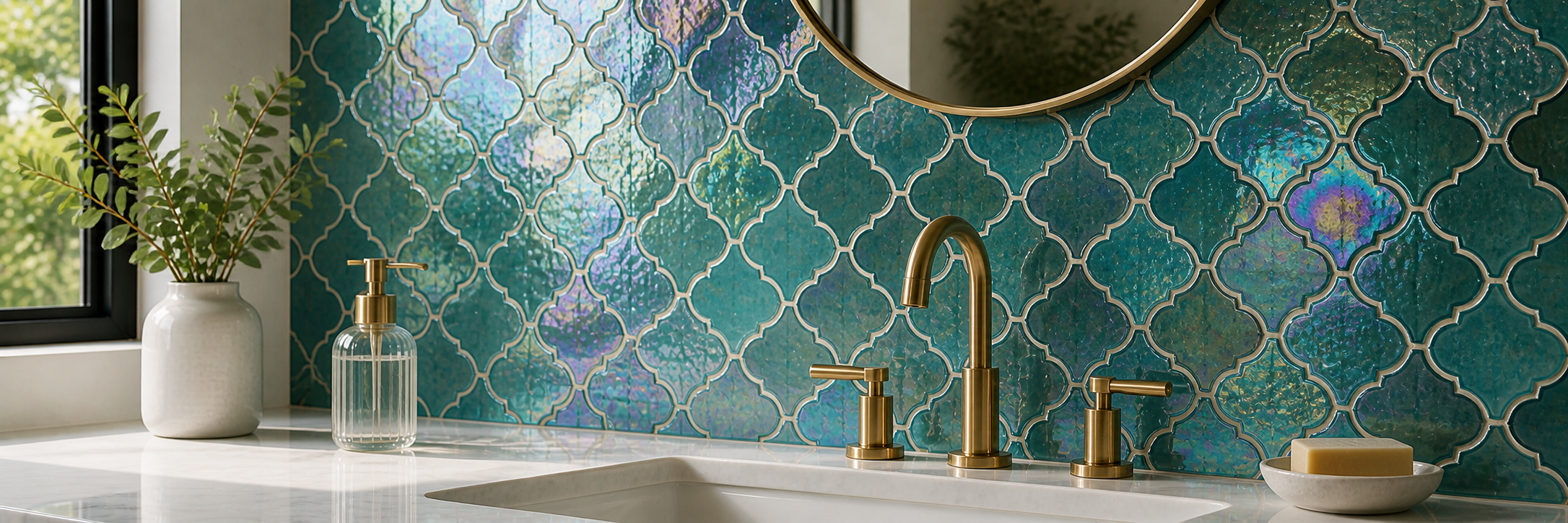
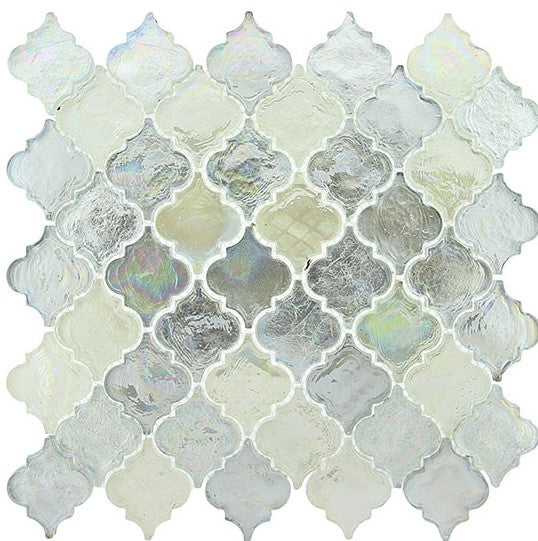
If you have ever stood near a swimming pool on a sunny day and watched the water throw shifting patterns of light across the pool floor, you have seen the principle behind iridescent tile in action. The color does not come from a dye or a pigment. It comes from light itself, bent and separated by a thin-film surface that reflects different wavelengths at different angles. The result is a tile that appears to contain multiple colors simultaneously, and that changes character every time the light in the room changes.
Iridescent tile is one of the most visually dynamic surface materials available in residential and commercial design. It is also genuinely misunderstood. People who have only seen photographs of it often expect something louder than what arrives. People who have only seen subdued sample chips often underestimate how activated the finish becomes in a real installation with good lighting. This guide explains exactly what iridescent tile is, how it is made, where it performs at its best, what it looks like in different environments, and everything you need to know to use it well.
The Science Behind the Iridescent Effect
What Causes Iridescence?
The iridescent effect is produced by a phenomenon called thin-film interference. When light strikes a very thin transparent or semi-transparent layer, one that is on the order of a few hundred nanometers in thickness, some of the light reflects off the top surface of the layer and some travels through and reflects off the bottom surface. These two reflected beams travel slightly different distances before reaching your eye, which causes certain wavelengths to amplify each other (constructive interference) and certain wavelengths to cancel each other out (destructive interference). The wavelengths that amplify are the colors you see. The specific colors you see at any given moment depend on the thickness of the film and the angle at which light is hitting the surface.
This is the same physics that explains why soap bubbles show rainbow patterns, why oil slicks on water display shifting colors, and why some butterfly wings appear to change color as they move. In all these cases, the color comes not from any pigment in the material but from the physical behavior of light. This is called structural color.
How Does This Translate to Tile?
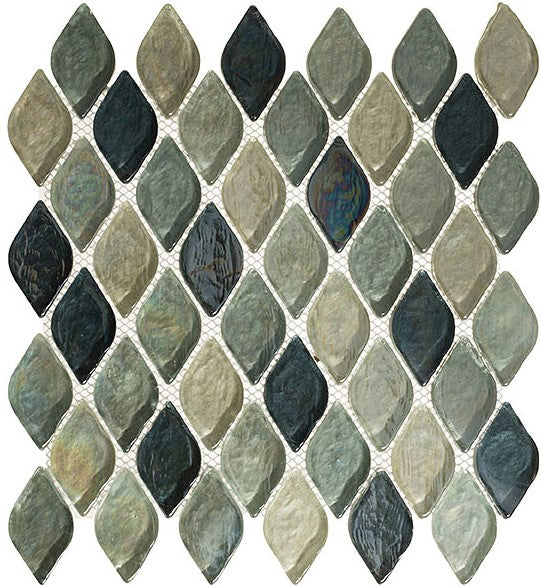
In iridescent glass tile, the thin-film coating is a metallic oxide layer applied to the glass surface during or after the manufacturing process. The coating is typically a metal oxide compound, titanium dioxide, iron oxide, or similar materials, deposited in an extremely thin, uniform layer that creates the interference conditions necessary to produce the iridescent effect. The coating is bonded to the glass surface and, in quality tiles, is effectively part of the glass itself rather than a separate layer that could peel or degrade. Different coating thicknesses and compositions produce different dominant color families, the aqua-teal and blue-green range that most people associate with iridescent tile, pearl-grey tones, bronze and amber families, and multi-color blends where the color shift spans a wider range of the visible spectrum.
Types of Iridescent Tile
Standard Glass Iridescent Tile
Standard glass iridescent tiles are made from clear or tinted soda-lime or borosilicate glass with a metallic oxide coating. The base color of the glass contributes to the dominant hue family of the finished tile, a blue-tinted base glass with a titanium oxide coating will read primarily in the blue-aqua spectrum, while a clear glass base allows the coating itself to determine the color family. Standard glass iridescent tiles are the most widely available format and cover the full range of applications from kitchen backsplashes to shower walls, feature walls, and pool waterlines.
Recycled Glass Iridescent Tile
Recycled glass iridescent tiles use post-consumer glass cullet, from sources such as wine bottles, plate glass, and industrial glass waste, as the primary raw material. The manufacturing process crushes, sorts, and re-fuses the recycled glass before applying the iridescent coating. The result is a tile with meaningful sustainability credentials without any visual compromise. Recycled glass tiles often carry slight variation in color from piece to piece within a production run, which adds a handcrafted, artisanal quality to the finished installation that distinguishes them from more uniformly manufactured tiles. Our recycled glass tile collection includes options with iridescent finishes for those prioritizing sustainability alongside aesthetics.
Iridescent Glass Mosaic Tile
The vast majority of iridescent glass tile is produced in mosaic format, small individual tiles (typically ranging from 3/4 inch squares to 2x2 inch squares) mounted on mesh-backed sheets for easier installation. Mosaic format is particularly well suited to the iridescent finish because the many individual tile faces, each slightly different in orientation, catch light from multiple angles simultaneously and produce a richer, more complex shimmer than a single large tile face would. Our glass mosaic tile collection includes a wide range of iridescent options across multiple shape families.
Iridescent Pool Tile
Iridescent glass tile intended for pool use is manufactured to more demanding performance specifications than standard interior glass tile. Pool tiles must withstand constant immersion, pool chemical exposure (primarily chlorine and pH adjustment chemicals), UV radiation, freeze-thaw cycles in colder climates, and thermal expansion from the heating of pool water. Pool-rated iridescent glass tile carries specific certifications and testing data that distinguish it from interior-only products. Never use standard interior iridescent glass tile in a submerged pool application, always use products specifically rated for pool use. Our iridescent pool tile collection includes only pool-rated products.
What Iridescent Tile Looks Like in Different Environments
In a Kitchen With Natural Light
In a kitchen that receives direct or angled natural light, an iridescent glass tile backsplash will display the most dramatic color-shift effect during the hours when light strikes the backsplash surface at an oblique angle. Eastern morning light and western afternoon light, hitting a backsplash on an adjacent perpendicular wall, produce the maximum effect. During overcast days or in kitchens with limited natural light, the tile will appear more pearlescent, still beautiful, but with a subtler shift. This variation is part of the tile's appeal rather than a deficiency.
In a Shower With Artificial Lighting
In an enclosed shower with recessed overhead LED lighting, iridescent glass tile produces a contained, intimate shimmer effect. The steam that fills the shower during use diffuses the light and softens shadows, which creates a luminous, almost otherworldly quality on the tile surface. The effect is more ambient than dramatic, calming rather than theatrical, which is well suited to a space intended for relaxation. For specific shower design strategies, see our dedicated post on iridescent glass tile shower ideas. Our full shower wall tile collection includes iridescent options appropriate for wet applications.
In a Pool in Sunlight
The most spectacular expression of iridescent tile is in a swimming pool in direct sunlight. Moving water refracts sunlight onto the iridescent tile surface from continuously changing angles, which means the color-shift is not static but constantly animated. The pool floor or walls appear to be alive with shifting color. This is the application where the physics of iridescent tile most completely fulfills its visual potential, and it is one of the reasons iridescent glass tile is so prevalent in high-end pool design.
In a Feature Wall Under Ambient Interior Lighting
On a bathroom or living area feature wall under typical residential ambient lighting, iridescent glass tile produces a luxurious, textured surface that appears different from different positions in the room. Standing directly in front of the wall and viewing it straight on reveals one color. Moving to the side reveals another. Walking past the wall creates a brief, shifting color sequence. This spatial variation is subtle enough not to be distracting in a living environment while being distinctive enough to make the wall genuinely memorable. Browse our feature wall tile collection for curated iridescent options.
Where Iridescent Tile Works Best
Kitchen Backsplashes
The kitchen backsplash is the most popular application for iridescent glass tile in residential design. The backsplash zone is a contained, vertical surface at eye level, the ideal position for a light-reactive material. It receives varied light throughout the day, is framed by cabinetry and countertops that provide context for its color, and is experienced at close range during food preparation and clean-up. For detailed kitchen application ideas, see our post on iridescent glass tile backsplash ideas.
Shower Walls and Bathroom Surfaces
The wet, steamy, artificially lit environment of a shower is one of the most beautiful contexts for iridescent glass tile. The non-porous glass surface is also a genuinely practical choice in this environment, it resists moisture penetration, resists mold, and requires no sealing.
Swimming Pools and Spas
As described above, the pool is where iridescent glass tile reaches its most dramatic visual expression. For aquatic applications, only pool-rated iridescent glass tile should be used, products that have been tested and certified for submerged or waterline use in treated water environments.
Feature Walls
Any application where a single wall surface is intended to carry the visual weight of a room's design is a strong candidate for iridescent glass tile. Fireplace surrounds, bathroom accent walls, headboard walls in bedrooms, and living area accent walls all benefit from the spatially dynamic quality that iridescent tile produces. Browse our fireplace tile collection for iridescent options suited to that specific application.
Choosing the Right Iridescent Tile for Your Project
Color Family
The dominant color family of an iridescent tile is its base color, the color it appears most often in standard ambient lighting conditions. Blues, aquas, and teals are the most popular and most versatile. Pearl and grey tones are the most neutral and pair with the widest range of cabinetry and interior palettes. Bronze and amber tones pair particularly well with warm-toned wood cabinetry and natural stone countertops. Multi-spectrum tiles, those that shift across a wider range including green, gold, blue, and silver, are the most dramatic and suit spaces designed around a single bold statement surface.
Tile Shape
The shape of the tile affects how the iridescent finish reads in the finished installation. Shapes with angled or curved faces, hexagon, arabesque, penny round, catch light from multiple directions simultaneously, producing a richer and more complex shimmer than flat-faced square or rectangular tiles. However, flat square and rectangular mosaics produce a cleaner, more contemporary surface that suits modern minimalist interiors. Our iridescent glass tile collection includes options across multiple shape families, including arabesque, hexagon, and standard mosaic formats.
Grout Color
Grout color selection is one of the most impactful decisions in an iridescent glass tile installation. A tone-matched grout creates a seamless surface where the shimmer is the only visible element. A contrasting lighter grout emphasizes the tile shape and pattern. Avoid bright white grout with most iridescent glass tiles, it creates a high-contrast grid that fragments the color-shift effect. Always use unsanded grout for mosaic glass tile joints under 1/8 inch. Our grout collection provides options across the full neutral spectrum.
Sampling Before Purchasing
Because the iridescent effect is so dependent on the specific lighting conditions of the installed environment, ordering a sample before purchasing the full quantity is strongly recommended. A sample allows you to test the tile in your actual space under your actual light sources before committing. Samples at Tile Choices ship free, and most products in our collection have a sample option available directly from the product page.
Installation Essentials for Iridescent Glass Tile
Always Use White Thinset Mortar
White polymer-modified thinset mortar is required for all glass tile installations. Grey thinset will show through the glass and alter the tile's apparent color, muting the iridescent coating. Apply with a 3/16 inch V-notch trowel for small mosaic formats and back-butter each sheet to eliminate voids.
Prepare a Flat Substrate
Glass tile requires a flat, sound substrate. Check the surface with a straightedge and correct any high or low spots before tiling. In wet applications, install a waterproofing membrane as a required first step. Our guide to bathroom waterproofing covers the process in full detail. Refer to our comprehensive tile guides for installation guidance specific to each application type.
Grout and Cure
Allow thinset to cure fully before grouting, typically 24 hours minimum, longer in cool or humid conditions. Apply unsanded grout for joints under 1/8 inch using a rubber grout float, pressing firmly into all joints and removing excess with a damp sponge before it dries. Allow grout to cure per manufacturer instructions before sealing grout joints in wet applications.