
Most american homeowners underestimate their renovation budgets by up to 30 percent, leading to stressful financial surprises along the way. Tackling a home remodel involves more than picking out new finishes or colors. Understanding the real costs and common budgeting mistakes helps you make smarter choices, avoid setbacks, and turn your renovation into a true investment instead of a money pit.
Table of Contents
- Budgeting For Renovations: Core Principles And Misconceptions
- Types Of Renovation Expenses To Expect
- How To Estimate Costs And Set Priorities
- Hidden Costs And Budget Overruns To Avoid
- Strategies To Save Without Compromising Quality
Key Takeaways
| Point | Details |
|---|---|
| Understand Expense Types | Distinguish between capital improvements and basic repairs to budget effectively for renovations. |
| Include Contingency Fund | Add a 15-20% contingency to your budget to cover unexpected costs and material price fluctuations. |
| Prioritize Critical Repairs | Focus on mandatory repairs and functional improvements before considering aesthetic enhancements to maximize your investment. |
| Track Expenses Diligently | Monitor spending throughout the renovation process to stay aligned with your budget and avoid overruns. |
Budgeting for Renovations: Core Principles and Misconceptions
Renovation budgeting is far more nuanced than simply setting aside money for new tiles or paint. Strategic financial planning transforms home improvement from a potential financial nightmare into a calculated investment. Understanding core budgeting principles helps homeowners navigate complex renovation landscapes while avoiding common monetary pitfalls.
At the fundamental level, renovation budgeting requires distinguishing between different types of expenses. According to University of Colorado Boulder, not all renovation expenditures are created equal. Some improvements extend an asset’s useful life, while others merely represent cosmetic updates. Capital improvements represent strategic investments that significantly alter a property’s functionality or longevity, whereas basic repairs maintain existing conditions.
Key misconceptions often derail renovation budgets. Many homeowners underestimate total project costs by 20-30%, failing to account for unexpected expenses, material price fluctuations, and potential structural complications. Smart budgeting involves:
- Adding a 15-20% contingency fund to your initial budget estimate
- Getting multiple contractor quotes to understand true market rates
- Prioritizing essential structural improvements over aesthetic upgrades
- Tracking expenses meticulously throughout the project
Successful renovation budgeting demands both analytical thinking and flexibility. Master Mixing Tile Patterns for Stunning Spaces can provide additional design insights that help you make financially savvy choices while creating beautiful spaces. By understanding these core principles, you transform renovation from a potentially stressful experience into a strategic home improvement journey.
Types of Renovation Expenses to Expect
Renovation projects involve multiple expense categories that homeowners must carefully anticipate and budget for. Accounting Insights provides a comprehensive breakdown of renovation expenses that can help strategic planners understand the financial landscape of home improvement projects.
Typically, renovation expenses can be categorized into six primary segments: demolition, structural repairs, mechanical systems, exterior improvements, interior finishes, and landscaping. Demolition costs might include removing existing structures, old flooring, or outdated fixtures. Structural repairs represent the most critical and potentially expensive category, addressing foundational issues, wall reinforcements, and load-bearing modifications that ensure the property’s long-term stability.
Mechanical system expenses cover critical infrastructure updates:
- Electrical system upgrades
- Plumbing replacements
- HVAC system modifications
- Smart home technology integrations
- Insulation improvements
Exterior and interior finish costs tend to be more visible and often consume a significant portion of renovation budgets. These include painting, tiling, flooring installations, cabinetry, countertops, and aesthetic enhancements that transform living spaces. While these expenses might seem purely cosmetic, they directly impact property value and livability. Strategic homeowners balance functional improvements with design elements that create both practical and visually appealing environments.
Master Mixing Tile Patterns for Stunning Spaces can provide additional insights into how design choices intersect with renovation budgeting. Understanding these expense categories helps homeowners create more accurate, comprehensive budget plans that minimize financial surprises and maximize renovation success.
How to Estimate Costs and Set Priorities
Estimating renovation costs requires a strategic approach that balances detailed research with realistic expectations. Cost estimation is more than just collecting contractor quotes or browsing online price guides. According to New York City’s Department of Cultural Affairs, successful project planning involves understanding eligible project types and their associated financial implications.
Prioritizing renovation expenses demands a systematic methodology. Homeowners should first conduct a comprehensive property assessment, identifying critical structural needs versus aesthetic upgrades. This approach helps create a hierarchical spending strategy that addresses essential repairs before pursuing optional improvements. Break down potential expenses into three key categories:
- Mandatory Repairs: Structural integrity, safety issues, critical system replacements
- Functional Improvements: Layout modifications, energy efficiency upgrades
- Aesthetic Enhancements: Design updates, cosmetic renovations
To develop accurate cost estimates, gather multiple professional quotes and leverage digital estimation tools. Factor in potential complications by adding a 15-25% contingency buffer to your initial budget. Professional contractors typically recommend allocating funds based on project complexity, with structural repairs receiving the highest priority and budget allocation. Master Mixing Tile Patterns for Stunning Spaces can offer additional insights into balancing design aspirations with financial constraints.
Ultimately, successful renovation budgeting requires continuous monitoring and flexibility. Track expenses meticulously, remain open to strategic compromises, and remember that thoughtful planning transforms potential financial stress into a calculated home improvement investment.
Hidden Costs and Budget Overruns to Avoid
Renovation projects are notorious for unexpected financial surprises that can quickly derail even the most carefully planned budgets. Homeland Security Grant Program guidance highlights the critical importance of understanding potential compliance and regulatory expenses that often emerge during renovation projects.
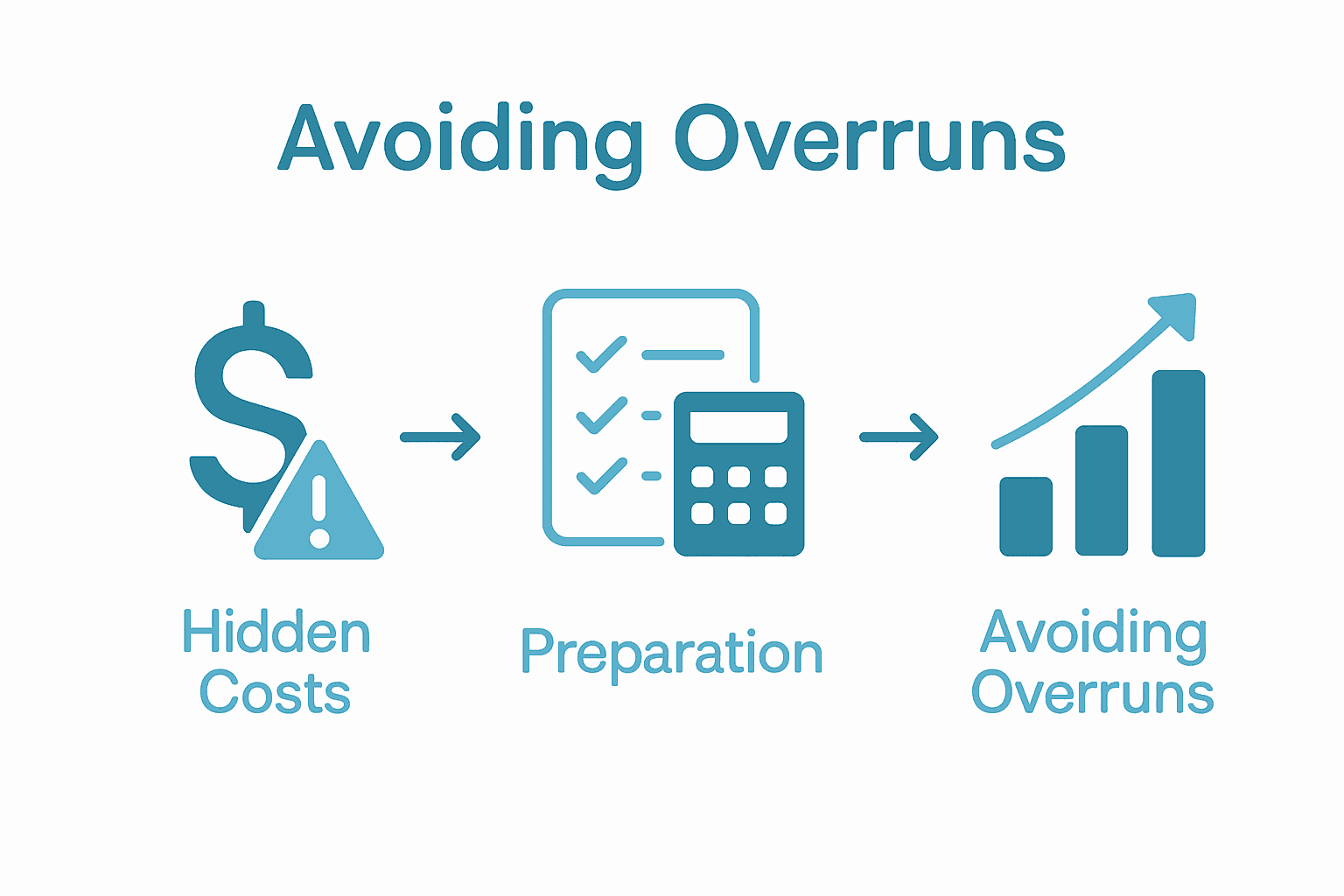
Hidden costs represent the silent budget killers that catch most homeowners off guard. These unexpected expenses frequently stem from three primary sources:
- Structural discoveries during demolition
- Compliance and permit requirements
- Unforeseen infrastructure upgrades
For instance, opening walls might reveal electrical systems that do not meet current building codes, requiring complete rewiring. According to IntraHealth, construction projects frequently encounter administrative and legal expenses that extend far beyond initial material and labor estimates. These can include site work modifications, equipment procurement challenges, and mandatory safety upgrades that were not anticipated in the original budget planning.
Preventative strategies are crucial for managing potential budget overruns. Professional contractors recommend conducting thorough initial assessments, maintaining a 20-25% contingency fund, and working with experienced professionals who can anticipate potential complications. Master Mixing Tile Patterns for Stunning Spaces can provide additional insights into managing design expectations while maintaining financial discipline. Remember, successful renovation budgeting is less about avoiding all unexpected costs and more about creating a flexible financial strategy that can absorb potential surprises without completely derailing your project.
Strategies to Save Without Compromising Quality
Saving money during renovations doesn’t mean sacrificing craftsmanship or design integrity. Smart budgeting requires strategic planning and creative problem-solving that maximize value without cutting critical corners. Navy Federal Credit Union highlights the importance of exploring financing options that can help homeowners manage renovation costs effectively.
Key strategies for cost-conscious renovation include:
- Prioritize structural improvements over cosmetic upgrades
- Consider phased renovation approaches
- Purchase materials during sales or clearance events
- Negotiate bulk pricing with contractors
- Explore alternative material options
- Perform some labor-intensive tasks yourself
Financing plays a critical role in managing renovation expenses. According to Texas FHA Loans, specialized loan products like the FHA 203(k) can provide comprehensive financing that covers both property purchase and renovation costs. These innovative financial tools allow homeowners to invest in quality improvements without depleting entire savings accounts.
Timing and research are crucial cost-saving elements. Compare multiple contractor quotes, research material alternatives, and remain flexible in your design expectations. Master Mixing Tile Patterns for Stunning Spaces can offer additional insights into creating beautiful spaces without breaking the bank. Remember, saving money isn’t about spending the least possible amount, but about making intelligent investments that maximize long-term value and quality.
Master Your Renovation Budget with Stylish Tile Solutions
Budgeting for renovations can feel overwhelming due to hidden costs and unexpected expenses like structural repairs or compliance upgrades. You want to avoid financial surprises while creating a beautiful, functional space. This requires careful planning, prioritization, and choosing materials that add lasting value without blowing your budget.
At TileChoices.com, we understand these challenges and provide a wide selection of high-quality tiles that fit both aesthetic goals and smart budgeting strategies. Whether you need durable options for kitchen backsplashes, bathroom walls, or floors our curated collections help you make cost-effective design decisions. Explore ideas and gain confidence with expert tips on mixing tile patterns for stunning spaces so you can transform your renovation into a rewarding investment.
Ready to take control of your renovation budget without compromising style or quality Visit TileChoices.com now for reliable tile solutions and inspiration. Start planning your project today to prevent costly mistakes and bring your vision to life with ease.