Of all the green tile shades available in 2026, sage green stands apart. It is the rare color that functions both as a bold design choice and as a sophisticated neutral, warm enough to sit alongside natural wood and travertine, calm enough to complement white cabinetry and gray grout. If you have been drawn to green tile but are unsure how committed you want to be with color, sage green is your answer. This guide covers everything you need to design with sage green tile confidently, from which rooms it works best in, to how to pair it with fixtures, finishes, and grout.
What Makes Sage Green Tile Different from Other Green Shades
Sage green is a muted, gray-green tone that sits between olive and mint on the color spectrum. Unlike deep emerald or saturated forest green, sage carries enough gray and beige in its undertone to keep it from reading as overly bold. This is what makes it such a useful design tool, it introduces color and warmth to a space without the visual weight that darker greens carry.
Compared to mint green, which skews cool and slightly blue, sage reads warmer and more earthy. Compared to olive, which has strong yellow undertones, sage is softer and more restrained. Interior designers consistently reach for sage green tile because it pairs with almost every adjacent color: warm whites, creamy beiges, warm grays, natural wood, brass, bronze, travertine, and marble all sit beautifully next to it.
In 2026, sage green tile is part of a broader shift toward biophilic interiors, spaces that bring the feeling of nature indoors through organic color, texture, and material. Sage is at the center of that movement. Explore the full range of green tile at Tile Choices to see available sage and other green shades across multiple formats and finishes.
Best Rooms for Sage Green Tile
Sage Green Bathroom Tile
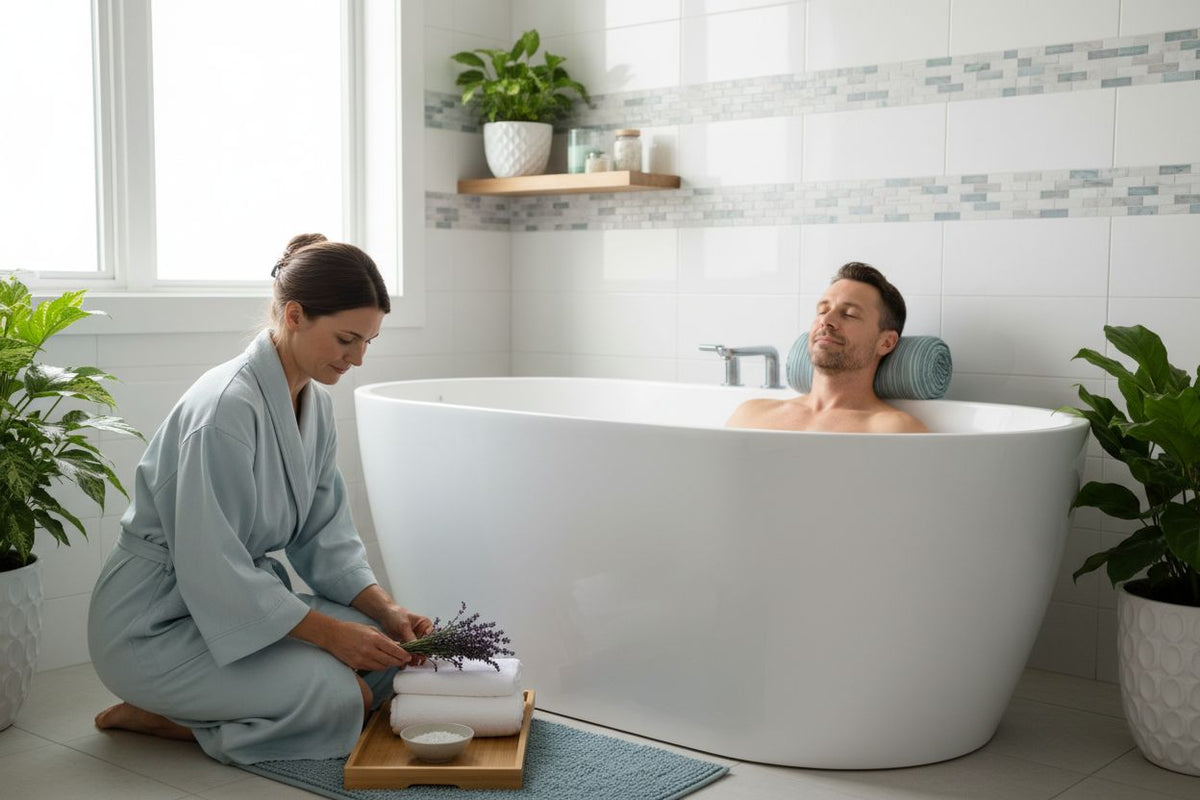
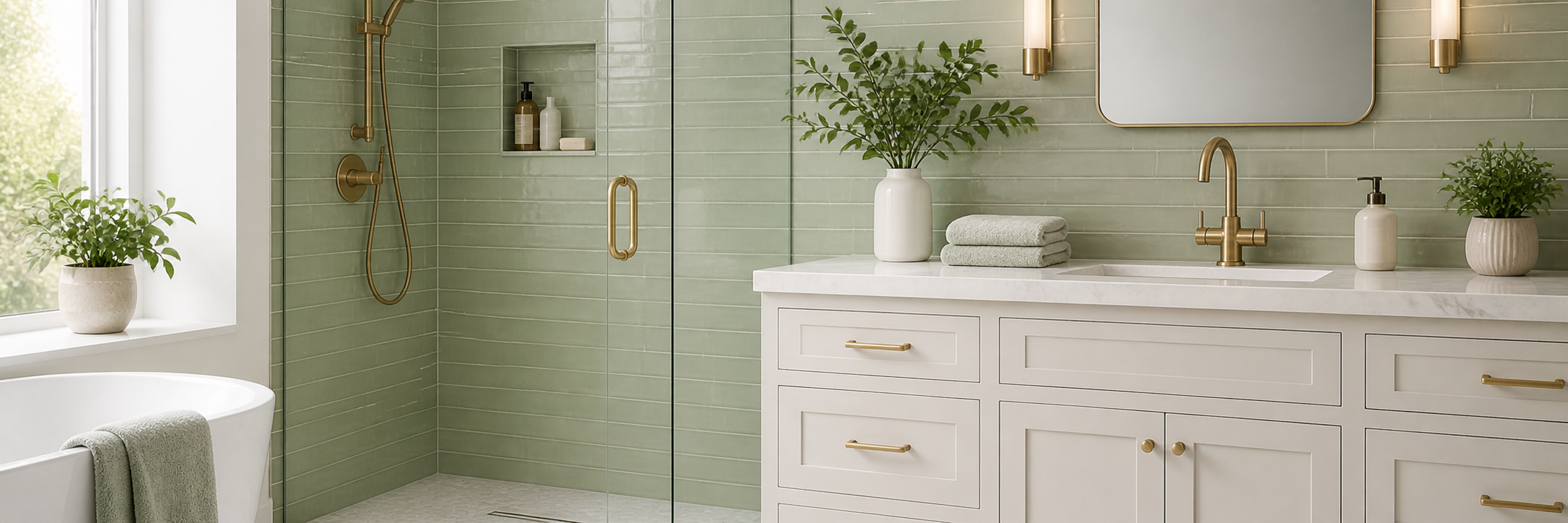
The bathroom is where sage green tile delivers its most powerful effect. Against white or cream fixtures, brushed brass hardware, and warm wood vanities, sage creates an instantly calming, spa-like environment. The color evokes moss, eucalyptus, and forest light, exactly the feeling people seek in a bathroom retreat.
For bathrooms, sage green works on every surface. Sage green subway tile on shower walls creates a clean, structured look. Sage porcelain in a large format on bathroom floors creates a seamless, grounding base. Sage mosaic tile used in a shower niche or as an accent band adds detail without overwhelming the space. Read our green tile bathroom ideas guide for room-by-room layout inspiration, and browse our full bathroom tile collection for sage green options across multiple formats.
Sage Green Kitchen Backsplash Tile
Sage green backsplash tile has become one of the most requested kitchen updates. Paired with white shaker cabinets and brushed brass or unlacquered brass hardware, sage green subway tile creates a design that feels simultaneously classic and current. The combination of white, warm brass, and soft green is unlikely to date, it avoids the sharpness of black-and-white contrasts while remaining crisp and polished.
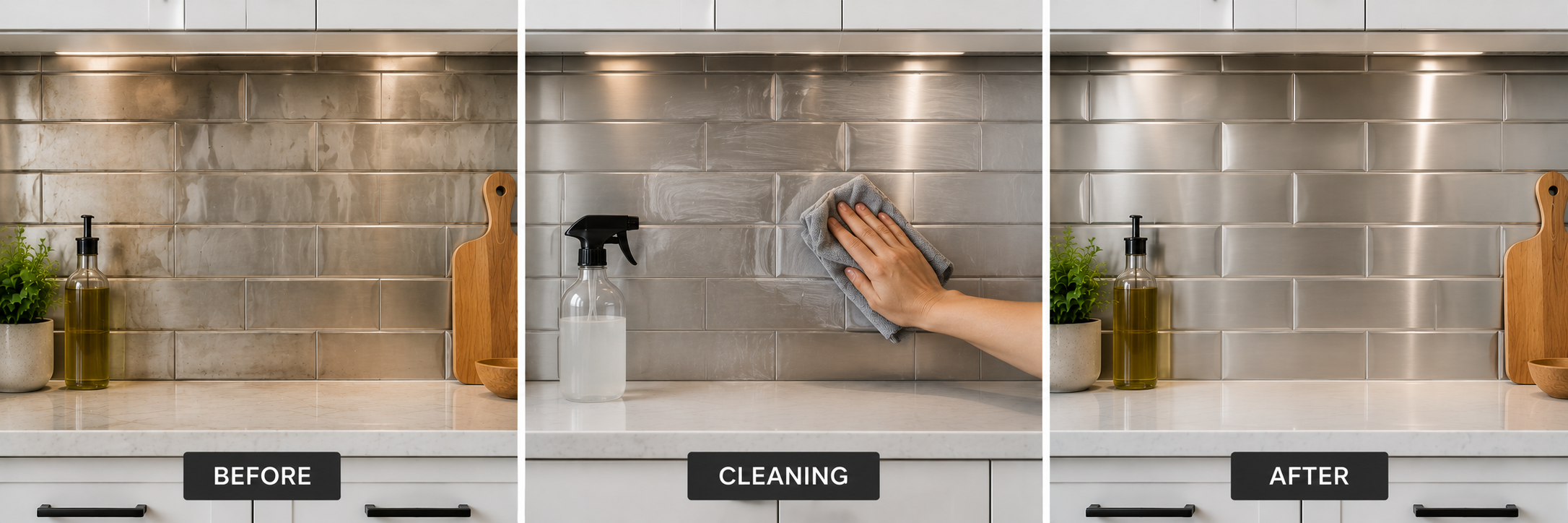
For kitchen backsplash applications, choose glazed ceramic or glass sage green tile for easiest cleaning. Matte finishes require slightly more attention around cooking areas. A classic subway tile format in sage green, 3 x 6 or 3 x 10, works with virtually any kitchen layout and cabinet style.
Sage Green Feature Wall
A sage green feature wall behind a bathroom vanity or along a hallway wall requires fewer tiles than a full room installation but creates an outsized design impact. Sage green tile on a single wall works especially well in smaller spaces where a full room of color might feel heavy. Our feature wall tile collection includes formats and finishes suited for exactly this kind of accent application.
Sage Green Tile Finishes: Matte, Glossy, and Textured
Matte Sage Green Tile
Matte is the most popular finish for sage green tile, and for good reason. The absence of shine allows the subtle color variation in sage, its gray and beige undertones, to read more fully. Matte sage green tile feels organic and handmade in quality even when it is not. It photographs beautifully, shows fewer water spots and fingerprints, and is the finish most specified by interior designers for bathroom walls and shower installations.
Glossy Sage Green Tile
Glossy sage green tile catches and reflects light, which brightens smaller bathrooms and kitchens. In a glass tile format, sage green becomes luminous, the color deepens at the edges and brightens at the center, creating depth that flat tile cannot achieve. Choose glossy for spaces where you want to maximize brightness, particularly north-facing rooms with limited natural light.
Textured Sage Green Tile
Textured and zellige-style sage green tile is the premium option for those who want the most design impact per tile. Handcrafted variation in glaze and surface means every tile is slightly different, no two are exactly alike. The result is a wall that has depth, movement, and character that flat machine-made tile simply cannot replicate. This finish is particularly striking in shower enclosures where water enhances the texture and color.
What to Pair with Sage Green Tile
Hardware and Fixtures
Brushed brass is the single most popular hardware pairing for sage green tile. The warmth of brass deepens the earthy undertones in sage without overwhelming the softness of the color. Unlacquered brass, which develops a natural patina over time, is especially popular in bathrooms aiming for a lived-in, artisan quality. Aged bronze works similarly well. Avoid polished chrome or cool-toned nickel with sage green, as the contrast can make the tile read more gray than green.
Grout Color for Sage Green Tile
For sage green tile, warm white and warm beige grout are the most versatile choices. They create gentle contrast without the harshness of bright white. If you want a more seamless, color-drenched look, match your grout closely to the sage tile itself. See our complete guide on what grout color goes with green tile for a full shade-by-shade breakdown covering sage, emerald, forest, olive, and mint.
Adjacent Materials
Natural travertine, warm marble, light oak wood, bamboo, and rattan all sit beautifully alongside sage green tile. These organic, nature-adjacent materials reinforce the biophilic quality of sage green. Avoid pairing sage with very cool or blue-toned materials, cool gray concrete, for example, can pull the sage green toward a dull olive that loses its warmth.
Sage Green Tile in Different Formats
Sage Green Subway Tile
Subway tile is the most popular format for sage green tile installations. The classic 3x6 subway tile works in both traditional and contemporary settings. Elongated formats, 3x10 and 3x14, feel more modern and are ideal for floor-to-ceiling shower wall installations. Our green subway tile design guide covers layout patterns, sizing, and installation tips for every application.
Sage Green Mosaic Tile
Small-format and mosaic sage green tile adds texture and visual detail to shower niches, accent bands, and bathroom floors. Penny round and hexagon formats in sage green ceramic or glass are especially popular for shower floors, where the additional grout lines provide slip resistance alongside pattern interest.
Large-Format Sage Green Tile
Large-format sage green porcelain tile creates the most dramatic effect in shower enclosures and full-height bathroom walls. Fewer grout lines mean the color reads as a continuous field rather than a pattern, the tile becomes immersive rather than decorative. This is the approach that creates the spa-like "color drenching" effect that leading interior designers are specifying in 2026. Explore our contemporary tile collection for large-format options.
How Much Sage Green Tile Do You Need?
Calculate your square footage by measuring each surface (length × width) and adding 10–15% overage for cuts and waste. For shower walls, measure each wall separately. Always order from the same dye lot. Order samples before committing, sage green reads very differently in different lighting conditions, and seeing it in your actual space under your lighting is essential before purchasing full quantities. Browse our complete green tile collection or call our team at 614-515-7816. For broader bathroom planning, our bathroom tile selection guide covers every material and installation decision from start to finish.
Ready to explore your options? Browse our full green tile collection, including sage green in every available format and finish. Also explore our bathroom tiles, shower wall tiles, and feature wall tiles. For more design inspiration, read our companion guide on green tile shower ideas and our post on choosing the right grout color for green tile.