No reviews
Sizing is one of the most common questions when it comes to tab pulls, and getting it right matters both for function and proportion. As a general starting point, the tab pull should be no wider than half the total width of a drawer front, and no taller than one-third the height of a cabinet door. These are guidelines rather than rules, but they give you a proportional baseline that works in most kitchens.
For standard upper cabinet doors, a tab pull with a 3-inch to 4-inch width is typically appropriate. Base cabinet drawers, especially the wider ones spanning 24 inches or more, often benefit from a longer edge pull in the 5-inch to 7-inch range to maintain visual balance and give a comfortable, two-finger grip. On very wide drawers (30 inches and beyond), some designers opt for two shorter tab pulls placed symmetrically, particularly on integrated or handleless kitchen systems.
Placement is equally important. On doors, tab pulls are typically installed at the top of the door on the latch side, opposite the hinge, so the door swings open naturally when you lift and pull. On drawers, they sit centered on the top edge, making the motion of pulling a drawer open feel entirely intuitive. Some designers install them vertically on tall pantry doors for a modern architectural effect.
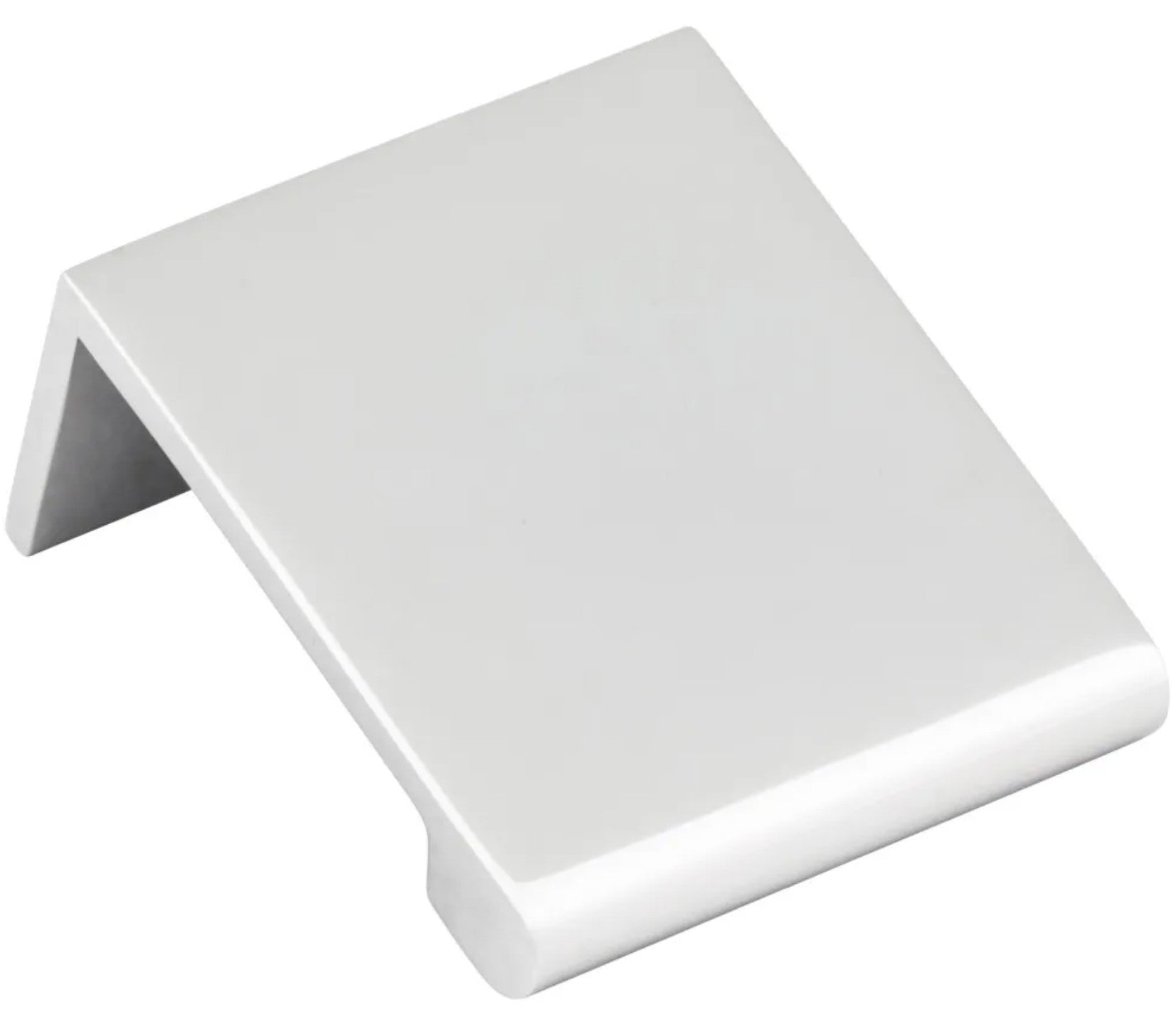
One of the reasons tab pulls are popular with both professional cabinetmakers and DIY remodelers is that installation is relatively straightforward once you understand the basic approach. Most tab pulls mount from the back of the cabinet panel using one or two machine screws that pass through pre-drilled holes in the door or drawer front. The tab or lip extends past the top edge, providing the finger grip.
Before drilling, take time to mark your hole placement carefully. A cabinet hardware jig is an inexpensive tool that dramatically reduces errors and keeps every pull at a consistent height and position across all your doors and drawers. Consistency across the whole kitchen is what gives a finished installation its professional look.
For integrated or edge-mounted styles that sit flush with the door edge rather than wrapping over the top, routing a shallow channel into the door edge is sometimes required. This is more of a cabinetmaker's installation than a basic DIY project, and it is worth consulting with a professional if you are not comfortable with a router.
Always check your screw length before installation. Screws that are too long can push through to the visible face of the cabinet door and create an obvious, frustrating mistake. Most tab pull hardware includes screws in one or two lengths — measure your door panel thickness and choose accordingly.
Tab pulls do not exist in isolation. They sit in a room alongside faucets, light fixtures, appliances, and tile, and the most successful kitchen designs treat all of those elements as part of a cohesive system rather than independent decisions.
The most reliable approach is to choose one dominant finish and repeat it across hardware and fixtures. If your tab pulls are in matte black, carry that finish through to your faucet, range hood trim, and light pendants. If you are using satin brass, look for complementary warm-toned accents in the lighting and plumbing. This does not mean everything needs to match exactly, mixing a satin brass tab pull with an unlacquered or aged brass faucet creates intentional variation, but the metal temperature (warm or cool) should stay consistent.
Tab pulls also pair beautifully with the right tile backsplash. A matte black tab pull against white upper cabinets becomes even more refined when paired with a handmade-style subway tile or a subtle textured backsplash that introduces organic movement to an otherwise clean surface. If you are exploring backsplash options to complete your kitchen design, browse the full tile collection at Tile Choices for styles that coordinate naturally with modern cabinet hardware.
Every tile in this collection is carefully selected based on real-world performance, design relevance, and long-term durability. We don’t list thousands of random products — we curate materials that meet professional installation standards.
Our collections are guided by Bruno Mendolini, a tile expert with over 25 years of experience and deep roots in the Italian tile industry.