When shopping for swimming pool tiles, one question comes up more than any other: should I use glass or porcelain? Both materials are excellent for pool environments. Both are durable, chemical-resistant, and available in a wide range of colors and styles. But they perform very differently depending on where in the pool you use them, what your priorities are, and how much you want to spend. Understanding the real differences between these two materials, beyond surface-level comparisons, is what leads to a pool design you'll love for decades rather than one you second-guess a few years after installation.
This guide covers everything you need to know about glass vs. porcelain pool tile: how each material is made, where each performs best, what each costs, and how to decide which one is right for your specific project. We'll also cover the scenario most experienced pool designers use, combining both materials strategically to get the best of each.
What Is Glass Pool Tile?
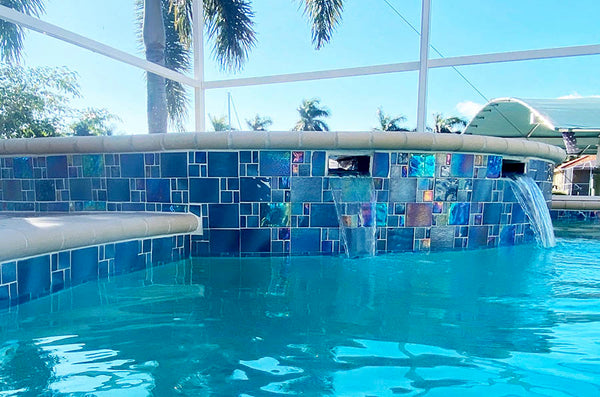
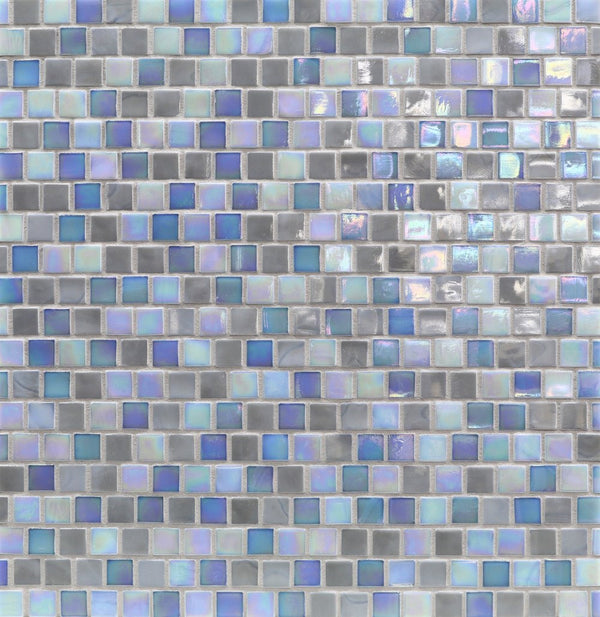
Glass pool tile is made from silica-based glass fired at high temperatures to create a dense, non-porous tile body. Most glass pool tiles are small-format, commonly 1×1 inch or 2×2 inch mosaics mounted on mesh sheets for easy installation, though larger formats are available. The defining characteristic of glass tile is its ability to reflect and transmit light. Because glass is translucent, light enters the tile body, reflects off the back surface, and exits in a way that creates a luminous, jewel-like quality no other tile material can replicate.
Glass pool tile is rated for full water immersion and engineered to withstand UV exposure, pool chemicals, and freeze-thaw cycles when manufactured specifically for pool use. It is the most widely used material for pool waterlines and pool interior walls in both residential and commercial pools worldwide. Its non-porous surface is naturally resistant to algae and staining, and calcium deposits at the waterline wipe away more cleanly from glass than from any textured alternative.
Browse our full glass pool tile collection to see the full range of colors, formats, and finishes available.
What Is Porcelain Pool Tile?
Porcelain is a type of ceramic tile fired at extremely high temperatures, significantly higher than standard ceramic, which produces a very dense, low-porosity tile body. Pool-grade porcelain typically has a water absorption rate of 0.5% or less, making it naturally frost-proof and highly resistant to water infiltration. This density is what gives porcelain its legendary durability in outdoor and wet environments.
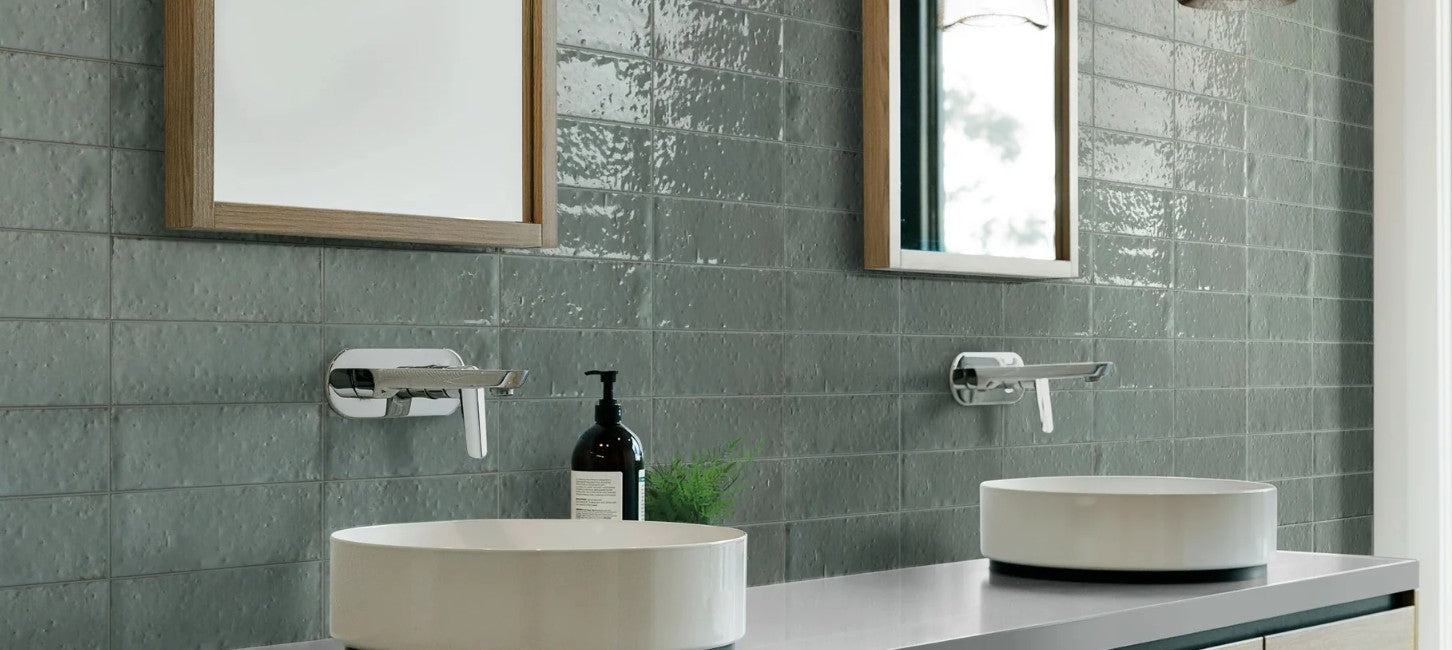
Modern porcelain manufacturing technology allows porcelain tile to convincingly mimic the appearance of natural stone, wood, concrete, and other materials. This gives homeowners access to a wide range of aesthetic looks at a fraction of the maintenance that natural stone requires. Porcelain is available in a much wider range of sizes than glass, from small 1×1 inch mosaics to large-format 24×48 inch slabs, giving designers more flexibility in scale and layout.
Porcelain is the standard choice for pool floors, steps, and outdoor surrounds because of its strength, density, and slip-resistance options. Many porcelain tiles designed for pool use carry certified slip-resistance ratings, making them the appropriate choice wherever wet foot traffic is a safety consideration. Explore our porcelain pool tile collection for the full range of styles and finishes.
Glass vs. Porcelain Pool Tile: Key Differences
Appearance and Visual Impact
Glass tile wins on visual impact, and it's not a close competition. The translucent glass body allows light to pass through and reflect off the back surface, creating a luminous, almost three-dimensional quality in the tile. Colors appear richer, more saturated, and more complex in glass than in any opaque tile material. In pool water, this effect is amplified, light reflects off moving water, enters the glass tile, and bounces back in constantly changing ways throughout the day. The result is a waterline or pool interior that genuinely appears to glow.
Porcelain offers a much wider range of looks, from realistic stone textures to sleek polished finishes to wood-look patterns, but it does not have the inherent reflective quality of glass. A beautifully designed porcelain pool can look stunning, but it creates that effect through design and color rather than through the optical properties of the material itself. If making your pool look as visually spectacular as possible is the top priority, glass is the clear choice for waterlines and interior walls.
Durability and Longevity
Both materials are highly durable in pool environments and can last 20 or more years with proper installation. However, they have different vulnerability profiles. Glass tile is harder and more scratch-resistant than porcelain on a surface level but can be more prone to chipping at edges and corners, particularly during installation, if tiles are dropped, or if the pool is struck by heavy objects. Porcelain is denser overall and better at absorbing impact forces without cracking or chipping.
The most important factor in the longevity of either material is not the tile itself but the installation quality. The right thinset, proper waterproofing membrane, adequate expansion joints, and full back coverage are what determines whether tile lasts 25 years or starts failing at year 5. Material quality matters; installation quality matters more.
Slip Resistance
Porcelain has a decisive advantage when it comes to slip resistance. Textured and matte porcelain tiles can achieve high Coefficient of Friction (COF) ratings, the industry measure of slip resistance, making them the preferred and often the only appropriate choice for pool floors, steps, and surrounding deck surfaces. The goal for pool floors is a COF of 0.60 or higher; for steps, 0.65 or higher is recommended.
Glass tile surfaces are generally too smooth for use on horizontal walking surfaces. A glossy glass waterline tile that looks beautiful at eye level would be genuinely dangerous underfoot. Glass tile should never be used on pool floors, steps, or any surface where wet foot traffic occurs.
Installation Requirements
Glass tile requires more specialized installation than porcelain and is less forgiving of shortcuts. Because glass is translucent, the thinset used must be white, any gray or buff thinset shows through the tile body and shifts its apparent color. The thinset must be specifically rated for glass tile and for continuous water submersion, and it must achieve 100% coverage on the back of the tile, no air pockets, no bare spots. Any gap behind a glass tile allows water infiltration, which under freeze-thaw conditions causes the tile to crack from within.
Porcelain installation is more forgiving. A flexible polymer-modified thinset rated for pool use is appropriate for most porcelain pool tile applications. Porcelain tiles do not transmit light, so thinset color does not affect the tile's appearance. The standard target is still 95% back coverage for pool applications, but the consequences of small voids are less severe with porcelain than with glass.
Cost
Porcelain pool tile is generally more affordable than glass tile at every tier of the market. Budget porcelain for pool use starts around $3–$6 per square foot. Mid-range glass pool tile typically runs $8–$15 per square foot. Premium iridescent glass and specialty large-format glass tiles can reach $20–$35 or more per square foot. Installation costs also tend to be higher for glass tile due to the more specialized technique required.
For a full interior tile pool, the cost difference between glass and porcelain can be substantial. For a waterline-only tile application, the total quantity of tile is modest enough that even premium glass is a manageable investment.
Maintenance
Both materials are significantly easier to maintain than plaster, aggregate, or painted pool surfaces, but glass has a slight edge. Glass tile's non-porous surface is naturally resistant to algae and staining. Calcium and mineral deposits that form at the waterline sit on top of the glass surface rather than penetrating into it, making them easier to remove with routine brushing or a pH-neutral cleaner. Textured porcelain, while still easy to maintain compared to plaster, has a surface profile that can trap calcium and body oils in its texture over time, requiring slightly more attention to keep looking its best.
Which Should You Choose?
Choose Glass Pool Tile When:
Visual impact at the waterline or pool interior is your top priority. You're willing to invest in professional installation by an installer experienced with glass tile. You're tiling a spa, fountain, water feature wall, or decorative accent area where the reflective shimmer effect will be showcased. You want a waterline tile that is as easy as possible to clean and maintain long-term.
Choose Porcelain Pool Tile When:
You need to tile the pool floor, steps, or surrounding deck where slip resistance is non-negotiable. You're working with a tighter budget and need to cover a large surface area cost-effectively. You prefer the look of natural stone, wood, or concrete but want the durability and low maintenance of manufactured tile. You're doing a DIY installation and want a material with more forgiving installation requirements.
Use Both — The Best Approach for Most Pools:
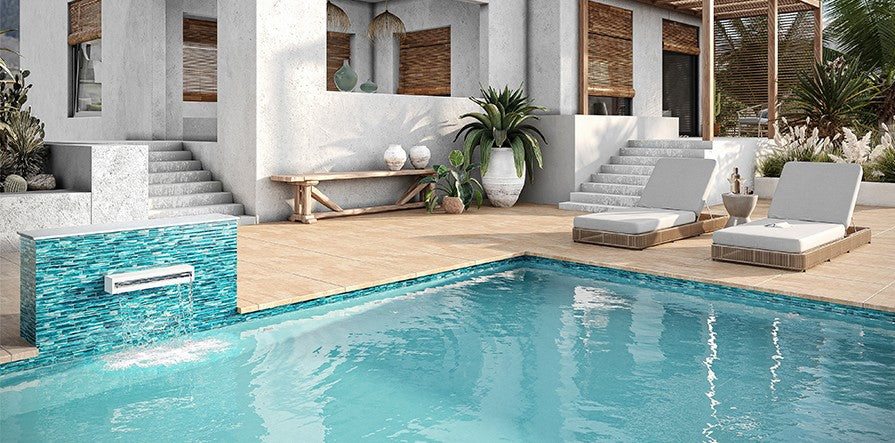
Many of the best-looking and best-performing pool projects use both materials strategically. Glass or iridescent tile on the waterline and interior walls where visual impact is most important. Porcelain on the floor, steps, and surrounding deck where durability and slip resistance are the priorities. This approach gives you the reflective beauty of glass where it makes the biggest visual difference and the practical durability of porcelain where you actually need it — without overspending on either material.
Ready to compare your options side by side? Browse our glass pool tile collection, our porcelain pool tile collection, and our complete swimming pool tile collection at Tile Choices. Samples are available on most products, we strongly recommend ordering samples and evaluating them wet in your outdoor light conditions before committing to a full order.