Choosing the best tile for your bathroom floor is one of the most important decisions in any remodel. Bathroom floors face constant moisture, daily foot traffic, and the risk of slip, so the tile you choose needs to balance durability, safety, and style.
With so many options available, it can be difficult to know which tile is right for your space. In this complete guide, we’ll break down the best bathroom floor tile options, what features to look for, and how to choose a tile that performs well for years to come.
Table of Contents
- Key Features to Look for in Bathroom Floor Tile
- Best Types of Tile for Bathroom Floors
- Slip Resistance Explained
- Tile Size and Layout Considerations
- Maintenance and Durability
- Design Tips for Bathroom Floors
- Final Thoughts
Key Features to Look for in Bathroom Floor Tile
Before selecting a tile, it’s important to understand the key performance factors that matter most in a bathroom environment.
Water Resistance
Bathrooms are high-moisture areas, so your tile should have low water absorption. Porcelain tile is one of the best options because it is highly resistant to water and humidity.
Slip Resistance
Safety is critical, especially in wet conditions. Tiles with textured surfaces or smaller formats that include more grout lines can improve traction.
Durability
Bathroom floors experience daily use, so your tile should be able to withstand wear, impact, and foot traffic without cracking or chipping.
Ease of Maintenance
Tiles that are easy to clean and resistant to stains will save you time and effort over the long term.
To explore a wide range of options that meet these criteria, browse our full bathroom tile collection.
Best Types of Tile for Bathroom Floors
Not all tiles are created equal. Here are the top tile types that perform best in bathroom floor applications:
Porcelain Tile (Best Overall)
Porcelain tile is widely considered the best choice for bathroom floors. It is dense, durable, and highly water-resistant, making it ideal for wet environments.
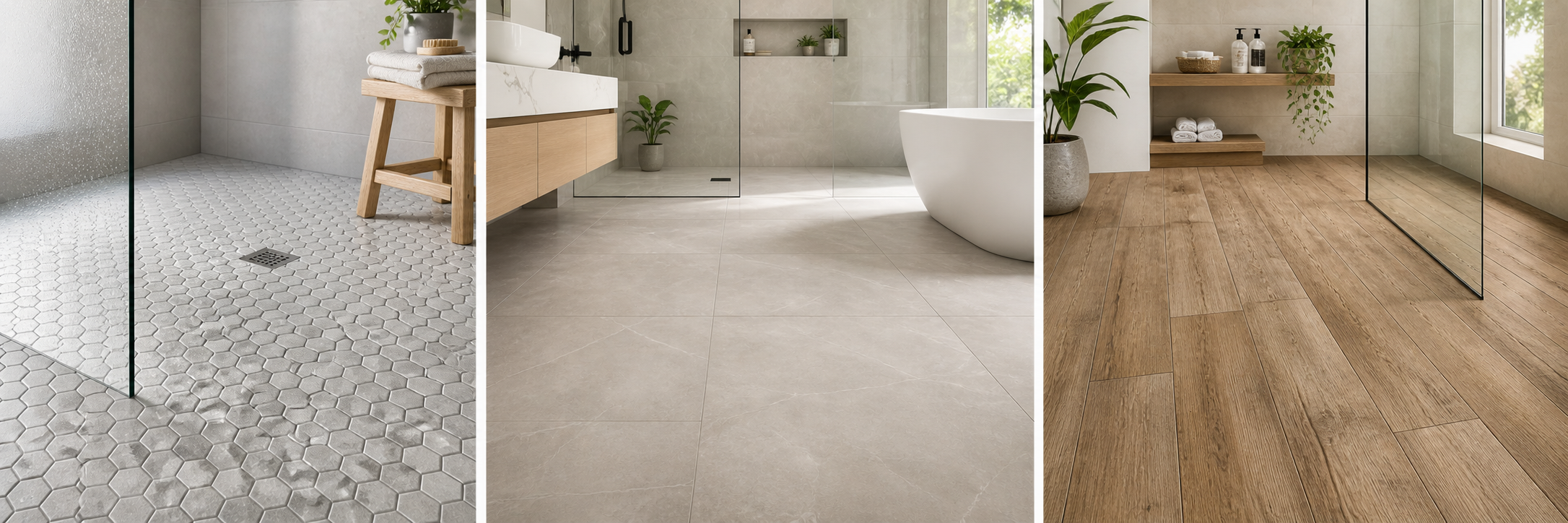
Porcelain also comes in a wide range of styles, including options that mimic wood, stone, and concrete. This allows you to achieve a high-end look without sacrificing performance.
Ceramic Tile
Ceramic tile is a more budget-friendly option that still offers good durability and water resistance. While it may not be as strong as porcelain, it can work well in lower-traffic bathrooms.
Natural Stone Tile
Natural stone, such as marble or slate, offers a luxurious and unique appearance. However, it requires more maintenance, including sealing, to prevent moisture damage.
Mosaic Tile
Mosaic tiles are an excellent choice for bathroom floors, especially in areas like showers. Their smaller size creates more grout lines, which improves traction and reduces the risk of slipping.
For wet areas, you can explore specialized shower floor tiles designed for both safety and performance.
Slip Resistance Explained
Slip resistance is one of the most important factors when choosing bathroom floor tile. Wet surfaces can become dangerous if the tile is too smooth.
Tiles are often rated for slip resistance using a coefficient of friction (COF). A higher COF rating means better traction. While many homeowners overlook this detail, it plays a critical role in safety.
Textured finishes, matte surfaces, and smaller tiles with more grout lines all contribute to improved grip. Avoid highly polished tiles on bathroom floors, as they can become slippery when wet.
Tile Size and Layout Considerations
Tile size can significantly impact both the look and functionality of your bathroom floor.
Large Format Tiles
Large tiles create a clean, modern look with fewer grout lines. They can make a bathroom feel more spacious, especially when paired with a consistent color scheme.
Small Tiles and Mosaics
Smaller tiles provide better traction and are ideal for areas that require slip resistance, such as shower floors.
Tile Layout Patterns
- Diagonal Layout: Makes the room appear larger
- Herringbone Pattern: Adds visual interest
- Stacked Layout: Creates a modern, clean look
For a cohesive design, consider coordinating your floor tile with your shower wall tiles to create a unified bathroom aesthetic.
Maintenance and Durability
Long-term performance is just as important as initial appearance. Choosing a tile that is easy to maintain will help keep your bathroom looking its best over time.
Porcelain tile requires minimal maintenance and is resistant to stains, scratches, and moisture. Regular cleaning with mild products is usually enough to keep it in excellent condition.
Ceramic tile is also relatively easy to maintain but may require more care in high-moisture areas. Natural stone requires the most maintenance, including periodic sealing to protect against water and stains.
Design Tips for Bathroom Floors
Your bathroom floor plays a major role in the overall design of the space. Here are a few tips to help you create a stylish and functional layout:
- Stick with Neutral Colors: Whites, grays, and earth tones create a timeless look.
- Use Texture for Depth: Textured tiles add visual interest and improve safety.
- Create Contrast: Pair lighter floors with darker walls or vice versa.
- Keep It Consistent: Using similar tiles across the bathroom can make the space feel larger.
Combining smart design choices with high-quality materials ensures your bathroom floor looks great and performs well for years to come.
Final Thoughts: Choosing the Best Bathroom Floor Tile
The best tile for your bathroom floor depends on your specific needs, but porcelain tile remains the top choice for most homeowners. Its durability, water resistance, and low maintenance make it ideal for high-moisture environments.
However, other options like ceramic, mosaic, and natural stone can also work well depending on your design goals and budget.
By focusing on key factors like slip resistance, durability, and style, you can confidently choose a tile that enhances both the safety and appearance of your bathroom. Explore our full range of bathroom tiles to find the perfect option for your next project.