
One of the most common questions we hear from homeowners planning a bathroom renovation is some version of: "Can I use large tile on my shower floor, or do I have to use that small mosaic stuff?" It's a great question, and the answer is more nuanced than a simple yes or no.
Both mosaic tile and large format tile have their place in shower floor design. The right choice depends on your shower size and layout, how much installation expertise you have access to, your safety priorities, and ultimately what you want the finished floor to look and feel like. This guide gives you a thorough, honest comparison of both approaches so you can make the right decision for your project.
Browse our full shower floor tile collection at Tile Choices →
Defining the Two Categories
Mosaic Tile
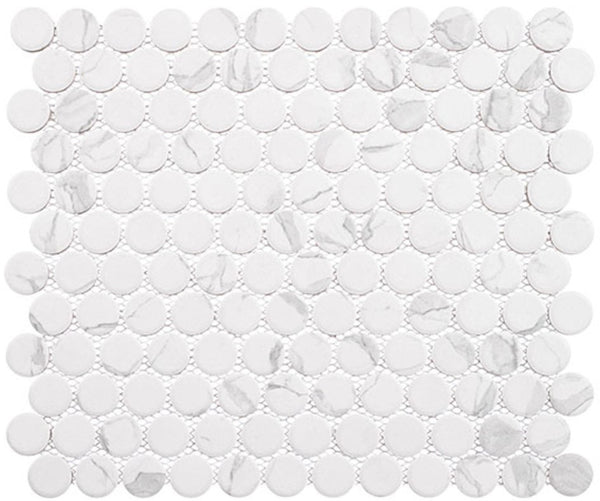
Mosaic tile refers to small tiles, generally anything 4×4 inches or smaller, that are typically mounted on mesh backing sheets for easier installation. This includes 1-inch hexagon, penny round, 2×2 square, basketweave, herringbone, pebble, and any other small-format tile pattern. The defining characteristic is not just size, but the mesh-backed sheet format that makes the many small pieces manageable.
Large Format Tile
Large format generally refers to tiles 12×12 inches or larger. This category includes 12×12, 12×24, 18×18, 24×24, and even larger plank formats that have become popular in contemporary bathroom design. Large format tile creates a sleek, seamless look with fewer visible grout lines, a very different aesthetic from the dense pattern of mosaic tile.
Safety: The Non-Negotiable Factor
On any floor, safety matters. On a wet shower floor, it's the first consideration, and it's where the two formats diverge most significantly.
Why Mosaics Win on Safety
Mosaic tiles have an inherent safety advantage: more tiles means more grout joints, and more grout joints means more grip. A 1-inch hexagon mosaic might have 15–25 grout joints per square foot. A 12×12 tile has just one or two. Those grout joints act like micro-treads, slight texture breaks that grip bare feet in wet conditions.
This is why the tile industry and most professional installers default to recommending small format tile for shower floors. It's not just convention, it's physics. The DCOF (Dynamic Coefficient of Friction) standard requires 0.42 or higher for wet floor use, and mosaic tiles consistently meet this standard even with relatively smooth tile surfaces, because the grout lines do much of the slip-resistance work. Our complete guide to slip-resistant shower floor tiles and DCOF ratings covers this in detail.
Can Large Format Tile Be Safe on a Shower Floor?
Yes, but the tile surface itself must carry the entire safety burden, since there are few grout lines to help. This means large format shower floor tile must have a DCOF of 0.42 or higher verified from the manufacturer, and must have a matte or textured finish. Polished or glossy large format tiles are genuinely hazardous on wet shower floors. There is no design justification that outweighs a safety risk you walk on every day.
Installation: The Practical Reality
Mosaic Tile Installation
Mosaic tile on mesh backing sheets is designed to handle the challenges of shower floor installation. The flexible mesh conforms naturally to the sloped shower pan, the ¼-inch-per-foot drain slope that every code-compliant shower requires. Cutting around the drain is more work with small tiles, but the mesh format makes the overall installation manageable for experienced DIYers and straightforward for professional tile setters.
Mosaic sheets also require less precise back-buttering because the individual tile pieces are small enough that minor variations in the mortar bed don't create significant lippage issues. This forgiveness in installation technique makes mosaic tile more consistently reliable across a wider range of installer skill levels.
Large Format Tile Installation
Large format tile on a shower floor is a technically demanding installation that should be performed by an experienced professional. Every tile must be individually back-buttered with complete mortar coverage, any void behind a large tile creates a stress point that can cause cracking over time. The tiles must be precisely set at the correct angle to maintain the drain slope, and tile leveling clips are necessary to prevent lippage at the edges.
In a shower with a center drain, the floor slopes in four directions, making large format tile very difficult to set correctly. Linear (trench) drains, where the floor slopes in a single direction, are much more compatible with large format tile. As our shower floor tile size guide explains in detail, drain type significantly affects which tile sizes are practical.
Aesthetics: What Each Format Achieves
The Mosaic Look
Mosaic tile floors have visual richness, the pattern created by dozens or hundreds of small tiles creates texture and depth that large format tiles can't replicate. This texture reads differently at different scales: from across the room, a mosaic floor reads as a colored surface; up close, the individual tiles and their grout joints create intricate detail.
Mosaic formats are inherently more traditional in their associations, penny round, basketweave, and hexagon patterns have Victorian and Edwardian roots, but modern materials (glass, recycled glass, contemporary porcelain colors) make them very much at home in contemporary bathrooms. Shop mosaic tiles → | Shop hexagon tiles →
The Large Format Look
Large format tile achieves something mosaic can't: seamlessness. A 24×24 tile floor in a large walk-in shower, grouted with a closely matching grout in thin lines, reads as almost a single surface, material rather than pattern. This minimalist quality is very much in step with current high-end bathroom design, where clean lines and restrained material palettes dominate.
Large format also makes maintenance easier in one sense: fewer grout lines means less grout to clean and seal. Though in a shower, epoxy grout largely eliminates this difference in practice.
Cost Comparison
Tile material cost and installation cost are separate considerations:
- Material cost: Large format tile can be less expensive per square foot than specialty mosaic tile (like glass or stone mosaic), but premium large format tile costs more than standard ceramic mosaic. Budget and mid-range mosaic tile is often the most affordable option overall.
- Installation cost: Large format tile installation on a shower floor costs significantly more than mosaic installation because of the skill and time required for proper back-buttering, slope management, and leveling. The installation premium for large format can easily offset any material cost savings.
- Waste: Mosaic tile generates less waste in small showers due to smaller cut pieces. Large format tile can generate substantial waste in small shower stalls where cuts are frequent.
The Verdict: When to Choose Each
Choose Mosaic When…
- Safety and slip resistance are your top priorities
- You have a standard shower with a center drain
- Your shower is small to medium-sized (under 4×4 feet)
- You're doing DIY installation or working with a general contractor rather than a specialist tile setter
- You want design options: colors, patterns, materials (glass, pebble, stone, recycled glass)
Choose Large Format When…
- You have a large walk-in shower, ideally with a linear drain
- You're working with a highly experienced tile installer
- The minimalist, seamless aesthetic is a design priority
- The tile has a confirmed wet DCOF of 0.42+ and a textured or matte finish
- You're prepared for the higher installation cost
For a comprehensive breakdown of every tile size and when each works best, see our detailed shower floor tile size guide. And for a full comparison of tile materials — porcelain, stone, glass, pebble, and more, see our guide to the best shower floor tile options.
Browse all shower floor tiles at Tile Choices →
Need help deciding? Call us at 614-515-7816 or email sales@tilechoices.com.