Choosing the right shower floor tile is one of the most important decisions in any bathroom renovation, and one of the most overlooked. People spend hours agonizing over wall tile colors and vanity styles, then grab whatever's left for the floor. That's a mistake. The shower floor is the hardest-working surface in your bathroom: it's wet every single day, walked on barefoot, and expected to grip your feet while looking good for the next 20 years.
The good news? When you understand what each material actually offers, in terms of slip resistance, durability, maintenance, and aesthetics, the decision gets much easier. This guide breaks down every major shower floor tile option so you can make the right call for your space, your budget, and your lifestyle.
Browse our full shower floor tile collection →
What Makes a Good Shower Floor Tile?
Before diving into materials, it helps to understand what a shower floor actually demands from a tile. There are four non-negotiables:
Slip Resistance (DCOF Rating)
The Dynamic Coefficient of Friction (DCOF) measures how much grip a tile provides when wet and in motion. The ANSI A137.1 standard requires a minimum DCOF of 0.42 for wet floor use. Anything below that is a slip hazard and shouldn't be used on a shower floor. Matte, textured, and smaller-format tiles tend to score higher. Polished, glossy surfaces tend to score lower. Be sure to read our full guide to slip resistance and DCOF ratings.
Water Resistance
Shower floors are saturated daily. Your tile needs to be either non-porous (like porcelain or glass) or properly sealed (like natural stone) to prevent moisture from penetrating and causing subfloor damage, mold, or structural issues over time.
Slope Compatibility
Every shower floor must slope toward the drain at approximately ¼ inch per foot. Smaller tiles, mosaics, pebbles, penny rounds, flex naturally around this slope. Larger tiles require more precise back-buttering and cutting near the drain to maintain the correct pitch.
Durability
Look for tiles rated for floor use, specifically wet floor use. The PEI (Porcelain Enamel Institute) rating scale goes from 0–5; shower floors should use tiles rated PEI 3 or higher. Porcelain consistently leads here; some natural stones require more care to maintain their surface integrity.
Porcelain Shower Floor Tile
Porcelain is the most popular shower floor tile material for good reason, it's the most practical choice available. Made from dense, fine-grained clay fired at very high temperatures, porcelain has a water absorption rate of less than 0.5%, making it essentially impervious to moisture.
Why Porcelain Works So Well on Shower Floors
- Near-zero water absorption — no sealing required
- Available in textured and matte finishes with high DCOF ratings
- Extremely durable — resists cracking, scratching, and staining
- Wide range of sizes, colors, and styles including wood-look, stone-look, and concrete-look
- Easy to clean and maintain long-term
Best Porcelain Formats for Shower Floors
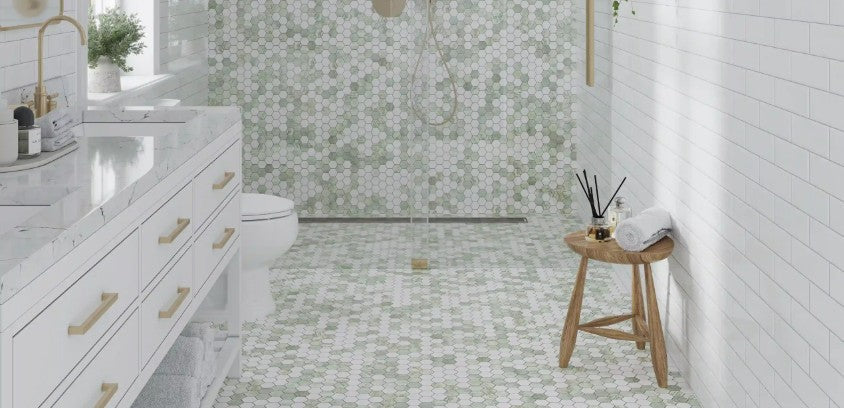
For shower floors specifically, smaller porcelain formats work best. 2×2 mosaics are a top choice, they adapt well to the drain slope, create many grout lines for traction, and come in a huge range of colors. Hexagon porcelain tiles (typically 1 inch or 2 inch) offer a stylish modern look with the same practical benefits. Larger porcelain formats (12×12 and up) can work but require expert installation.
Things to Consider
The main limitation of porcelain is that it can feel cold underfoot, though radiant floor heating can solve this. Also, some polished porcelain tiles have lower DCOF ratings; always confirm the wet slip rating before choosing a glossy finish for a shower floor.
Best for: Homeowners who want maximum durability and minimum maintenance with a broad range of design options.
Natural Stone Shower Floor Tile
Natural stone, marble, travertine, slate, limestone, granite, brings a level of luxury and uniqueness that no manufactured tile can replicate. Every slab and tile is one-of-a-kind, with natural variation in veining, color, and texture. In a shower, well-chosen and properly installed stone creates a spa-like environment that genuinely elevates the space. Natural stone shower floor tile: what you need to know →
The Most Popular Stone Options for Shower Floors
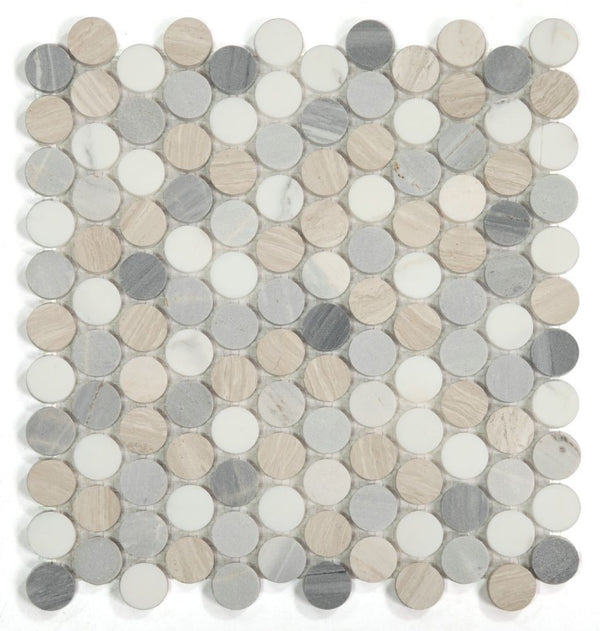
Marble
Dramatic veining, elegant coloring, and timeless prestige. Marble is beautiful but it is a high-maintenance choice. It's porous, relatively soft, and susceptible to etching from acidic products (soap, shampoo, cleaning products). For shower floors, honed (matte) marble is strongly preferred over polished, it provides better grip and hides minor scratches. Must be sealed before installation and resealed every 6–12 months.
Travertine
A form of limestone with a distinctive pitted, earthy texture that is naturally slip-resistant. The pores in travertine can either be left open (providing grip) or filled with grout for a smoother look. Warm beige and tan tones make it a popular choice for spa-inspired bathrooms. Like marble, it requires regular sealing and pH-neutral cleaners.
Slate
One of the most practical natural stones for shower floors. Slate has a naturally cleft, textured surface that provides excellent grip, and it's more resistant to water absorption than marble or travertine without as much maintenance. Available in deep charcoals, greens, and rusty reds. The layered texture can make cleaning slightly more involved.
Granite
The hardest and most durable natural stone option. Granite is dense, scratch-resistant, and less porous than marble or travertine. It still requires sealing but less frequently. Available in a wide range of colors and patterns. Polished granite can be slippery when wet, opt for honed or flamed finishes for shower floors.
The Non-Negotiables for Stone Shower Floors
- Always seal before grouting — a penetrating impregnator sealer protects the stone from within
- Reseal annually (or every 6 months for marble in high-use showers)
- Use pH-neutral cleaners only — vinegar, bleach, and acidic products will etch and damage stone
- Use a honed or textured finish on shower floors, never polished
- Install smaller formats (2×2 or 4×4 mosaics work beautifully in marble and travertine) for better slope compatibility and grip
Best for: Homeowners who want luxury aesthetics and are willing to commit to proper maintenance.
Shop Natural Stone Tiles at Tile Choices →
Mosaic Shower Floor Tile
Mosaic tiles, typically anything smaller than 4×4 inches, mounted on mesh backing sheets, are arguably the most practical and versatile option for shower floors. The defining characteristic is the high ratio of grout lines to tile surface, which translates directly to grip. More grout lines mean more texture, and more texture means a safer wet surface.
Types of Mosaic Tile for Shower Floors
Glass Mosaic
Glass mosaic tiles bring depth, color vibrancy, and a reflective quality that no other material matches. The glass surface is completely non-porous, it won't absorb water, mold, or stain. Available in an extraordinary range of colors, finishes (iridescent, frosted, glossy), and sizes from ¾ inch squares up to 2×2 inch pieces. For shower floors, choose textured or frosted glass rather than highly polished glass for better grip.
Recycled Glass Mosaic
A specialty of ours at Tile Choices, recycled glass mosaics are made from post-consumer glass (bottles, windows, industrial glass) that's been processed into beautiful tile. They offer the same performance benefits as standard glass mosaic with an eco-friendly story and often more organic, varied coloring. Explore our recycled glass collection →
Ceramic Mosaic
The budget-friendly, widely available workhorse of shower floor mosaics. Ceramic mosaics come in an enormous range of colors and finishes, are easy to install, and perform reliably in wet environments. Not quite as dense as porcelain, so look for tiles with a PEI rating of 3 or higher for floor use. Shop Ceramic Mosaic Tiles →
Popular Mosaic Shapes for Shower Floors
- Penny Round — Circular tiles in the 7/8 to 1-inch range. Excellent grip, beautiful classic look, easy to fit around drains. Shop Penny Round →
- Hexagon — 1-inch hex tiles are a modern staple for shower floors. Geometric, stylish, and highly practical. Shop Hexagon Tiles →
- Basketweave — A classic interlocking pattern that's been used in bathrooms for over a century. Pairs beautifully with subway tile walls. Shop Basketweave →
- Square Mosaic — Simple 1×1 or 2×2 squares. Clean, versatile, and widely available in every color imaginable.
Best for: Homeowners who want maximum safety, design flexibility, and ease of installation on sloped shower floors.
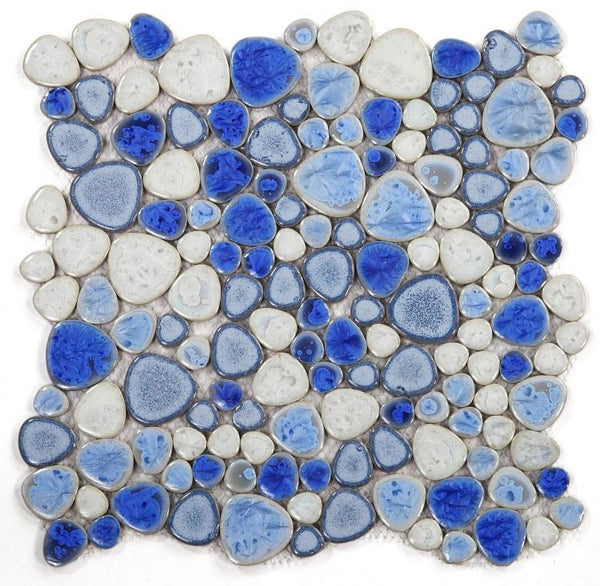
Pebble Shower Floor Tile
Pebble tiles are natural river stones, smoothed by water over centuries, mounted on mesh backing sheets in a random pattern. They're the most organic and tactilely satisfying option for a shower floor. Walking on them feels like a reflexology treatment, and they create an unmistakably spa-like, nature-inspired aesthetic.
Why Pebble Tile Works on Shower Floors
- Naturally rounded stones provide excellent grip, among the highest slip resistance of any tile format
- The irregular surface and numerous gaps drain water extremely efficiently
- Each floor is unique, no two pebble installations look exactly alike
- Works beautifully with nature-inspired, coastal, and spa-style bathrooms
- The stones themselves require no sealing; the grout between them should be sealed
Things to Know Before Installing Pebble Tile
Pebble tiles require more grout than standard mosaic sheets because the gaps between stones are larger and more irregular. Cleaning between the stones takes a bit more effort, a soft brush works well. Some homeowners find the uneven surface uncomfortable if they stand in the shower for long periods; this is entirely subjective and many people find it pleasant. Read our full pebble tile pros, cons & maintenance guide →
Best for: Nature-inspired and spa-style bathrooms where grip, drainage, and organic aesthetics are priorities.
Shop Pebble Tiles at Tile Choices →
Ceramic Shower Floor Tile
Ceramic tile is made from less refined clay than porcelain and fired at lower temperatures, resulting in a slightly more porous, less dense material. It's widely available, affordable, and perfectly suitable for shower floors when the right product is chosen.
The key distinction: make sure any ceramic tile used on a shower floor has a PEI rating of 3 or higher and a wet DCOF of 0.42 or above. Wall-rated ceramic tiles should never be used on the floor, they're not designed to handle foot traffic or wet surface requirements.
Ceramic is an excellent budget-friendly option, especially in mosaic format where the many grout lines provide good grip. It's easier to cut than porcelain and widely available at every price point.
Best for: Budget-conscious renovations where practical performance matters more than premium aesthetics.
Side-by-Side Comparison
| Material | Slip Resistance | Maintenance | Cost (material) | Sealing Required |
|---|---|---|---|---|
| Porcelain | High (textured) | Very Low | $3–$15/sq ft | No |
| Marble | Medium (honed) | High | $8–$30/sq ft | Yes — 6–12 mo |
| Travertine | High (unfilled) | Medium | $5–$20/sq ft | Yes — annual |
| Slate | Very High | Low–Medium | $4–$15/sq ft | Recommended |
| Glass Mosaic | Medium–High | Very Low | $8–$25/sq ft | No |
| Pebble | Very High | Low (grout only) | $6–$18/sq ft | Grout only |
| Ceramic | Medium (textured) | Very Low | $1–$8/sq ft | No |
For everything you need to know about tile sizing for shower floors, see our complete shower floor tile size guide.
How to Choose: A Quick Decision Guide
Choose Porcelain if…
You want the most practical, low-maintenance option with the widest range of styles. Porcelain suits almost every bathroom aesthetic and doesn't require any special care.
Choose Natural Stone if…
You want genuine luxury, uniqueness, and a spa-quality finish, and you're committed to regular sealing and pH-neutral cleaning. Stone is a long-term investment that rewards proper care.
Choose Glass Mosaic if…
You want color depth, visual pop, and a non-porous surface that's extremely easy to clean. Recycled glass options add an eco-friendly dimension.
Choose Pebble Tile if…
You're building a nature-inspired or spa-style bathroom and want maximum grip with organic aesthetics. Pebble floors are conversation pieces.
Choose Ceramic if…
You're working within a tighter budget without compromising on safety or performance. Stick to mosaic formats for best results.
Ready to shop? Browse our full shower floor tile collection at Tile Choices →
Questions? Call us at 614-515-7816 or email sales@tilechoices.com — we're happy to help you find the right tile.