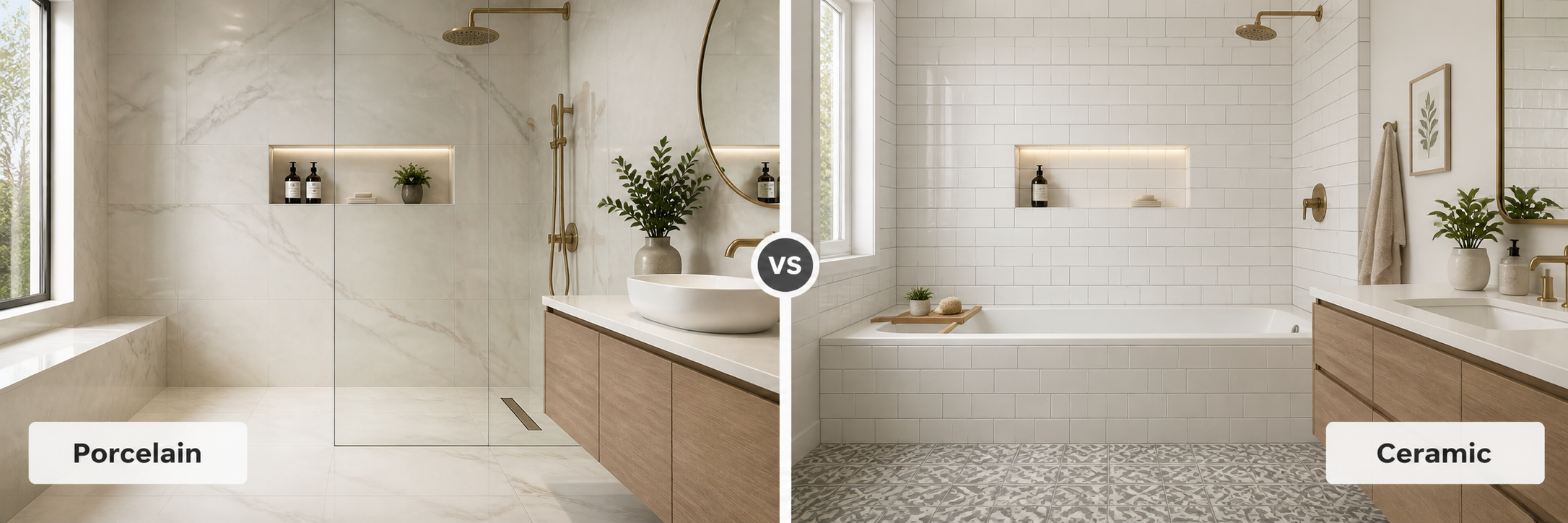
Choosing the right tile is one of the most important decisions when designing or remodeling a bathroom. Two of the most popular options are porcelain and ceramic tile, but which one is better for your space?
While both materials offer durability and style, they have key differences that impact performance, maintenance, and long-term value. In this guide, we’ll break down porcelain vs ceramic bathroom tile so you can confidently choose the best option for your floors, walls, and shower areas.
Table of Contents
- What’s the Difference Between Porcelain and Ceramic Tile?
- Durability Comparison
- Water Resistance
- Cost Comparison
- Best Uses for Each Tile Type
- Which Tile is Best for Your Bathroom?
What’s the Difference Between Porcelain and Ceramic Tile?
Both porcelain and ceramic tiles are made from clay and fired in a kiln, but the key difference lies in how they are manufactured. Porcelain tiles are made from a more refined clay and fired at higher temperatures, making them denser and more durable than ceramic tiles.
Ceramic tiles, on the other hand, are slightly more porous and easier to cut, making them a popular choice for wall applications and budget-friendly projects. You can explore a wide range of both options in our bathroom tile collection.
Durability Comparison
When it comes to durability, porcelain tile is the clear winner. Its dense composition makes it highly resistant to scratches, chips, and heavy foot traffic. This makes porcelain an excellent choice for bathroom floors and high-use areas.
Ceramic tile is still durable, but it is better suited for walls or areas with less wear and tear. If you're installing tile in a high-traffic bathroom, porcelain is typically the safer long-term investment.
Water Resistance
Bathrooms are high-moisture environments, so water resistance is a critical factor when choosing tile.
Porcelain tile has a very low water absorption rate, making it ideal for showers, floors, and wet areas. It can handle constant exposure to water without compromising its integrity.
Ceramic tile is also water-resistant but not as impervious as porcelain. It works well for bathroom walls and backsplashes but may not be the best choice for areas with heavy water exposure.
For wet zones like showers, consider pairing porcelain tiles with our shower floor tiles for optimal performance and safety.
Cost Comparison
Cost is often a deciding factor for homeowners. Ceramic tile is generally more affordable than porcelain, making it a great option for budget-conscious projects.
Porcelain tile tends to be more expensive due to its durability and manufacturing process. However, its long lifespan and low maintenance can make it a better value over time.
Installation costs may also vary, as porcelain is harder and requires specialized tools to cut.
Best Uses for Each Tile Type
Where Porcelain Tile Works Best
- Bathroom floors
- Shower walls
- Shower floors (when slip-resistant)
- High-traffic bathrooms
Where Ceramic Tile Works Best
- Bathroom walls
- Backsplashes
- Decorative accents
- Low-traffic areas
For modern shower designs, many homeowners prefer porcelain tiles for walls due to their durability and clean appearance. Browse our shower wall tiles to see popular styles.
Which Tile is Best for Your Bathroom?
The right choice ultimately depends on your specific needs, budget, and design preferences.
If you’re looking for maximum durability, water resistance, and long-term performance, porcelain tile is the best choice, especially for floors and showers.
If you’re working on a budget or focusing on wall applications, ceramic tile offers excellent value and a wide range of design options.
Many homeowners choose to combine both materials, using porcelain on floors and ceramic on walls, to get the best of both worlds.
No matter your choice, selecting high-quality materials is key to achieving a beautiful and long-lasting bathroom. Explore our full range of bathroom tiles to find the perfect fit for your project.