Tile size is one of the first decisions you'll face when planning a shower floor, and one that has more practical consequences than most people realize. Get the size wrong and you'll fight a sloped installation, end up with a slippery surface, or create a look that feels out of proportion with the room. Get it right and everything else falls into place.
This guide walks through every common tile size for shower floors, explains the practical tradeoffs of each, and gives you a clear framework for making the right call for your specific situation.
Shop our full shower floor tile collection →
Why Tile Size Matters More on Shower Floors Than Anywhere Else
On a regular floor, tile size is mostly an aesthetic decision. On a shower floor, it has direct safety and installation consequences.
The Slope Problem
Every code-compliant shower floor slopes toward the drain at approximately ¼ inch per foot. This slope is essential for drainage but creates a challenge for tile installation: the tile surface has to follow that slope. Small tiles, mounted on flexible mesh sheets, naturally conform to gradual curves and slopes. Large tiles are rigid and flat, they have to be individually back-buttered and set at precise angles to follow the slope, and the larger the tile, the harder this becomes.
The Grip Problem
Every grout joint in a tile floor creates a slight texture change, a micro-ridge that adds grip underfoot. Small tiles create more grout joints per square foot, which means more grip on a wet surface. A 1-inch mosaic tile might have 15–20 grout joints per square foot. A 12×12 tile might have just 1–2. This is why smaller tiles are inherently safer on wet shower floors.
The Proportion Problem
Large tiles in a small shower can look cramped and generate excessive cutting waste. Small tiles in a very large shower can look busy or dated. Matching tile size to shower size matters for aesthetics as much as for performance.
Small Format Tiles: 1-inch to 4-inch
Small format tiles are the most practical and most popular choice for shower floors. This category covers everything from tiny 7/8-inch penny rounds up to 4×4-inch field tiles, and it encompasses the formats designers and installers most consistently recommend.
1-Inch Mosaic Tiles
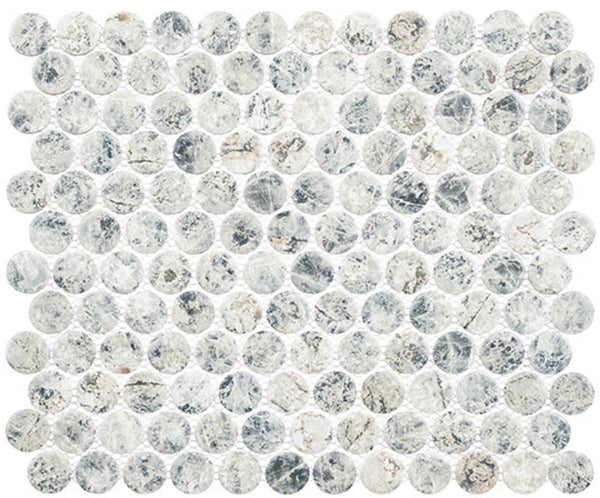
The 1×1 square and its close cousins, 1-inch hexagon, penny round, and similar formats, are the workhorses of shower floor design. They come on mesh-backed sheets (typically 12×12-inch sheets) that flex easily, conform beautifully to drain slopes, and create a dense grid of grout lines for maximum traction.
From a design standpoint, 1-inch mosaics can look either classic (think white ceramic penny round with dark grout) or very modern (polished glass hexagon in a soft gray). They're versatile enough to work in nearly any bathroom style.
- Slip resistance: Excellent — many grout joints per square foot
- Slope compatibility: Excellent — flexible mesh backing adapts easily
- Installation difficulty: Low to medium — sheets make installation faster; cutting around drains requires care
- Best for: Any shower, any style, any budget level
Shop 1-inch Hexagon Tiles → | Shop Penny Round Tiles →
2×2-Inch Tiles
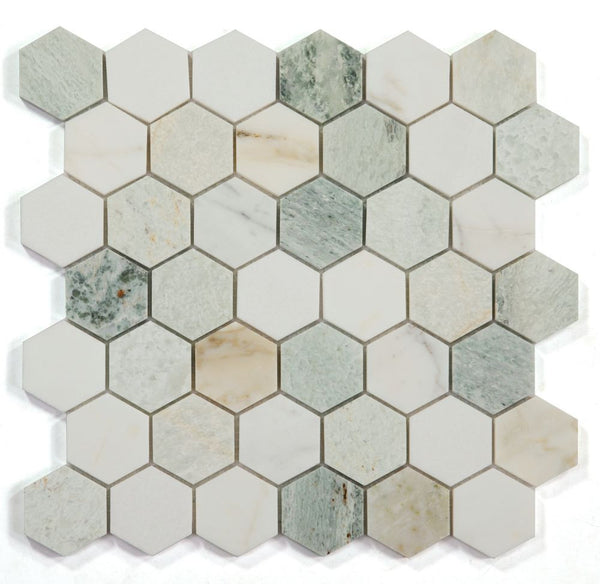
The 2×2 is slightly larger than the 1-inch family but still provides excellent performance on shower floors. Many people find the 2×2 format a nice compromise, it has more visual weight than a 1-inch tile, making it feel slightly more substantial and modern, while still conforming well to slopes and maintaining good grout density for traction.
Porcelain 2×2 mosaics are particularly popular in this format, available in an enormous range of colors and textures. Many large-format tile collections offer a coordinating 2×2 mosaic, allowing you to match your shower floor to your wall tile perfectly.
- Slip resistance: Very good, understand about slip resistance.
- Slope compatibility: Excellent
- Installation difficulty: Low to medium
- Best for: Modern and contemporary bathrooms; coordinating with larger wall tile
3×3 and 4×4-Inch Tiles
At 3×3 and 4×4 inches, tiles start to transition from mosaic-style to small field tile. They still work well on shower floors, particularly 4×4 ceramic, which has been a shower floor staple for decades, but they require more attention to the slope during installation since each individual tile is larger and less flexible.
The 4×4 format has a classic look often associated with traditional and craftsman bathrooms. It can feel a bit dated in some design contexts but remains a solid performer and an affordable option.
- Slip resistance: Good (look for matte or textured finishes)
- Slope compatibility: Good, still manageable
- Installation difficulty: Medium
- Best for: Traditional and craftsman bathrooms; budget-conscious renovations
Medium Format Tiles: 6×6 to 8×8-Inch
Medium format tiles occupy a tricky middle ground for shower floors. They're small enough to install correctly with care, but large enough that slope management becomes a real installation challenge. At 6×6 to 8×8 inches, you'll need an experienced installer who understands how to back-butter individual tiles and set them to follow the shower pan slope precisely.
When Medium Format Works
Medium tiles can work well in larger showers (4×4 feet and above) where the drain is centered and the slope is gradual. They also work in walk-in showers with linear drains, where the floor slopes in one direction like a ramp rather than from all sides toward a center drain. In these situations, medium tiles create fewer cuts and a cleaner look.
From a design perspective, a 6×6 tile can look crisp and contemporary without the busyness of a mosaic pattern. Some homeowners specifically want this look and are willing to invest in the installation expertise required to pull it off correctly.
What to Watch For
- Verify the tile has a wet DCOF of 0.42 or higher and a matte or textured finish, medium tiles have fewer grout joints, so the tile surface itself needs to provide more grip
- Budget for an experienced installer, improper back-buttering at this size will result in pooling water and potential tile failure
- Account for extra cutting waste around the drain
- Slip resistance: Medium, rely more on tile surface texture than grout density
- Slope compatibility: Moderate, requires skilled installation
- Installation difficulty: Medium to high
- Best for: Large showers, walk-in showers with linear drains, homeowners hiring experienced installers
Large Format Tiles: 12×12 and Above
Large format tiles on shower floors are a polarizing topic among tile professionals. Done correctly, a 12×12, 12×24, or even 24×24 tile floor in a shower can look absolutely stunning, sleek, seamless, and spa-like. Done incorrectly, it's a recipe for water pooling, cracked tiles, and a slippery hazard.
The Case For Large Format
Large tiles create a clean, minimal, modern look with fewer visible grout lines. In a large shower, this can feel incredibly luxurious, especially when the floor tile matches or coordinates with the wall tile to create a seamless flow. Walk-in showers with linear (trench) drains are particularly well-suited to large format floors because the floor only slopes in one direction, making leveling much more straightforward.
The Case Against (and the Caveats)
Large tiles are rigid. They cannot flex to follow a sloped surface, each tile must be individually set at precisely the right angle with a full bed of mortar behind it (a technique called back-buttering or floating). Any voids behind the tile create stress points that can cause cracking. And with fewer grout lines, the tile surface itself carries the entire burden of providing grip, which means a smooth, polished large tile on a wet shower floor is genuinely dangerous. Read more in depth information on mosaic vs large format shower floor tiles.
If you want large format on a shower floor, these are non-negotiable:
- DCOF of 0.42 or higher — verified, not assumed. Textured or matte finish only.
- Full back-buttering — every tile needs complete mortar coverage, no voids
- Lippage control — tile leveling clips or wedges prevent edges from jutting up and creating trip hazards
- Linear drain preferred — center drains require four-directional slope, which is very difficult to execute with large tiles
- Experienced installer required — this is not a DIY-friendly format for shower floors
- Slip resistance: Entirely dependent on finish — matte/textured only
- Slope compatibility: Challenging — requires expert installation
- Installation difficulty: High
- Best for: Large walk-in showers with linear drains; experienced installers; homeowners prioritizing aesthetics over ease
Special Formats: Pebble, Herringbone & Irregular Shapes
Pebble Tile
Pebble tile doesn't have a standard "size" in the conventional sense, individual stones range from about ½ inch to 2 inches across, mounted on mesh sheets. The organic, irregular format naturally conforms to any slope and creates excellent grip through the texture of the stones and the multiple grout lines. Shop pebble tiles →
Herringbone & Basketweave Mosaics
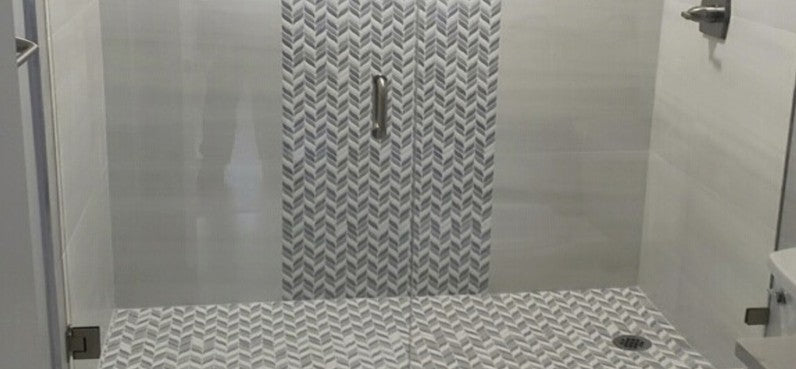
These pattern formats are typically made up of small rectangular or square tiles arranged in a specific pattern on mesh backing. The individual tile pieces are usually small (½×1 to 1×2 inches), giving them the same excellent slope compatibility as standard mosaics with the added visual interest of the pattern itself.
Shop Herringbone Tiles → | Shop Basketweave Tiles →
Arabesque & Specialty Shapes
Lantern, arabesque, fish scale, and similar specialty shapes are typically in the small-to-medium range (2–4 inches) and behave similarly to standard mosaics on shower floors. Because of their irregular shapes, they create grout lines in all directions, providing excellent grip and a highly distinctive look.
Shop Arabesque Tiles → | Shop Fish Scale Tiles →
Shower Size vs. Tile Size: A Practical Guide
| Shower Size | Recommended Tile Size | Notes |
|---|---|---|
| Small (3×3 ft or less) | 1–2 inch mosaic | Keeps proportion; avoids excessive cuts |
| Standard (3×4 to 3×5 ft) | 1–4 inch mosaic | Most versatile range; widest design options |
| Large (4×5 ft and up) | 2–6 inch; up to 12×12 with care | Larger tiles look proportional; slope management critical |
| Walk-in / linear drain | Any size, up to 24×24 | One-directional slope makes large tile feasible; expert install required |
Final Recommendation
If you want a simple answer: choose a 1-inch to 2-inch mosaic tile. It's the most forgiving to install, the safest underfoot, and available in enough styles to match any bathroom design. Every other size involves tradeoffs that require either a larger shower, a more experienced installer, or accepting more installation risk.
That said, if your heart is set on a large-format shower floor, it can absolutely be done beautifully, just go in with open eyes about the installation requirements and invest in an experienced professional.
Browse all shower floor tiles at Tile Choices →
Need help deciding? Call us at 614-515-7816 or email sales@tilechoices.com.