Tile color variation—often expressed as V1 through V4—is one of the most important, and sometimes misunderstood, specifications you’ll see when choosing tile. This guide explains what each V-rating means, why variation happens, how it affects design and installation, and smart steps to avoid surprises on the jobsite.
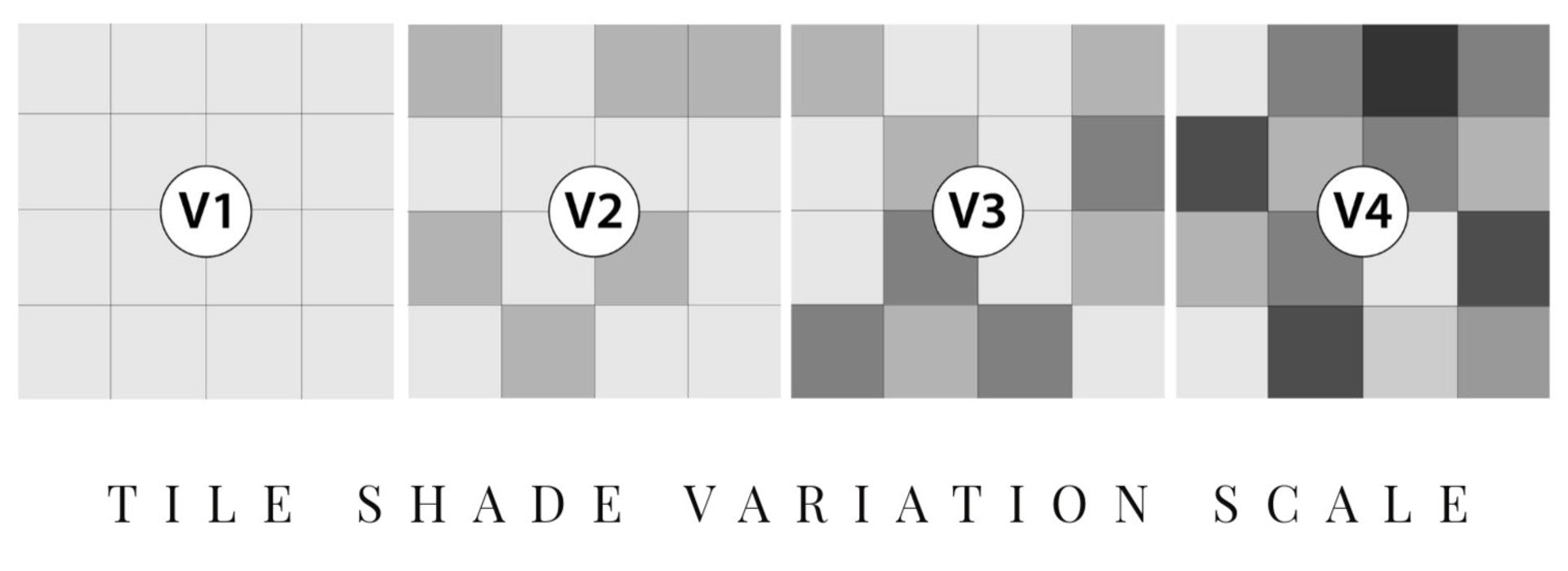
- V1 (Uniform): Minimal variation — predictable, consistent field.
- V2 (Slight): Subtle differences — gentle character without chaos.
- V3 (Moderate): Noticeable variation — adds depth and texture.
- V4 (Substantial): Bold, random variation — best for rustic or dramatic looks.
What Is the Tile Variation (Color) Scale?
The tile variation scale is a manufacturer-assigned rating that describes how much color, shade or surface appearance can differ between individual tiles in the same production run. Most commonly you'll see V1 through V4. The scale is intended to set expectations: a V1 tile will look very consistent from piece to piece, whereas a V4 tile can vary dramatically and intentionally produce a more organic or rustic surface.
Why the Variation Scale Matters
Color variation affects the final aesthetic, the installation approach, and the level of planning required. Designers who want a flat, contemporary field will usually choose V1 or V2 tiles. Projects that benefit from natural movement, visual texture, or a handmade look may choose V3 or V4. Getting the right variation level reduces returns, callbacks and client disappointment.
V1–V4 Explained: What Each Rating Means
V1 — Uniform Appearance
What to expect
V1 tiles have very limited variation. Color, tone and surface finish are highly consistent between pieces. These tiles are ideal when you want a seamless field without noticeable shifts in color.

Best for
- Modern kitchens and bathrooms with clean, minimal looks
- Large continuous surfaces where consistency is critical
- Commercial spaces requiring a predictable, repeatable finish
V2 — Slight Variation
What to expect
V2 tiles show small, subtle differences in shade or texture. The variation is muted and controlled—enough to add a little life to a surface without drawing attention to individual tiles.

Best for
- Backsplashes or floors that need a little character while remaining refined
- Transitional designs that mix solid and textured elements
V3 — Moderate Variation
What to expect
V3 tiles show clear differences from tile to tile. Variation can include color shifts, veining, or differences in surface texture. When laid together, V3 fields feel lively, layered and more natural.

Best for
- Rustic, eclectic or artisan-inspired interiors
- Feature walls, hearths, or floors where visual texture is desired
V4 — Substantial Variation
What to expect
V4 is intentionally inconsistent. Individual tiles can contrast strongly in color or pattern, producing a dynamic, unpredictable field. This level is commonly used to mimic natural stone, reclaimed finishes, or handcrafted surfaces.

Best for
- Bold accent walls, artisanal floors, or design-forward commercial applications
- When the goal is high visual drama and a non-uniform look
Reasons Tiles Vary: Manufacturing, Material & Batches
Variation arises from multiple sources:
- Raw materials: Natural clays and minerals contain inherent color variation that shows up after firing.
- Glaze and ink application: Differences in glaze thickness, spray coverage or transfer inks produce shading differences.
- Firing conditions: Temperature and kiln atmosphere affect final color and surface effects.
- Batch changes: Separate production runs sampled at different times can have slight or major differences.
Note on Natural Stone
Natural stone will almost always display more variation than manufactured porcelain or ceramic. For stone projects expect dramatic veining, tone shifts and surface irregularities that are part of the material’s character.
How to Choose the Right Variation Level for Your Project
1. Match the variation to the design goal
If the design calls for calm, continuous fields (modern, minimalist, luxury retail), choose V1 or V2. If the goal is textural depth, handmade feeling or a reclaimed look, favor V3 or V4.
2. Consider room size and lighting
In small rooms, high-variation tiles can feel busy; in larger rooms the same tiles can add interest without overwhelming the eye. Always evaluate tiles in the space under real lighting conditions before making a final choice.
3. Coordinate with surrounding materials
Test sample tiles next to countertops, cabinets, paint and fixtures. High-variation tile may clash if adjacent surfaces are already very busy.
4. Think practically
High-variation tiles mask dirt and wear differently than uniform tiles. For high-traffic or highly visible commercial spaces, balance aesthetics with maintenance expectations.
Ordering, Sampling & Jobsite Tips to Avoid Surprises
Order physical samples — along with photos
Photos and renderings can misrepresent tone and gloss. Always order a color sample, if it is high shade, try and get a color of the light and the dark (or a full box if possible) and view them in the actual room at different times of day.
Mix boxes during installation for V3 & V4
For moderate or substantial variation, pull tiles from several boxes as you install. This helps the color and pattern distribute naturally over the surface rather than clustering similar tiles together.
Lay out tiles before setting
Dry-lay a section on the floor or sheeting to evaluate the look. Rearrange pieces until you achieve a balanced composition, then proceed with installation.
Tell your installer what you expect
Provide the V-rating, approved samples and clear instructions on mixing and layout. A short mock-up or approved photographed sample can prevent misunderstandings.
Installation & Grout: How Variation Affects Installation Choices
Grout color strategy
Choose grout that either blends or contrasts intentionally. With high-variation tiles, a neutral grout that blends often produces a cohesive field; a contrasting grout will amplify patterns and highlight individual tiles.
Joint width & tile size
Smaller tiles and intricate mosaics will show variation differently than large-format tiles. Adjust joint specifications and setting materials per manufacturer recommendations to accommodate movement and tolerance.
Managing surface irregularities
Some high-variation tiles (especially hand-formed or textured pieces) can have slight dimensional variation. Use appropriate leveling systems and setting techniques to ensure a safe, attractive finish.
Summary: Use the Variation Scale to Control Expectations
The V1–V4 scale is a practical tool that helps you match materials to design intent. Spend time sampling, communicate clearly with your installer, and plan layout and grout choices ahead of time. With that preparation, you’ll get the visual impact you want — whether that’s perfectly uniform or beautifully unpredictable.
Need help choosing the right tile variation?
Tile Choices can help you compare samples, select grout and create a layout plan tailored to your design and maintenance needs. Contact our specialists for personalized guidance.