When designing or remodeling a bathroom, safety should be just as important as style. Wet floors, soap residue, and daily use can quickly turn a bathroom into a high-risk area for slips and falls. That’s why choosing the right slip-resistant tile is critical—not just for comfort, but for long-term safety.
In this guide, we’ll walk you through everything you need to know about slip-resistant bathroom tiles, including how they work, what to look for, and which options perform best in real-world conditions. Whether you’re upgrading a shower floor or retiling your entire bathroom, this guide will help you make a confident and informed decision.
Table of Contents
- Why Slip Resistance Matters in Bathrooms
- Understanding Slip Resistance Ratings (COF Explained)
- Best Slip-Resistant Tile Types
- Best Tile Finishes for Safety
- Tile Size and Its Impact on Traction
- Where Slip-Resistant Tile Matters Most
- Common Mistakes to Avoid
- Final Thoughts
Why Slip Resistance Matters in Bathrooms
Bathrooms are one of the most common places for household slips and falls. Water, humidity, and smooth surfaces all contribute to increased risk. Choosing slip-resistant tile helps reduce that risk and creates a safer environment for everyone—from children to older adults.
Beyond safety, slip-resistant tiles also improve confidence when walking on wet surfaces. This is especially important in areas like showers and bathroom floors, where water exposure is constant.
If you're exploring safe and stylish options, our bathroom tile collection includes a wide range of tiles designed for both performance and aesthetics.
Understanding Slip Resistance Ratings (COF Explained)
Slip resistance is typically measured using a rating called the coefficient of friction (COF). This rating indicates how much traction a tile surface provides.
For residential bathrooms, a higher COF rating generally means better slip resistance. While exact standards may vary, tiles with a higher rating are better suited for wet environments like bathrooms and showers.
It’s important to note that COF ratings are only part of the picture. Surface texture, tile size, and installation pattern also play a major role in overall safety.
Best Slip-Resistant Tile Types
Some tile types naturally provide better traction than others. Here are the best options to consider for a slip-resistant bathroom:
Porcelain Tile
Porcelain tile is one of the top choices for bathroom floors due to its durability and water resistance. When finished with a matte or textured surface, it also offers excellent slip resistance.
Mosaic Tile
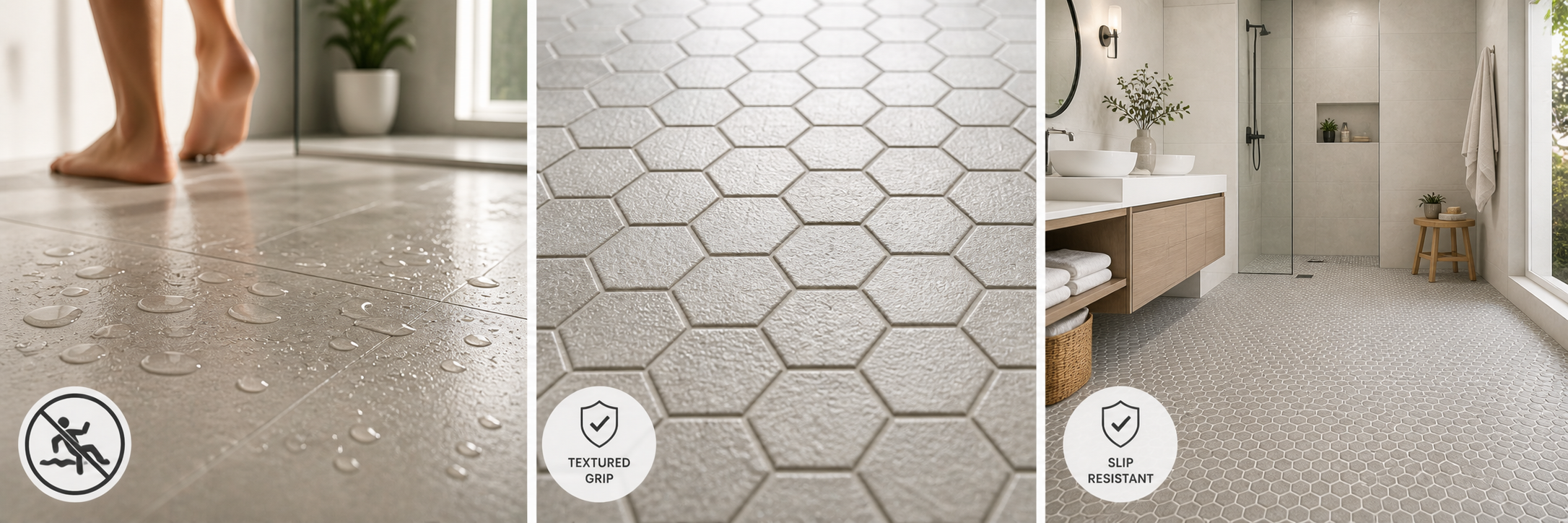
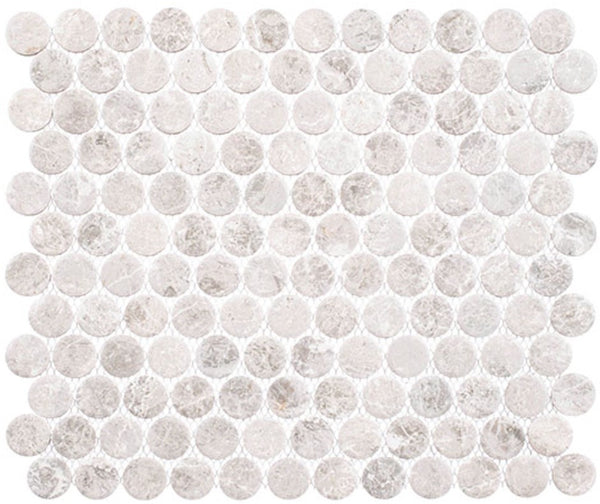
Mosaic tiles are one of the safest options for wet areas. Their small size creates more grout lines, which provide additional grip underfoot. This makes them ideal for shower floors. Explore our shower floor tiles for options designed specifically for safety.
Natural Stone Tile
Textured natural stone, such as slate, can offer good slip resistance. However, it requires regular maintenance and sealing to maintain performance.
Ceramic Tile
Ceramic tile can also be slip-resistant when it has a textured or matte finish. It’s a versatile and budget-friendly option for many bathrooms.
Best Tile Finishes for Safety
The finish of a tile plays a major role in how slippery it becomes when wet.
Matte Finish
Matte tiles are one of the best options for bathroom floors. They provide a natural level of grip and reduce the risk of slipping.
Textured Finish
Textured tiles add additional traction by creating small surface variations. These are especially useful in high-moisture areas.
Glossy Finish (Use with Caution)
Glossy tiles are visually appealing but can become extremely slippery when wet. They are best reserved for walls or decorative features rather than floors.
Tile Size and Its Impact on Traction
Tile size is often overlooked, but it has a significant impact on slip resistance.
Smaller tiles, such as mosaics, create more grout lines, which improve traction. This is why they are commonly used in showers and wet areas.
Larger tiles have fewer grout lines, which can make them more slippery if they have a smooth surface. However, choosing a textured or matte finish can help offset this.
For a balanced approach, many homeowners use larger tiles for the main bathroom floor and smaller tiles in the shower area.
Where Slip-Resistant Tile Matters Most
While all bathroom floors should prioritize safety, certain areas require extra attention:
- Shower Floors: Constant water exposure makes slip resistance essential.
- Main Bathroom Floor: Water from sinks, tubs, and showers can create slippery conditions.
- Entry Points: Areas just outside the shower or tub are common slip zones.
Using the right tile in these areas can significantly reduce the risk of accidents.
To create a cohesive design, consider pairing safe floor options with stylish shower wall tiles that complement your overall look.
Common Mistakes to Avoid
Even with the best intentions, it’s easy to make mistakes when selecting bathroom tile. Here are a few to avoid:
- Choosing Style Over Safety: Always prioritize slip resistance for floors.
- Using Polished Tiles on Floors: These can become dangerously slippery.
- Ignoring Tile Ratings: Always check performance specifications.
- Overlooking Grout Lines: Fewer grout lines can mean less traction.
Avoiding these mistakes will help ensure your bathroom is both beautiful and safe.
Final Thoughts: Balancing Safety and Style
Choosing slip-resistant tile doesn’t mean sacrificing design. Today’s tiles offer a wide range of styles, textures, and finishes that combine safety with visual appeal.
By focusing on factors like texture, size, and material, you can create a bathroom that not only looks great but also performs safely in everyday use.
Start exploring your options by browsing our full selection of bathroom tiles to find the perfect combination of safety and style for your space.